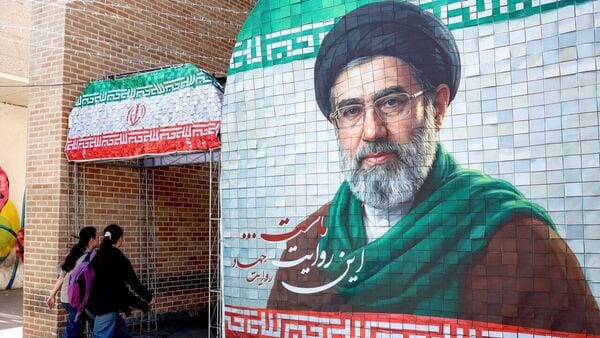
The United States Secretary of State, Marco Rubio, has addressed questions on since the leader has not been seen in public since the conflict started. He also pointed to intelligence indicators suggesting that Mojtaba Khamenei is engaged in decision-making, despite sustaining injuries in the conflict.
Speaking of Mojtaba Khamenei, suggested that since many of them have been killed, “being public is not recommended for them internally.”
“We haven’t seen him publicly, and I would imagine, given what’s happened to multiple leaders in that system, being very public is probably not something that’s recommended for them internally,” Marco Rubio said.
“But that said, I think there are indications out there that he is increasingly engaging at some level, although all of his communications have been in writing and through intermediaries,” the United States Secretary of State continued.
These observations arrive amid intense international scrutiny regarding ‘s physical condition, given that he has vanished from public view since being seriously injured on 28 February, sparking widespread questions over the stability of Iran’s leadership hierarchy.
The US Secretary of State also defended Washington’s military approach toward Iran, asserting that Iran had sought to develop its conventional arms infrastructure as a “shield” to safeguard its nuclear ambitions.
Testifying before the US Senate Foreign Relations Committee on Tuesday, Rubio stated that recent American military operations had drastically diminished Iran’s military capabilities, effectively stripping its conventional forces of any credible deterrent power.
“What they tried to do is they were going to try to build a conventional shield and hide behind that conventional shield,” Rubio told lawmakers.
The top American diplomat emphasised that Tehran’s maritime forces had suffered a catastrophic blow during the hostilities and impacted their defence infrastructure. “What’s left of Iran’s navy is a ‘bunch of Boston Whalers with machine guns on them,’” adding that the fleet had been severely degraded.
“This is a pervasive problem around the world. The economics of it are something we have to solve for,” Rubio stated, while maintaining that the Islamic Republic’s “conventional shield” had been “substantially eroded” by the recent strikes.
“Phase 2 is they have to commit to very specific negotiations. On the disposition of the highly enriched uranium that still is buried deep in a mountain somewhere… They have to agree on negotiating severe and long-term limitations and/or cancellation of enrichment activity in their country,” Rubio informed the committee.
Speaking of reopening of the Strait of Hormuz, he said, “Reopening the straits means the following: ships can sail through international waters the way they can through other chokepoints around the world without being fired upon, without paying a toll.”
(With agency inputs)