World Environment Day is not merely an occasion for reflection. It is rather a call to action. At a time when cities across the world are grappling with the challenges of the climate crisis, air pollution, and environmental degradation, the responsibility to build a greener and more sustainable future has never been greater. The government, led by Prime Minister Narendra Modi, is determined to match this responsibility toward the environment with a firm resolve to mobilise collective action to protect the planet.
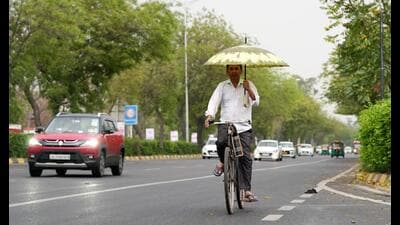
Towards that end, developing urban greening infrastructure in Delhi has been recognised as an efficacious way to improve air quality along with emission-control measures targeting vehicles, industries, construction activities, road dust, and biomass burning. Nature offers some of the most powerful and cost-effective solutions available to us.
In urban areas, trees, shrubs, landscaped grass act as a natural air filter, mitigating the urban heat island effect, and absorb toxic greenhouse gases. Several studies conducted in Delhi and elsewhere have demonstrated that vegetation can effectively reduce particulate pollution at the local scale.
Beginning today, the Department of Forest and Wildlife, the Delhi Government, in collaboration with the ministry of environment, forests and climate change, is undertaking an ambitious plantation and ecological restoration programme for the year 2026–27. At the heart of this effort lies the ecological restoration of the Delhi Ridge — the city’s green lungs and an extension of the ancient Aravalli landscape. The initiative combines the ecological restoration of the Ridge ecosystem with extensive roadside and urban greening efforts under the ‘Dust Free Delhi Campaign’ (DFDC).
Protecting and restoring this invaluable natural asset is not merely an environmental necessity; it is an investment in Delhi’s future.
Together, these interventions represent one of the largest coordinated urban afforestation and environmental improvement exercises undertaken in Delhi.
DFDC seeks to address several critical environmental challenges, including air pollution, dust generation, urban heat island effects, biodiversity loss, and degradation of natural habitats. Through the planting of millions of trees, shrubs, bamboos, and hedges, the government aims to create a healthier, greener, and more climate-resilient urban environment.
The Delhi Ridge has been chosen for the noble mission for it serves as an extension of the ancient Aravalli mountain system and serves as the “green lungs” of the National Capital Territory. It plays a crucial role in regulating local climate, improving air quality, preventing soil erosion, supporting biodiversity, acting as a carbon sink, providing habitat for native flora and fauna.
Recognising its ecological importance, the government has planned extensive restoration plantations across the Southern Ridge, Central Ridge, and DDA-managed ridge areas.
Under DFDC, the government has set an ambitious target of planting 14.27 lakh trees, 14.29 lakh shrubs and bamboos — a total of approximately 28.57 lakhs plants, shrubs and grass clumps. The Southern Ridge accounts for the largest share of the programme, with over 19.31 lakh plantation units, reflecting its strategic importance in restoring degraded forest landscapes and strengthening ecological connectivity.
Research shows dust pollution is one of the major contributors to poor air quality in Delhi. Roadsides, central verges, construction zones, and open spaces often generate significant particulate matter, particularly during dry seasons. To have a lasting solution, multiple road-owning agencies have been tasked with undertaking coordinated plantation drives with herb/shrub species identified by ICFRE and BSI.
The Municipal Corporation of Delhi, Public Works Department, New Delhi Municipal Council, Central Public Works Department, National Highways Authority of India, Delhi Development Authority, and Irrigation and Flood Control Department (IFCD) have been directed to collectively plant 19.13 lakh shrubs, 65,000 bamboo and hedge units, and 4.56 lakh trees.
Shrubs, hedges, and bamboo act as natural barriers that trap dust particles and reduce their movement into residential and commercial areas. Roadside vegetation also helps lower surface temperatures, mitigate heat stress, and improve thermal comfort for residents.
Delhi, as we know, faces multiple environmental challenges, including high particulate pollution levels, rising temperatures, pressure on natural ecosystems, rapid urbanisation and habitat fragmentation.
DFDC addresses these challenges through nature-based solutions that are sustainable, cost-effective, and capable of delivering long-term ecological benefits. The emphasis on both ridge restoration and urban roadside greening reflects a balanced approach that combines conservation of natural ecosystems with environmental improvements in densely populated urban areas.
Additionally, under the CAQM framework, with end-to-end paving and plantations, greening of central verges, and end-to-end paving and greening of roads is being undertaken in Delhi. Provision of underground utility ducts is also being made to prevent repeated road cutting.
A total of 3,538 km of roads have been identified for redevelopment by various agencies including PWD, MCD, DDA, DSIIDC, IFCD, DJB and others. To enhance urban green cover and improve ecological conditions, a total 382 acres of brown patches and degraded areas within parks, green belts, other green spaces have been identified for restoration and greening during 2026.
While the government is making sustained efforts, environmental challenges cannot be addressed by governments alone. They require collective action and public participation. Every tree planted, every green space restored and every citizen who embraces a sustainable lifestyle contributes to building a better future.
A Green Delhi will be more than a cleaner city. It will be a symbol of India’s commitment to balancing development with environmental responsibility — a living example of the vision of a Viksit Bharat.
Bhupender Yadav is Union cabinet minister for environment, forest and climate change. The views expressed are personal