Deputy Foreign Minister Majid Takht-Ravanchi said Iranian officials had explained to foreign diplomats in Tehran on Tuesday the contents of the memorandum of understanding with the U.S., and he noted a previously unmentioned “mechanism” in the terms that he said would be triggered in the event that Israel “violates the agreement.”
While the agreement is between Iran and the U.S., Iran’s foreign minister told the diplomats earlier that in Tehran’s view, “the two parties to this memorandum of understanding are the United States and Israel on one side, and Iran and Hezbollah on the other.”
According to Iran’s official state news agency, Takht-Ravanchi said after the meeting that “a clause in the memorandum of understanding on the termination of war and military operations across all fronts, including Lebanon, explicitly states that if the Zionist regime violates the agreement, then — since the United States has committed on behalf of its partners in this understanding to ending the war on all fronts, including Lebanon — the mechanism set out in the memorandum will be activated.”
It was not clear what mechanism the deputy foreign minister was referring to. Neither the U.S. nor Iranian governments have released the text of the agreement that Vice President JD Vance is expected to sign on Friday with Iranian officials.
Iran’s Foreign Minister Abbas Araghchi said Tuesday that the continuing presence of Israeli forces in Lebanon would be a violation of the U.S.-Iran agreement set to be signed on Friday.
Speaking to foreign diplomats in Tehran in remarks aired on state TV, Araghchi said: “When we reached a ceasefire, we declared it across all fronts, with particular emphasis on Lebanon … Any continued occupation of Lebanese territory will be regarded by us as a violation of the memorandum of understanding.”
Araghchi said Iran considered Israel, and the Hezbollah group Israel has fought for months in Lebanon, parties to the agreement struck between the U.S. and Iran.
“An important point I want to emphasize is that, in our view, the two parties to this memorandum of understanding are the United States and Israel on one side, and Iran and Hezbollah on the other,” Araghchi told the diplomats.
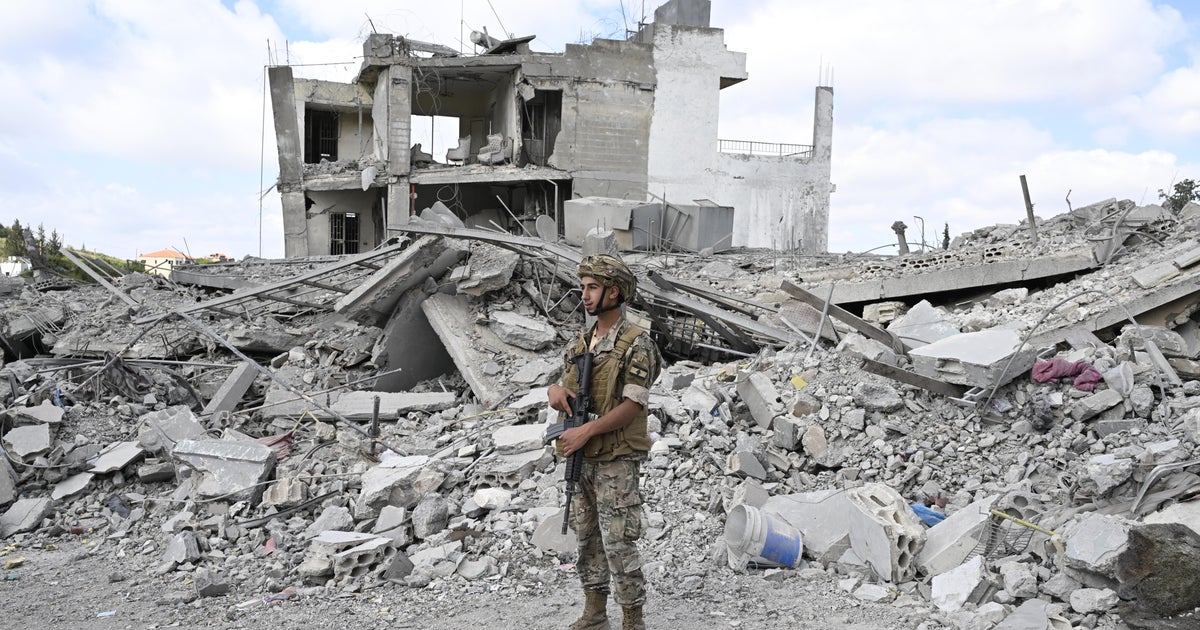
On Monday, Israeli officials said troops would remain in a wide section of southern Lebanon that they have effectively occupied over the last three and a half months, forcing tens of thousands of residents to evacuate.
“Trump’s agreement does not bind us,” Israel’s far-right National Security Minister Itamar Ben-Gvir said Monday.
Vice President JD Vance denied on Monday that Iran will receive “billions of dollars of assets” as part of the U.S.-Iran deal that was announced Sunday and is set to be signed later this week.
“When people say that billions of dollars of assets will be released, that’s not true,” Vance said on “CBS Mornings.” “What is true is that Iran will have a much better and much more prosperous future if they meet the obligations they make in this agreement.”
The U.S. has yet to release the terms of the agreement. But Iran’s powerful Revolutionary Guard said Monday that under the agreement, the country will receive $24 billion in frozen funds during the 60-day final negotiation period, of which half must be made available before final negotiations begin.
Pressed on the possibility of unfreezing Iranian assets, Vance said while “we’re open to a lot of things that are on the table,” the $24 billion figure “just doesn’t appear anywhere in any of the texts that we’ve talked about with the Iranians.”
President Trump wrote on Truth Social that “the story that the U.S. is paying Iran 300 million Dollars is Fake News, put out by the Dumocrats!!!”
The president appeared to be referring to reports that Iran could get access to $300 billion to rebuild as part of the memorandum of understanding it inked with the United States over the weekend. Iran’s Revolutionary Guards said Monday the deal requires the U.S. and its allies to present postwar reconstruction plans in at least that amount — though it’s unclear whether the money would come from the U.S. or other sources.
Vice President JD Vance — who has helped lead the Trump administration’s diplomatic push with Iran — has not ruled out a reconstruction fund, but said it would be paid for by Gulf allies. Asked about the issue on “CBS Mornings” on Monday, Vance said the fund is “the sort of thing they could have access to … so long as they honor their end of the obligation.”
Money has emerged as a point of contention in the day-old deal between the two countries. Iran has said the agreement requires the U.S. to unfreeze billions of dollars in sanctioned Iranian assets before nuclear talks between the two sides begin, but Vance and other U.S. officials say Iran will not get any sanctions relief until it demonstrates compliance.
Vice President JD Vance said on CNN the memorandum of understanding between the U.S. and Iran is a “very general document,” spanning about a page and a half, with knotty details on the future of Iran’s nuclear program and other issues left for future talks.
“On a number of issues, we are going to have to figure this stuff out during the technical negotiation phase,” Vance told CNN’s Jake Tapper, referring to the deal’s 60-day window for further talks, which are set to begin Friday.
Senior U.S. officials told reporters earlier Monday they plan to release the full text of the memorandum of understanding in the next 24 to 48 hours.
In the short-term, the deal is expected to extend the U.S.-Iran ceasefire, reopen the Strait of Hormuz, end a U.S. naval blockade on Iranian ports and launch negotiations on Iran’s nuclear program. But the two countries have made conflicting claims about sanctions relief, with Iran’s Revolutionary Guards saying the U.S. is expected to unfreeze billions in Iranian assets before the start of talks, while the U.S. says Iran will get nothing until it complies with the deal.
Vance told CNN the claims about unfreezing assets as a precondition to talks are “definitely not true,” and argued those claims may have been made by “hardliners” within Iran who tend to “overemphasize what Iran gets from the bargain” to appeal to a domestic audience.
Vance said Iran could get a “very significant sanctions relief package,” but only if it meets its obligations.
“There is a really big opportunity for the Iranians, but they only get the benefit of that opportunity if they do the things they promise they’re going to do,” he said.
It’s also unclear what form a potential U.S.-Iran nuclear agreement might take, or whether the two sides will strike a deal in 60 days. And Iran said last week that negotiations will only cover nuclear issues, with Iran’s ballistic missile program and its support for militant groups like Hamas and Hezbollah — two other major concerns for the U.S. — excluded from talks.
Vance said preventing Iran from developing a nuclear weapon or reconstituting its nuclear program are the most important issues, but U.S. officials “certainly expect that as part of our broader agreement … Iran is going to stop funding terrorist organizations.” He pointed to a portion of the memorandum that said Iran must commit to “regional peace and stability.”
Senate Minority Leader Chuck Schumer expressed skepticism about the U.S.-Iran agreement and pressed for more information, arguing “it’s been nearly 24 hours since Trump announced there was a potential deal with Iran, and we still don’t know the details.”
“In these high-stakes negotiations, the devil is in the details, but Trump hasn’t even revealed the text of his quote, understanding, unquote with Iran,” the New York Democrat said in remarks on the Senate floor Monday. “The American people need to know exactly what’s in the deal. Trump must brief Congress and the public on the details of his understanding with Iran immediately and end this war once and for all.”
Senior U.S. officials said earlier Monday the text of the U.S.-Iran memorandum of understanding will be released in the next 24 to 48 hours.
The top Senate Democrat also warned that gas prices could remain elevated and Iran could retain some control over the Strait of Hormuz, adding: “Americans are scratching their heads, wondering what we’ve accomplished in Iran.”
PresidentTrump has projected confidence about the Iran deal while meeting with world leaders at the G7 summit in Evian-les-Bain, France. He arrived Monday for talks with G7 leaders, including some who have been sharply critical of his management of the 15-week conflict that led to a surge in global energy prices.
Mr. Trump said he isn’t sure whether he’ll attend the signing of the agreement to end the Iran war on Friday, suggesting during a joint appearance with French President Emmanuel Macron that he “may be involved,” although Vice President JD Vance “was originally going to do it.”
The U.S. president has hailed the Iran deal as promising, but not a guarantee.
“Hopefully, it’s going to be a good relationship, and we’re going to get along. If we don’t, we go back to where we started. But I don’t think that’s going to be necessary,” said Mr. Trump. “The Iran deal we made is going to bring a lot of, a lot of success to the world, because the oil was really clogged up there for a while.”
Trump added that the Strait of Hormuz will “be completely opened” on Friday.