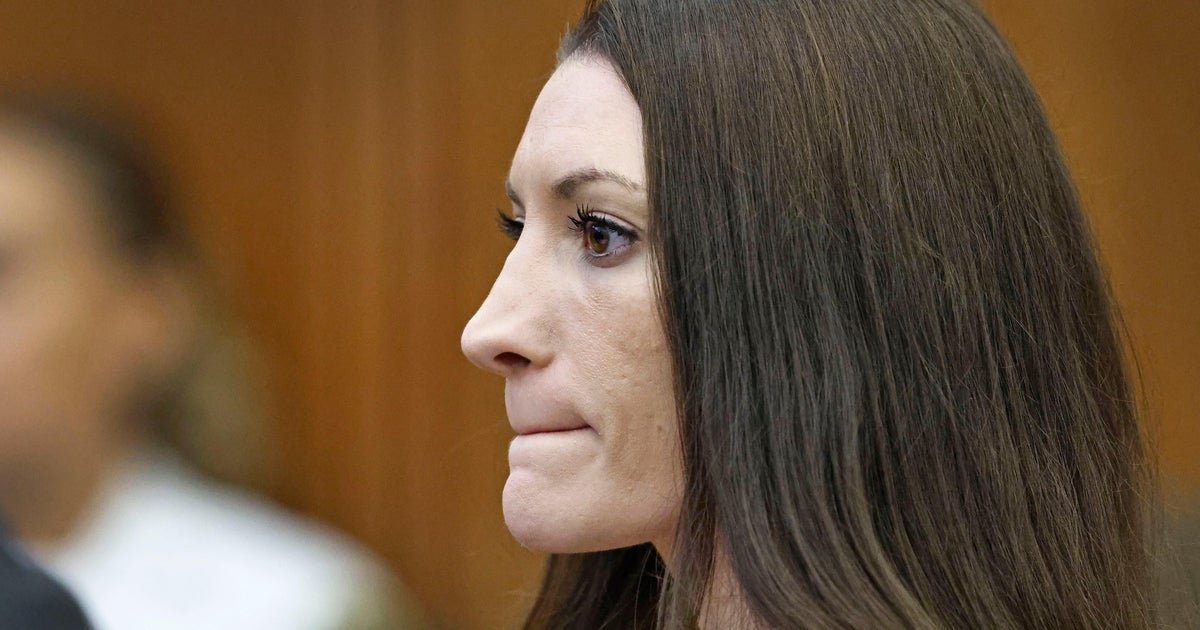
Lindsay Clancy’s murder case is now in the hands of a Massachusetts jury after 22 days of testimony in Plymouth Superior Court.
Clancy, 36, has pleaded not guilty to first-degree murder in the deaths of her three children, Cora, 5, Dawson, 3, and Callan, 8 months. Clancy admits to killing the children in their Duxbury home on Jan. 24, 2023. She then slit her throat and jumped from a window, breaking her neck. The fall left her paralyzed.
Her defense claims that she was overmedicated and suffering from postpartum psychosis, and so should not be held criminally responsible. Prosecutors allege that she planned the killings and faked her suicide attempt.
Most of the testimony has revolved around Lindsay Clancy’s mental state and the treatment she received. Here are the biggest takeaways from the trial.
Patrick Clancy’s testimony about the murders spanned two days. During the first day, he described his then-wife’s mental health struggles and said that, despite those issues, Lindsay Clancy had had “one of her best days” in the hours before the killings. Patrick Clancy was married to Lindsay Clancy at the time of their children’s deaths but they have since divorced.
On the second day of his testimony, Patrick Clancy described leaving the house to pick up takeout food that Lindsay Clancy had ordered. While picking up the food, she texted him asking him to pick up medicine at CVS. The two spoke on the phone while he ran the errand, he said. Patrick Clancy testified that when he returned home, he noticed “the house was really quiet.” He “knew something was wrong” when he found his bedroom door locked, he said.
Patrick Clancy said he saw “blood everywhere” that “looked like it was sprayed, almost like with a hose” and an open window. He ran outside, he said, and found Lindsay Clancy on the ground with “deep cuts on her wrists” and a red line across her neck. Lindsay Clancy said she had tried to die by suicide, Patrick Clancy said. When he asked where their children were, she said they were in the basement. She did not indicate they were in danger or that they had been harmed, Patrick Clancy said.
He testified that he stayed with his wife until first responders arrived. Then, he ran to the basement, he said. He described finding his children and trying to give them CPR before first responders arrived.
First responders who arrived at the Clancy home testified about what they witnessed on the third day of the trial. They recounted a distressing, chaotic scene that began in the backyard of the house.
Officer Stephen Hall said he heard a male voice, identified as Patrick Clancy’s, calling for help from the backyard. There, Hall found Lindsay Clancy with cuts to both wrists and her neck.
After hearing “a loud scream from inside,” Hall and fellow officer Brian Josephine entered the home and found Patrick Clancy in the basement, where he had discovered the bodies of his three children, Hall said.
When Patrick Clancy saw the officers, he “looked up and screamed ‘She killed the f—–g kids,'” Josephine testified.
Duxbury fire captain and paramedic PJ Hussey said that he put out an “all call” for Duxbury personnel and that things “turned very chaotic very quickly” as more resources arrived on scene.
On the fifth day of the trial, excerpts from Lindsay Clancy’s diary were read aloud. In an excerpt read by prosecutor Shannan Buckingham, Clancy wrote that she was struggling with her youngest child Callan’s sleep schedule and “felt like I’m drowning every day.”
In an entry dated Nov. 18, 2022, Lindsay Clancy wrote, “It’s like I’m so desperate to get a mental break from taking care of everyone that my mind is trying to make something physically wrong with me.”
In an entry read aloud by defense attorney Kevin Reddington, Lindsay Clancy described “horrible insomnia and anxiety which is causing depression,” as well as “crazy brain fog” and “no appetite.” She also described feeling “horribly guilty” about the state of her marriage, wrote that she felt “completely disconnected with” her baby, and “like I’m going through the motions every day.”
“I don’t know what’s wrong with me,” Lindsay Clancy wrote, according to Reddington. “I want help. I want to be well.”
In an entry in her phone’s notes app on Oct. 25, 2022, Lindsay Clancy described struggling to connect with her youngest child.
“I want to feel love and connection with all my kids. I’m also probably having a bit of an internal conflict because my whole life I’ve wanted to have a lot of kids. I still don’t want Cal to be our last, but I have a lot of figuring out to do before I have another,” Lindsay Clancy wrote, according to Timothy Chiappini, a unit commander for the Massachusetts State Police critical investigations team who was asked to do a forensic analysis on the phone.
In the entry, Lindsay Clancy mentioned being “on the fence” about starting a new medication, and said she wanted “to be able to relax and take care of my kids.”
“Cal was so very planned and desired. I want to be able to give him all the love he deserves,” Lindsay Clancy added, according to Chiappini.
Much of the trial focused on Clancy’s behavior in the time leading up to the killings. During his testimony, Patrick Clancy said his ex-wife was “extremely sleep deprived and highly anxious.” Her defense attorney described times where she would be on the couch, rocking back and forth with her head under a pillow.
Dr. Jennifer Tufts, who was treating Lindsay Clancy at the time of the killings, testified on the 10th day of the trial that Lindsay Clancy was “completely denying any suicidal ideation or homicidal ideation” the day before the murders.
“There were no signs of psychosis or mania. So there were no serious signs that her safety or anyone else’s safety was at risk,” she testified. Tufts said she did not recommend a hospitalization for Lindsay Clancy.
When asked by the defense if a medication increase that Tufts had ordered had pushed Lindsay Clancy “over the edge,” Tufts disagreed, though she said that her notes indicated Lindsay Clancy was struggling with medication side effects.
Psychiatric nurse practitioner Rebecca Jollotta, who treated Lindsay Clancy in 2022, said on the 11th day of the trial that Patrick Clancy expressed concern about his wife’s reaction to psychiatric medications. Jollotta said Patrick Clancy attended one of his wife’s appointments, and that they spoke on the phone twice.
“I believe he was concerned about her symptoms and he thought they started when she started being medicated,” Jollotta testified. She added that she “collaborated with” the Clancys to take Lindsay Clancy “off certain medications” in response to Patrick Clancy’s concerns.
Lindsay Clancy had multiple emotional outbursts during the trial. When she heard the 911 call from her ex-husband to police, she was hunched over the defense table. After the 911 audio concluded, a recess was called and she was wheeled from the room sobbing loudly.
Testimony from doctors, her former nanny and other witnesses also brought her to tears. She cried loudly as autopsy photos were shown on the eighth day of the trial.
Reddington claimed he heard prosecutors say “shut her up” on a hot mic as Lindsay Clancy cried, but the district attorney’s office said an unknown court employee had said “shut it off,” referring to the projected image of the autopsy screenings.
On the 12th day of the trial, Lindsay Clancy could be heard saying “I can’t do it” as a medical examiner described the injuries on her children’s bodies. Jurors were sent out of the room twice.
Margaret Hamp, who worked with Lindsay Clancy at Mass General Hospital until 2022, said the two had a conversation about postpartum mental health after a patient arrived at the hospital with plans to harm herself while pregnant. Lindsay Clancy was shocked by the patient’s case, Hamp said. Hamp was called by the defense on the 14th day of the trial.
Hamp said she asked Clancy if she was familiar with the case of Andrea Yates, a Texas mother who drowned her five children in 2001 and was found not guilty on a retrial because she was suffering from postpartum psychosis. Lindsay Clancy said she was unfamiliar with the case, Hamp said.
“We had a conversation about mental health and pregnancy and postpartum. I asked her if she had ever heard of the Andrea Yates case. She hadn’t. I explained that to her and she cried and she said, ‘How could a mother hurt her children?'” Hamp said.
Susan Clancy said that her ex-daughter-in-law was a “wonderful mother” who “loved her children” and was “begging for help” as she struggled with symptoms including insomnia and anxiety. Susan Clancy, a nurse, said she reached out to colleagues who were running a program to help postpartum mothers.
Lindsay Clancy’s mother, Paula Musgrove, said that her daughter sent texts asking her to stay the night and expressing concern about the medications she was taking.
Musgrove also recalled a conversation with Patrick and Lindsay Clancy where her daughter expressed a fear of hurting the children. Musgrove said she wasn’t concerned by the statement because she was present at the time. Texts showed Musgrove checking in on her daughter in the weeks before the killings.
Allison Ozga, Lindsay Clancy’s sister, described several interactions before the killings. In November 2022, Lindsay Clancy “did not look good, her energy wasn’t high,” Ozga said. A month later, in December 2022, Lindsay Clancy told Ozga she was in “a really tough spot.” Ozga said she asked Lindsay Clancy if she was safe, and she said yes. Ozga also testified that she saw Lindsay Clancy two weeks before the killings and had no concerns about the safety of the children.
Dr. Paul Zeizel, a clinical and forensic psychologist who met with Lindsay Clancy when she was hospitalized after the murders, testified on Tuesday that she told her then-husband she “heard a male voice ordering her” to kill her children.
Zeizel said he did not believe Lindsay Clancy was faking her symptoms.
“She told Patrick that she loved him very much. She was able to express a lot of emotion, but expressed love for him. She said she heard a male voice ordering her, telling her that she didn’t have any choice but she had to kill her children and then kill herself,” Zeizel said.
Patrick Clancy also testified about the conversation. He said that Lindsay Clancy “didn’t talk about our kids” during the call, but described “what she went through.”
“She said she heard a man’s voice telling her if she didn’t do it now, she would lose her chance, or something like that,” Patrick Clancy testified.
Dr. Avram Mack, a forensic psychiatrist and the first rebuttal witness called by the prosecution on the 18th day of trial, said that when he spoke to Lindsay Clancy after the killings, she also described hearing a male voice.
“The voice said, to the effect of, ‘You should kill the kids, this is your last chance so that you can kill yourself,'” Mack said.
Mack also said she described the murders.
“She described that while that was happening, she was saying out loud, ‘go to God,” Mack said.
Mack said that he believed she knew the difference between right and wrong at the time of the killings, and that she had “retained the capcaity required for having criminal responsibility for these actions.”
Mack said that while he believed Lindsay Clancy suffered from a major depressive episode and anxiety, he saw no evidence that she was bipolar in a manic state. He also said he did not believe her medication regimen had led to her being psychotic at the time of the killings.
But Dr. Phillip Resnick, a forensic psychiatrist who was a key witness in the trial of Andrea Yates, said his assessment led him to believe she was psychotic at the time of the murders and that he believed she was suffering from severe depression, mild mania and bipolar disorder before the killings.
“She was clearly psychotic on that day,” Resnick said, adding that she was under the influence of a “command hallucination.”
“Not only did she hear a command, but she felt that her body was taken over by an external force where she was in a dream state and did not have control of her own body,” Resnick said. “It was almost like she was a puppet and someone else was pulling the strings.”
Reddington called for a mistrial Monday after a witness began speaking about Catholicism. Forensic psychologist Dr. Kirk Heilbrun said when he spoke to Lindsay Clancy in April, she expressed a belief that “she and her children would be together in heaven with God.”
“She was raised as a Catholic. As I understand Catholic considerations, that’s not necessarily what happens. But when I asked her about that, when I said, ‘Isn’t suicide a mortal sin?'” Heilbrun said, before the defense objected and Sullivan called a sidebar with attorneys. Jurors were sent out of the room during a brief recess.
During the recess, Reddington called for a mistrial, noting that this was the second time religion had been discussed in the trial and his concerns that such testimony “is just over the top.”
Sullivan said he would not declare a mistrial, but reprimanded the prosecution. When the jury returned, Sullivan told jurors that the remarks about religion were “immaterial, irrelevant and to be disregarded,” and ended court early for the day.
Reddington and prosecutor Jennifer Sprague both outlined the case in their closing arguments to the jury on August 27. The closing arguments came on the 22nd day of trial. Each side had one hour to present their case.
Reddington spoke first, addressing the jury for 52 minutes. He argued that prosecutors had manipulated objective evidence to make Clancy look guilty or paint her behavior in a negative light. He also claimed that medical practitioners failed Clancy and that she was overmedicated at the time of the killings.
“My God, what does she have to do? She was reaching out for help and she was not getting it,” Reddington said. At least two jurors were seen weeping, and others appeared emotional as he spoke.
Sprague began her closing argument immediately after Reddington ended his. She said that there is no dispute that Clancy was mentally ill at the time of the killings, but that the jury’s responsibility is to decide if she was capable from distinguishing right from wrong at the time of the murders.
Sprague highlighted Lindsay Clancy’s behavior before the murders, including looking up how long it would take Patrick Clancy to run the errands she had asked him to complete, as indicators that she had planned the killings and was capable of acting rationally. As Sprague described the killings, Lindsay Clancy could be seen crying.
Sprague’s closing arguments lasted 54 minutes. After she was finished, Sullivan gave final instructions to the jury.