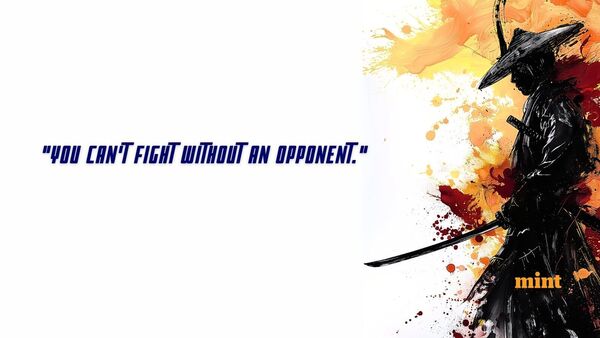
“You can’t fight without an opponent.”
Some truths hide in plain sight. This proverb is one of them. Aite no nai kenka wa dekinai. You can’t fight without an opponent. It sounds almost obvious at first. Read it again. Sit with it. The obvious surface dissolves quickly into something much deeper and more demanding.
This is not a proverb about combat. It is a proverb about perspective. It asks you to examine who you think your enemy is. More often than not, the answer will surprise you.
The proverb does not comfort. It confronts. It asks the person who is angry, frustrated, or stuck to pause and look around. Is there actually an opponent here? Or have you been fighting a battle that no one else is fighting with you?
What It Means
The draws attention to a simple but profound reality. A conflict requires two willing participants. One person alone cannot sustain a genuine fight. If your opponent refuses to engage, the fight cannot exist.
This matters because most of our daily conflicts are one-sided. We argue with people who have already moved on. We rehearse confrontations inside our own heads. We nurse grievances against people who are entirely unaware of our anger.
The proverb exposes this clearly. You are swinging at the air. The fight feels very real to you. But without an opponent, there is no fight. There is only suffering you are creating for yourself. That is an uncomfortable recognition. It is also deeply liberating.
A Brief History
Japanese culture has long placed high value on ma, the art of meaningful pause and considered response. Reacting impulsively was seen as a failure of character. Measured calm was the mark of a mature and disciplined person.
Samurai philosophy reinforced this strongly. The greatest swordsmen were not those who fought most often. They were those who understood when to withhold the sword entirely. Victory achieved without violence was considered superior.
Zen Buddhism contributed another layer. Zen teachers frequently pointed out to students the absurdity of fighting their own thoughts. Resistance creates friction. Acceptance dissolves it. The mind that stops fighting finds peace; the fighting mind never could.
Aite no nai kenka wa dekinai grew from this tradition of restraint and self-examination. It reminded ordinary people and warriors alike that conflict begins as a choice. Without that choice from both sides, it simply cannot continue.
What It Means For You
Think of the conflicts currently occupying your mind. List them honestly. Now ask yourself one question about each. Is there actually an opponent here, or am I fighting alone?
You may be holding anger toward someone who has forgotten the incident entirely. You may be competing with a colleague who does not know they are in a race. You may be arguing against a version of someone who no longer exists.
This does not ask you to be passive. It asks you to be precise. Real conflicts deserve real attention and resolution. Imagined conflicts deserve to be released.
The energy you spend fighting absent opponents is energy stolen from your actual life. Every moment of one-sided conflict is a moment of chosen suffering. The proverb hands you the key to stop it.
How to Apply It Today
Takeaway 1: Identify one ongoing frustration you carry about another person. Ask honestly whether that person is actively engaged in this conflict. If they are not, examine what it would take to simply set it down. You do not need their participation to end a fight. You only needed their participation to begin one.
Takeaway 2: The next time you feel provoked, pause before responding. Ask whether engaging will lead to a resolution or only to escalation. Not every provocation deserves a response. Choosing not to engage is not a weakness. It is the precise application of this proverb. Conflict requires two. You can always choose to be neither.
Takeaway 3: Apply this principle inward. Many people fight relentlessly against their own past decisions, limitations, and mistakes. That internal war also requires an opponent. When you stop treating yourself as one, the fighting stops too. Self-compassion is not self-indulgence. It is the refusal to be your own opponent indefinitely.
Why It Still Matters Today
Modern life is engineered to provoke. Social media rewards outrage. News cycles amplify division. surface content designed to make you feel attacked. The result is a population in a state of near-constant low-grade combat.
Most of those fights have no real opponent. They are performances of conflict without resolution. They produce heat without light and exhaustion without growth. The proverb cuts through all of it with quiet precision.
You cannot fight without an opponent. So before you engage, look carefully. Is someone actually there? Is this conflict real, mutual, and worth your energy? Those three questions, asked honestly, will spare you more suffering than almost any other habit you could build.
The people who live with the most peace are not those who never face conflict. They are those who have learned to distinguish real conflict from imagined ones. That distinction is the entire teaching of this proverb.
Another Japanese Proverb With a Related Lesson
“The reverse side also has a reverse side.”
Both proverbs ask you to look more carefully before you act. One reminds you that conflict needs two sides to exist. The other reminds you that every situation holds more complexity than your first view reveals.
Together, they build a philosophy of pause. See fully before you react. Confirm what is real before you fight it. Most of what we struggle against exists only because we have not yet looked carefully enough to see it clearly.