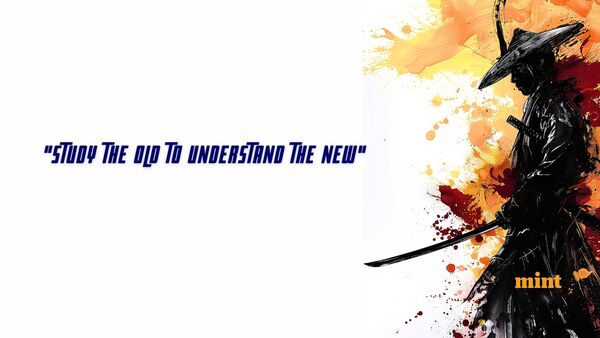
“Study the old to understand the new.”
This proverb comes from one of the oldest traditions in Japanese intellectual life. It appears in the Analects of Confucius, the ancient Chinese text that shaped Japanese scholarship for over a thousand years. Japan absorbed and refined this idea across centuries of learning. It became a guiding principle for scholars, craftsmen, warriors and artists alike. The Japanese did not merely borrow the idea; they made it their own.
The proverb’s Japanese title gives it additional weight. The verb tazuneru means to visit, to inquire, to seek out. You do not passively receive the old. You go to it. You seek it out deliberately. That active posture is built into the language itself.
What It Means
The proverb has four words in its core instruction. Study. Old. Understand. New. Each word earns its place.
Study is not casual. It implies sustained effort and deliberate attention. You do not glance at the old. You sit with it.
The old is not merely ancient dates and forgotten names. It is accumulated human experience. Wars fought, empires built, problems solved, and mistakes repeated. It is a pattern made visible through time.
Understanding is deeper than knowing. You can know a fact without understanding what it means. Understanding requires context, comparison and reflection. The asks for all three.
The new is not only the latest technology or idea. It is any situation you have not faced before. Any challenge. Any question. Any decision that feels unprecedented. The proverb argues that it probably is not unprecedented at all.
Together, the four words make a single claim. The past is a tool. Learn to use it.
Where It Comes From
The proverb traces directly to Confucius, who said: he who reviews the old and learns the new is fit to teach others. Japanese scholars encountered this idea during the Nara period, roughly the eighth century. The imperial court was actively importing Chinese knowledge, philosophy and governance structures. This proverb arrived with that wave and took root immediately.
It became particularly central during the Edo period, when deliberately closed itself to outside influence for over two centuries. Scholars had to work with existing knowledge rather than importing new ideas. The result was an extraordinary depth of engagement with classical texts. Japanese thinkers refined, annotated and reinterpreted accumulated wisdom until it became something new. The proverb described their entire method.
Another Perspective
There is a related Japanese idea: Shu-Ha-Ri. First, you follow the rules completely. Then you bend them deliberately. Then you transcend them. That three-stage framework assumes the same thing this proverb does. You cannot transcend what you have not first mastered. Departure requires a starting point.
How to Apply It
Before solving a current problem, ask whether someone has faced it before. They almost certainly have. Find out what they did. Find out what worked and what failed. Start there rather than from nothing.
Read history as a practical discipline, not a sentimental one. Ask what each period teaches about human behaviour under pressure.
When learning any new skill, seek out its oldest masters first. Fundamentals remain fundamentals for a reason. They survived because they worked.
Build the habit of looking backwards before looking forward. The past does not limit the future. It illuminates it.
Related Reading
Hagakure by Yamamoto Tsunetomo
The samurai code is built entirely on accumulated ancestral wisdom, applied to daily decisions.
The Art of War by Sun Tzu
The defining text of strategic thinking is still studied and applied seventeen centuries after it was written.
Zen and the Art of Motorcycle Maintenance by Robert M. Pirsig
A modern search for quality that circles back, again and again, to classical foundations.
Sapiens by
A sweeping account of human history that demonstrates precisely what studying the old reveals about understanding the new.