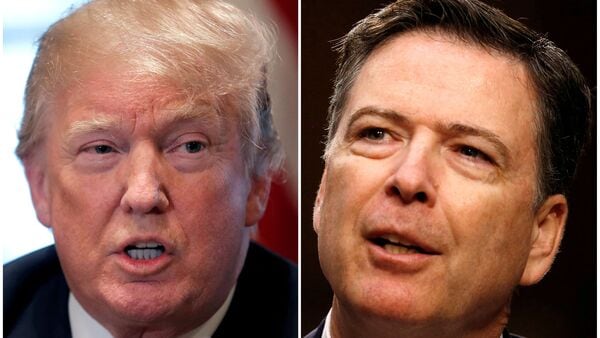
Former FBI Director James Comey was indicted on Tuesday (April 28) in connection with a social media post that authorities allege amounted to a threat against President Donald Trump. The development was reported by The Associated Press, citing a source familiar with the matter who spoke on condition of anonymity.
Details regarding the specific charges have not yet been publicly disclosed.
“86 47” controversy
The case centers on a photo Comey posted showing seashells arranged to read “86 47.” It is argued the message could be interpreted as a call to remove or harm Trump, who is serving as the 47th president.
Comey, however, denied any violent intent:
-“I didn’t realize some folks associate those numbers with violence.”
-“I oppose violence of any kind so I took the post down.”
“86” is slang commonly understood to mean “to throw out” or “to get rid of,” adding ambiguity to the interpretation, while “47” is understood to reference Trump’s position as the 47th president.
Secret Service investigation
Following the post, the United States Secret Service interviewed Comey in May after officials within the Trump administration suggested the message could be construed as advocating assassination.
Comey told investigators he encountered the shell arrangement during a beach walk and did not create it himself. He removed the post shortly afterward amid growing backlash.
Pattern of legal scrutiny
The indictment comes amid ongoing tensions between Trump and Comey dating back to 2017, when Trump dismissed Comey from his role as FBI Director during the investigation into Russian interference in the 2016 election. Since then, Comey has become a vocal critic of the former and current president.
This is not the first legal action taken against Comey by Trump-aligned officials. In September of the previous year, the Justice Department filed charges accusing him of misleading Congress regarding media leaks. However, that case was dismissed by a federal judge due to procedural issues surrounding the appointment of the prosecuting attorney.
Comey “denied any wrongdoing,” and the case was thrown out on procedural grounds.
Longstanding tensions with Trump
The relationship between Comey and Trump has been fraught for years. Comey, appointed FBI director by Barack Obama, remained in the role when Trump assumed office in 2017.
Tensions escalated early, particularly after Comey declined a request from Trump to pledge personal loyalty—an interaction Comey documented in a contemporaneous memo.
Trump dismissed Comey in May 2017 amid the FBI’s investigation into potential ties between Trump’s 2016 campaign and Russia.