Gadi Eisenkot’s Yashar party has emerged as the largest political force in , narrowly overtaking Prime Minister Benjamin Netanyahu’s , according to a KAN News poll published on Wednesday (August 19), The Jerusalem Post reported.
The poll, conducted by the Kantar Institute on August 18, puts Yashar at 24 seats, one ahead of Likud’s 23 in the 120-member Knesset. Naftali Bennett’s B’Yachad party ranked third with 14 seats.
’s current coalition is projected to win 52 seats, while opposition parties would secure 57 seats. Arab parties are projected to hold 11 seats. The broader political balance is projected to remain largely unchanged.
Likud primaries put Netanyahu’s influence under spotlight
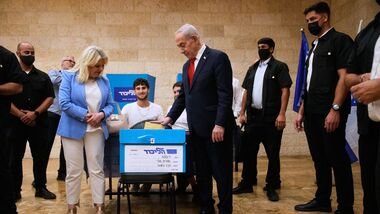
The poll comes days after Likud members voted in the party’s primaries to select candidates for the October 27 general election. Turnout reached 53%, about 10 percentage points higher than in the 2022 primaries, according to the party.
The results were closely watched as a test of Netanyahu’s influence over Likud. The top positions were largely secured by figures considered close to the prime minister.
Energy Minister Eli Cohen won the top spot on the Likud Knesset slate, followed by Knesset Speaker Amir Ohana, Justice Minister Yariv Levin, Transportation Minister Miri Regev and coalition chairman Ofir Katz.
Last month, the Likud Central Committee also approved a measure allowing Netanyahu to select eight of the first 30 candidates on the party list.
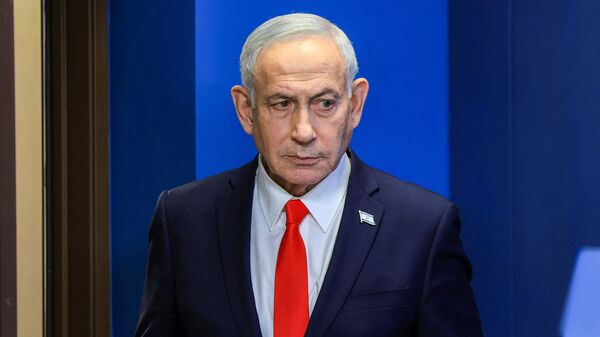
Netanyahu, 76, welcomed the election of several of his allies, as he prepares to fight for another term in office. He remains Israel’s longest-serving prime minister but enters the election facing a strong challenge from rival political forces.
Other parties
The Democrats, led by Yair Golan, were projected to win 10 seats. Itamar Ben-Gvir’s Otzma Yehudit and Avigdor Liberman’s Yisrael Beytenu were each projected to win nine.
United Torah Judaism was on eight seats, while Arye Deri’s Shas was projected to win seven.
Hadash-Ta’al was projected to retain six seats, while Mansour Abbas’s Ra’am would win five. Smotrich’s Religious Zionist Party also stood at five, one seat higher than in the previous poll.
The survey invited 2,327 people to participate, with 558 respondents aged 18 and above taking part. It was conducted online and included respondents from the Arab sector. The reported sampling error was ±4.2%.