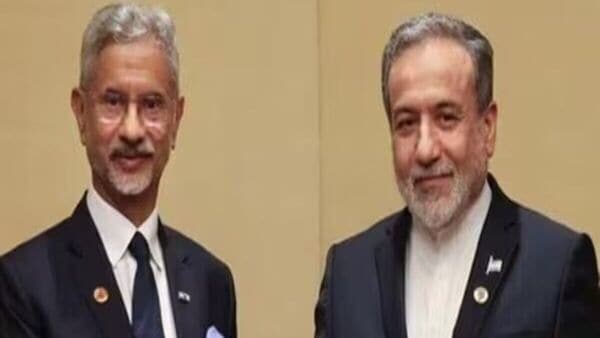
Islamic Republic News Agency (IRNA), Iran’s official state news agency, said Iranian Foreign Minister Seyed Abbas Araghchi and India’s External Affairs Minister S Jaishankar held a phone conversation to discuss the latest regional developments, including the ceasefire situation and bilateral ties.
In a post on X, formerly Twitter, IRNA said: “Foreign Minister @araghchi and his Indian counterpart @DrSJaishankar in a phone conversation discussed the latest developments related to the ceasefire, bilateral relations, and regional and international developments.”
The conversation comes amid continuing diplomatic activity in West Asia following heightened tensions involving Iran, the United States and Israel. Recent weeks have seen efforts continuing to stabilize the fragile ceasefire situation.
India maintains diplomatic outreach
India has maintained regular contact with Iranian leaders amid the ongoing crisis. in recent months as tensions in West Asia escalated. Previous conversations between the two leaders focused on regional security, bilateral cooperation and diplomatic efforts aimed at de-escalation.
India has repeatedly emphasized the need for dialogue, restraint and peaceful resolution of conflicts in the region, while also monitoring the impact of instability on energy security.
Iran has been actively engaging Pakistan, Oman and Russia as discussions continue around ceasefire arrangements and regional security issues.
Uncertainty over US-Iran peace talks
The development comes amid uncertainty surrounding a possible second round of peace talks between Washington and Tehran.
The first round of negotiations, held on April 11 and 12, reportedly failed to produce a breakthrough.
Araghchi travelled to Pakistan before and described his discussions there as “very productive,” including consultations with Pakistan Army Chief Asim Munir.
He also visited Oman, where he discussed security in the Strait of Hormuz with Sultan Haitham bin Tariq.
Uncertainty surrounds next round of US-Iran peace talks
Fresh uncertainty has emerged over the future of peace negotiations between the United States and Iran after the , even as diplomatic activity across the region continues to intensify.
The either side had hoped for, leaving the path forward unclear amid ongoing tensions linked to the wider conflict in the Gulf region.
Araghchi steps up regional diplomacy
– aimed at building support and discussing ceasefire efforts.
following a brief stop in Oman, where he met Sultan Haitham bin Tariq.
According to Iranian officials, discussions in Oman focused on security in the Strait of Hormuz and diplomatic initiatives aimed at ending the ongoing Iran-US conflict.
The Strait of Hormuz remains one of the world’s most strategically important waterways, handling a significant share of global oil shipments.
Trump halts Islamabad talks plan
After for Oman, with Iranian officials.
Trump argued that Washington currently “held all the cards” in negotiations with Tehran.
Despite suspending the Islamabad meeting plan, and said US and Iranian officials could still communicate directly by phone to pursue a peaceful resolution.
Ceasefire extended indefinitely
Last Tuesday, , just hours before the original two-week truce was due to expire.
According to US officials, the extension was intended to provide Tehran additional time to prepare what Washington described as a “unified proposal” aimed at ending the conflict.
The ceasefire extension temporarily eased fears of an immediate return to large-scale fighting in the Gulf region, though tensions remain high.
Conflict spread across Gulf region
The war began on February 28 when the United States and Israel jointly launched strikes against Iran.
Iranian authorities said the along with several senior military commanders.
Iran responded with retaliatory military action that expanded the conflict across parts of the Gulf region, raising international concerns over regional stability, energy security and global oil supplies.
Trump claims Iran in ‘state of collapse’
Meanwhile, .
“Iran has just informed us that they are in a ‘State of Collapse.’ They want us to ‘Open the Hormuz Strait,’ as soon as possible as they try to figure out their leadership situation,” Trump wrote on Truth Social.
The remarks came amid reports that .
However, US Secretary of State Marco Rubio in a Fox News interview signaled opposition to any agreement that excluded Iran’s nuclear program from negotiations.
White House reviewing fresh proposal
and his national security team.
“The proposal was being discussed,” Leavitt told reporters.
“I wouldn’t say they are considering it. I would just say that there was a discussion this morning that I don’t want to get ahead of.”
The remains one of the world’s most critical oil transit routes, with a significant share of global energy shipments passing through the narrow waterway.