Following the collapse of the first round of ceasefire negotiations with the United States in Islamabad, the faced severe security risks on its return to Tehran, according to a media report.
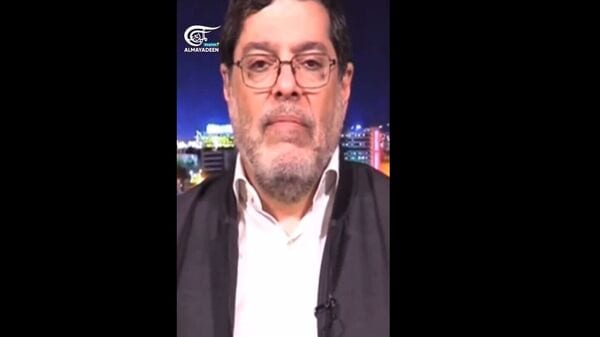
Political analyst Mohammad Marandi informed the Lebanese outlet Al-Mayadeen that Iran’s Foreign Minister Abbas Araghchi and Parliamentary Speaker Mohammad-Bagher Ghalibaf were forced to alter their travel plans mid-flight, eventually completing their journey via bus and train.
“On our way back, we did not fly to Tehran. It’s a very long story, but we all believed that there was a significant chance that they would down our plane, that they would shoot down our plane, that they would fire a missile at our plane,” Marandi said.
Marandi, a professor at Tehran University who travelled with the group, revealed that the delegation felt significantly endangered throughout the trip. He disclosed that they had received explicit warnings prior to arriving in Islamabad, suggesting their aircraft might be targeted. This necessitated extreme vigilance both during and after the diplomatic mission.
“We don’t trust the United States,” Marandi told Al-Mayadeen on Tuesday, “and we are also being very busy preparing ourselves for the next round of war.”
The analyst explained that for the return leg, the officials covertly boarded a different aircraft. During the flight to the capital, the plane made an abrupt diversion for a rapid landing in Mashhad. From there, the delegation utilized a combination of cars, buses, and trains to reach Tehran safely.
Marandi further said that the Iranian regime is bolstering its military capabilities “while we are at the negotiating table”.
US-Iran ceasefire may be extended
Mediators are nearing an extension of the ceasefire between the United States and Iran, aiming to revive negotiations and preserve a fragile truce set to expire next week, The Associated Press reported on Wednesday.
However, the stability of the week-old agreement remains under threat due to a US naval blockade on Iranian ports and subsequent retaliatory warnings from Tehran.
Despite these tensions, regional officials expressed optimism, suggesting that both nations have reached an “in principle agreement” to prolong the ceasefire to facilitate further diplomatic efforts. Conversely, a senior U.S. official tempered these reports, stating that Washington has not yet formally committed to an extension while “engagement” with Iranian representatives remains ongoing.
Adding to the friction, the commander of Iran’s joint military command issued a stark ultimatum. He warned that Iran would move to entirely halt imports and exports across the Persian Gulf, the Red Sea, and the Sea of Oman if the U.S. military does not immediately lift its blockade.
“Iran will act with strength to defend its national sovereignty and its interests,” Ali Abdollahi said.