Iran’s Islamic Revolutionary Guard Corps claimed a new series of strikes targeting U.S. military facilities across the Middle East on Friday, though there was no immediate confirmation from U.S. officials on any actual impacts.
The IRGC claimed it “carried out a surprise attack” on a U.S. special forces base in al-Tanf, Syria, destroying helicopters and causing casualties, and that it struck an American base in Kuwait with surface-to-surface missiles, causing a “massive fire” that “engulfed the base.”
The powerful paramilitary force also claimed to have destroyed U.S. radar facilities on Oman’s Salamah Rocks, in the Strait of Hormuz, as well as targeting U.S. logistical support centers in Kuwait with drones and a U.S. army base in Bahrain.
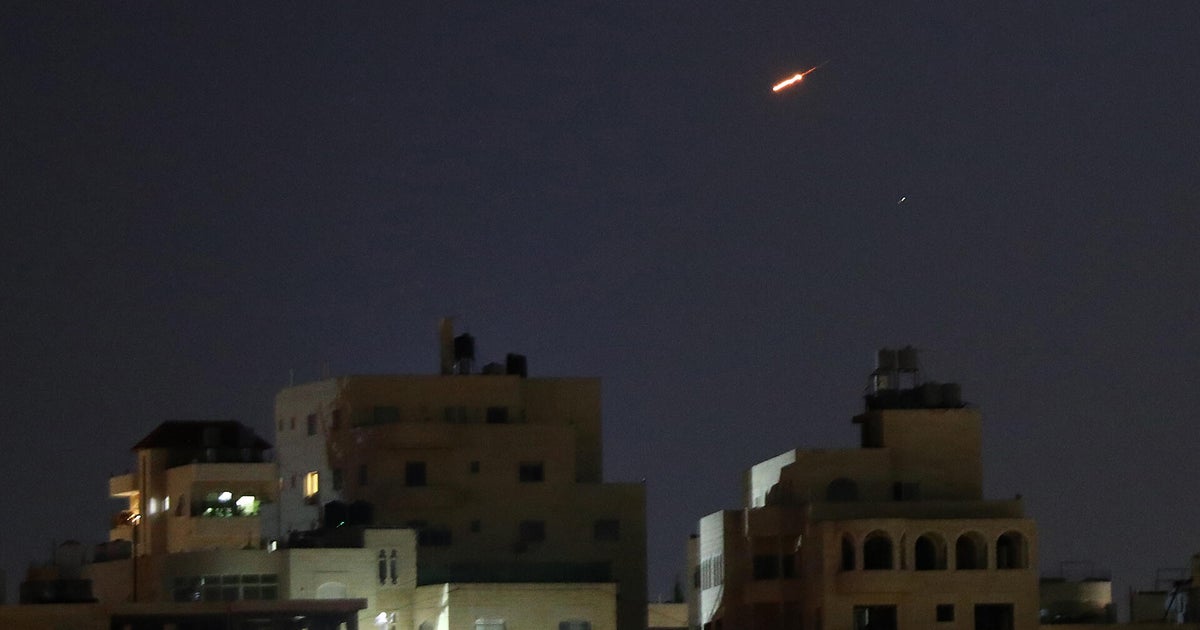
In another statement, the IRGC said it had destroyed several U.S. “refuelling aircraft and fighter jets” in Jordan and caused “serious damage to many more.”
The U.S. military did not immediately comment on the IRGC’s latest claims, which are often exaggerated.
Kuwait’s Ministry of Electricity, Water and Renewable Energy said on Friday that Iranian strikes had hit power and water desalination stations.
In Qatar, a child was wounded by shrapnel after an Iranian weapon was intercepted, the country’s interior ministry said Friday.
Since the breakdown of the U.S.-Iran memorandum of understanding, ship crews around the Strait of Hormuz are unwilling to make the risky trip, Dimitris Maniatis, CEO of the Greek maritime risk management company Marisks, said Thursday.
“Vessels that were trapped inside the Persian Gulf for a very long time, belonging to owners that were extremely risk averse, managed to exit, and everybody was very joyful about that,” he said during a briefing for the Lloyd’s List intelligence group.
“With the recent events, everything has changed. We’ve gone back to the worst case scenario. Nobody is willing to move.”
He pointed to the collapse in transits through the strait itself, as well as more deadly attacks on commercial vessels since the ceasefire ended.
“All this resonates with crews, and right now they’re just not very happy to go through, no matter what is promised to them,” Maniatis said. “It’s not about money anymore, it’s not about any other higher calling, it’s purely about the fear that is governing the decision-making right now.”
The concerns have pushed oil prices to their highest level in a month, with a barrel of Brent crude, the international standard, up about 1% Thursday to trade around $85 a barrel. U.S. benchmark crude oil was up a similar amount, trading just under $80 per barrel.
The U.S. completed another round of strikes on Iran early Friday morning local time, U.S. Central Command said in a statement.
This marked the sixth straight night of U.S. strikes on Iran since a fragile ceasefire between the two countries fell apart last week.
Friday’s strikes were conducted by fighter jets, aerial drones and warships that targeted “dozens of Iranian military targets such as coastal surveillance and air defense sites, military logistics infrastructure, and maritime capabilities,” CENTCOM said.
More than 50,000 U.S. military personnel are currently deployed across the Middle East, CENTCOM added.
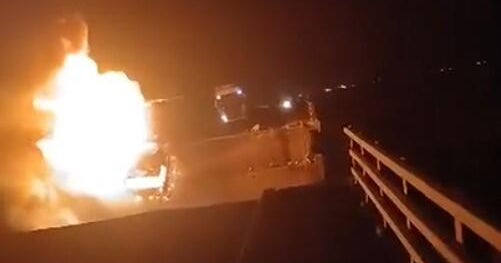
Deadly U.S. strikes early Friday morning local time hit an airport, a railway station and two bridges in Iran, killing three people, Iranian state media reported.
A U.S. strike on two bridges in the Hormozgan province killed three people and wounded nine, state TV wrote on Telegram, updating an earlier toll.
“Three explosions were heard around the airport and at least one American enemy projectile hit Iranshahr airport,” in the southeast, state television agency IRIB said on Telegram.
“A few minutes ago, the Bandar Abbas Railway Junction Station was targeted by the American enemy. According to this report, two Iranians were injured in the attack,” the Mehr news agency said on Telegram.
Another U.S. attack wounded one person in the western port city of Bushehr, Iranian state media posted on Telegram.
AFP
U.S. Marines boarded a commercial vessel in the Gulf of Oman Thursday, U.S. Central Command reported.
CENTCOM said on X that it boarded the M/T Wen Yao “to ensure full compliance” with the U.S. naval blockade of Iranian ports that President Trump reinstituted earlier this week as fighting resumed between the two countries.
According to CENTCOM, since the blockade began on Tuesday, the U.S. has redirected three commercial vessels that tried to dodge it. It has also disabled one oil tanker, the Curacao-flagged M/T Belma.
“The Strait of Hormuz and the surrounding waters remain free and open, except for vessels attempting to violate America’s steel wall blockade,” CENTCOM said.
White House press secretary Karoline Leavitt would not answer whether President Trump believes the talks with Iran are at a standstill, or even dead, though she did say the administration is still holding peace talks.
“Iran very much continues to talk to the United States of America and express that they want to make a deal with us because they are suffering devastating blows on behalf of our United States military.”
Leavitt emphasized the strikes that have occurred every day this week are a direct result of Iran breaking the agreement signed in mid-June.
“The reason for the recent strikes over the course of the last several days is because Iran violated the memorandum of understanding that we struck with them,” Leavitt said. “Specifically, in the memorandum of understanding that they signed, they were not to fire on commercial vessels moving through the Strait of Hormuz and unfortunately they have made the tragic decision, for them, to do that.”
“President Trump is not going to sit by and allow these acts of terrorism to take place in the strait without ensuring Iran pays consequences for that. And that’s what we are witnessing now.”