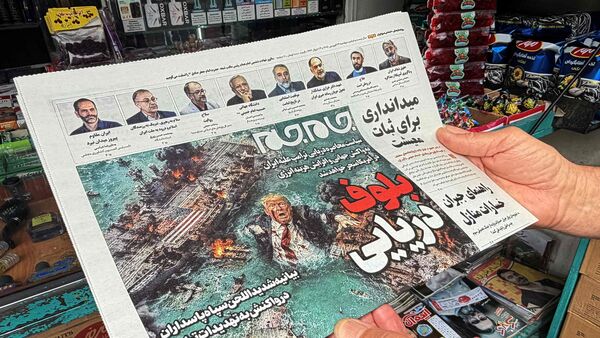
“You don’t get what you deserve, you get what you negotiate,” as Chester L. Karrass said, highlights that outcomes are shaped more by negotiation than by what one feels entitled to. After negotiations between the, US military forces moved to block all ships trying to enter or leave Iranian ports on Monday, escalating tensions and creating a dangerous new standoff. With sufficient warships, a blockade could deter many tankers from attempting to transport oil to and from . But US forces would also need to be ready to board and seize hostile ships that try to break the blockade.
Asian stocks were trading higher, tracking oil, which fell on Tuesday as expectations rose over a possible second round of talks between the U.S. and Iran. Benchmark U.S. crude fell 1.7% early Tuesday to $97.37 a barrel. the international standard, was down 0.9% to $98.49 per barrel.
In a conversation with Mint, Ausaf Sayeed, former Secretary in the Ministry of External Affairs and ex-ambassador of India to Saudi Arabia and Yemen, shared his views on the Iran–US war, noting that the conflict has created a complex and evolving geopolitical situation.
(Edited excerpts)
How would you define effective negotiation, and what, in your assessment, were the core reasons for the collapse of peace talks in Islamabad?
Effective negotiation is not merely the act of reaching an agreement—it is a structured process through which adversarial parties progressively reduce mutual distrust, exchange credible positions, and build conditions in which a durable settlement becomes politically possible for both sides.
Measured against this standard, the US-Iran peace talks in Islamabad cannot be dismissed as a “total failure”—an interpretation that is both historically inaccurate and analytically misleading. The language of both delegations as they departed Islamabad made their intent unmistakable: to keep the door to negotiations open rather than allow the process to be terminated. That is the grammar of a suspended negotiation, not a concluded one—and the distinction matters. This process has begun and is unlikely to end here.
Could India have been a better mediator? If yes, how?
In theory, India possesses several attributes that could qualify it as a credible mediator in international conflicts. Its doctrine of strategic autonomy enables it to maintain pragmatic, interest-based relations with a wide array of actors — including major powers and regional adversaries — without being perceived as aligned with any single bloc or ideological camp.
In practice, however, prevailing conditions foreclosed that possibility. A mediator’s core asset is the ability to exert influence with both parties simultaneously — in this case, Washington and Tehran. By 2025, the broader trajectory of India–US relations under the second Trump administration had reached a low point, constrained by punitive tariffs linked to Indian purchases of Russian oil, US outreach to Pakistan, and transactional pressures, all of which limited India’s leverage over Washington. India’s high-profile engagement with Tel Aviv immediately before the US-Israeli attacks on Iran had foreclosed its perceived neutrality in Iranian eyes.
Meanwhile, India’s Tehran channel had been functionally severed since the 2019 sanctions-era halt to oil imports, and very limited progress on the Chabahar project offered little basis for renewed trust. India thus lacked meaningful influence over either principal — the precise opposite of what effective mediation requires.
The deeper issue is historical. India’s mediation credentials are almost entirely confined to the Nehruvian era and the framework of Non-Alignment: the Korean War armistice, the Suez Crisis, and the Indochina conflict.
Since then, India has not replicated comparable standalone or leading multilateral mediation initiatives on the global stage.
Assuming the US-Iran negotiations remain stalled and the current ceasefire expires, what are the most likely short-term and long-term scenarios for regional security, nuclear proliferation risks, and potential escalation in the Middle East?
The consequences of the breakdown of the Islamabad talks have not remained theoretical. Even as negotiations unravelled, the United States moved to impose a naval blockade targeting Iranian ports at the Strait of Hormuz.
The broader structural consequence is the accelerated erosion of American primacy in the region. Gulf states that, for the first time in history, absorbed Iranian strikes on their own soil are already diversifying their security dependencies towards China and intra-regional arrangements — a reorientation that a destabilising blockade will only accelerate.
From India’s standpoint, how might the failure of these US-Iran talks affect India’s energy security, given our historical reliance on Iranian oil, and our strategic infrastructure projects such as the Chabahar Port?
India sits at the uncomfortable intersection of three converging pressures: rising global oil prices driven by the ongoing conflict, a severed Iranian oil supply chain, and a investment whose future is hostage to Washington’s sanctions architecture. Higher crude prices, costlier cooking gas, and remittance disruptions affecting millions of Indians working across the Gulf translate directly into inflation, fiscal stress, and political pressure at home. These are not abstract strategic concerns — they carry concrete domestic consequences.
The Chabahar situation is particularly precarious.
India signed a 10-year operational contract in 2024, committing $370 million to the project, with $120 million already deployed — only to find that the US sanctions waiver protecting that investment expired in April 2026. India is now seeking an extension while signalling retreat: the Union Budget 2026 omitted entirely for the first time in over a decade, a telling indicator of how far American pressure has unsettled India’s strategic calculus. The port’s value as India’s only viable connectivity corridor to Afghanistan and Central Asia, bypassing Pakistan, far exceeds its commercial metrics — its loss would be a strategic setback of the first order. The same regional instability also clouds the India-Middle East-Europe Economic Corridor (IMEC), leaving both of India’s principal connectivity ambitions in question.
India’s energy response has been to diversify toward Saudi, Emirati, Russian, and American suppliers — a pragmatic but costly hedge. Russian oil, India’s largest import source post-2022, now faces additional pressure through US secondary sanctions, squeezing the very diversification strategy India relied upon. The honest assessment is that India has no cost-free alternative to Iran’s combination of proximity, favourable pricing, and payment flexibility — and every substitute comes with its own geopolitical costs.
In an emerging multipolar world, how should India calibrate its foreign policy to balance relations with the United States, Iran, and other key players following this diplomatic setback, while safeguarding its strategic autonomy and interests in the Gulf and Indo-Pacific?
The central challenge for Indian foreign policy in the aftermath of the Islamabad failure is to translate its well-established tradition of strategic autonomy into principled, purposive positioning that advances Indian interests in a rapidly changing world. Strategic autonomy remains a sound foundational principle — but a maturing multipolar order will increasingly reward nations that complement it with durable institutional relationships and functional leverage across multiple theatres.
India’s most urgent foreign policy imperative is to negotiate a long-term, institutionalised sanctions exemption for Chabahar with Washington — not to roll over short-term waivers that subordinate a major strategic project to the rhythms of American domestic politics.
This requires invoking India’s role as a frontline Indo-Pacific partner in terms that Washington understands: Chabahar as a counterweight to Chinese influence in Central Asia and as a stabilising presence in post-conflict Iran. Simultaneously, India must invest in restoring its Tehran channel through quiet economic engagement and multilateral frameworks such as BRICS, which provide a structured space for bilateral normalisation.
The opportunity extends beyond Iran. The security vacuum created by the US-Iran conflict has opened new space in the Gulf, prompting GCC states to actively restructure their external partnerships. India — with its vast labour diaspora, growing defence-industrial capacity, and non-threatening strategic profile — is well positioned to deepen those bilateral ties on its own terms rather than as an appendage of Washington’s regional architecture. This does not require India to become anti-American; it requires India to be genuinely multi-directional. That distinction — between multi-alignment and mere hedging — lies in institutional depth, and that is precisely where India must now invest. Strategic autonomy, to remain meaningful, must rest on relationships capable of bearing weight, not merely on the absence of commitments.
What does the inability of the United States to secure a deal with Iran after intensive direct talks reveal about American negotiating leverage and influence in today’s multipolar global order, and what lessons does this hold for powers like India?
The collapse of the Islamabad talks — intense, direct negotiations led by the US Vice President — offers the most revealing stress test of American diplomatic power in a generation.
The core lesson is uncomfortable but inescapable: military preponderance, however overwhelming, cannot substitute for diplomatic strategy. Washington’s approach in Islamabad was not an aberration; it was the logical expression of a coercive maximalism that has become increasingly reflexive in American foreign policy. Islamabad demonstrated, with uncommon clarity, the limits of that reflex in a world no longer organised around a single dominant power.
For India, these lessons are not abstract — they are immediately actionable. The era of transactional dealmaking and coercive bilateralism is yielding diminishing returns across the board, including in India’s own region and neighbourhood. Soft power, economic interdependence, and sustained institutional presence are proving to be more durable instruments of influence than military leverage or pressure-based diplomacy.
Most consequentially, the willingness to build trusted neutrality — to be seen as a credible, principled actor by multiple parties simultaneously — is itself a form of strategic capital, finite and exhaustible, which must be cultivated rather than assumed.
The host nation of these talks accrued that capital simply by opening its doors; India, with vastly greater structural assets, has allowed its comparable stock to depreciate through years of selective alignment. The multipolar order now taking shape will reward those who have built relationships deep enough to bear weight when called upon. For India, the question is no longer whether strategic autonomy is the right principle — it is whether the institutional architecture to give it real meaning is being built with sufficient urgency. The answer, as yet, is not clearly yes.