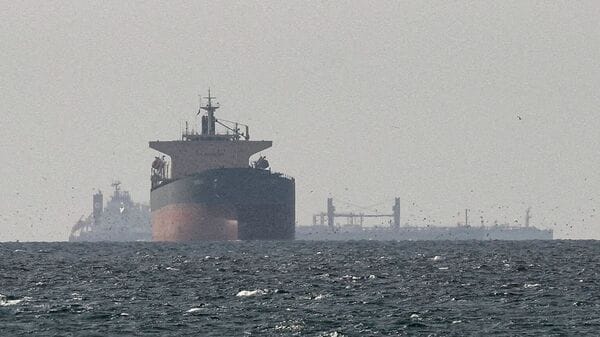
Iran has introduced new regulations requiring ships to obtain transit authorisation and pay tolls to pass through the Strait of Hormuz, according to a shipping journal, as Tehran and Washington remain at odds over efforts to end the war in the Middle East and restore access to the strategic waterway.
The move marks a formal assertion of Iranian control over the narrow chokepoint, through which about one-fifth of the world’s oil is normally transported, even as thecontinues to seek a deal to reopen the route to unrestricted shipping.
established a new agency last week to regulate vessel traffic through the and collect transit fees, according to Lloyd’s List, a shipping industry publication. It said Iran has set up the Persian Gulf Strait Authority (PGSA), which has “already introduced a new framework requiring ships to obtain transit authorisation and pay tolls before sailing.”
How it works?
While the journal referred to a form titled “Vessel Information Declaration” issued by authority, it said that ships are required to “submit detailed records of ownership, insurance, crew information, and their intended transit route”.
The form reportedly includes more than 40 questions, requiring vessels to provide information such as their name, identification number, any former names, ports of origin and destination, the nationalities of their registered owners, operators and crew, and details of the cargo they are carrying.
How much is the toll?
Iran has not publicly announced an official tariff structure for vessels transiting the Strait of Hormuz. However, according to Lloyd’s List, some ship operators have already paid fees amounting to millions of dollars to secure transit approval, with at least one reported payment totalling about $2 million.
Which countries have to pay the toll?
There is no official list of countries that are required to pay the toll. However, Iran has previously said it would bar vessels linked to the United States or Israel from transiting the Strait of Hormuz, while allowing ships from countries it considers “non-hostile” to pass only with prior coordination and approval from Iranian authorities. India and Pakistan are among the countries that have held talks with Tehran to secure safe passage for their flagged vessels through the strategic waterway.
Iran’s Revolutionary Guards-affiliated Press TV reported on Tuesday, May 5, that under the new transit regime, “all vessels intending to transit the Strait will receive an email from the official address info@PGSA.ir outlining the rules and regulations for passage.”
Can the toll be challenged?
There is no dedicated mechanism to enforce the United Nations Convention on the Law of the Sea (UNCLOS). While the treaty established the International Tribunal for the Law of the Sea and disputes can also be heard by the International Court of Justice, both bodies can issue rulings but lack the power to enforce them directly, as per Reuters.
Countries and companies, however, have several options to respond to any transit fees imposed by Iran. A single nation or a coalition of states could seek to uphold the treaty through coordinated action. The United Nations Security Council could also reportedly adopt a resolution opposing such tolls.
Businesses may choose to reroute cargoes to avoid the Strait of Hormuz, a step some have already begun taking. Governments could also broaden sanctions to target financial transactions that are seen as benefiting Iran, including by penalizing companies that agree to pay the fees.