The Trump administration used an unconventional backchannel to contact Iran’s powerful Islamic Revolutionary Guard Corps (IRGC) directly after US negotiators became uncertain whether their Iranian counterparts had the authority to reach a deal to end the war, Axios reported.
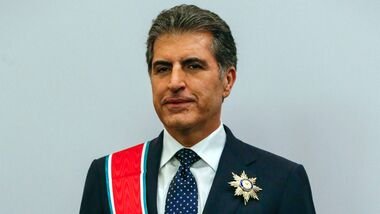
According to sources cited by Axios, US officials turned to Nechirvan Barzani, president of Iraq’s Kurdistan region, in mid-May because of his relationships with both Washington and senior Iranian officials.
The episode highlights the difficulty Washington has faced in negotiating with Iran, where the US has struggled to determine who ultimately controls key decisions on national security and foreign policy, the report said. The US and Iran eventually reached a memorandum of understanding, but the agreement later collapsed.
Why US contacted IRGC directly
After an April 8 ceasefire and a subsequent summit in Islamabad, Washington and Tehran began negotiations aimed at ending the war. By early May, White House officials believed they were close to an agreement, but Iran delayed its response for more than 10 days.
US negotiators began suspecting that Iranian negotiators, Parliament Speaker Mohammad Bagher Ghalibaf and Foreign Minister Abbas Araghchi, were being overruled by the IRGC and lacked the authority to finalise an agreement, the report mentioned further.
Around May 10, then-US Director of National Intelligence Tulsi Gabbard contacted Barzani and asked him to help establish communication with IRGC commander Gen Ahmad Vahidi.
Barzani was considered a suitable intermediary because he lived in Iran during the Iran-Iraq war, studied at the University of Tehran, speaks Farsi and maintains relationships with senior Iranian officials, including IRGC figures.
“Nechirvan Barzani is a pragmatic problem solver,” Brett McGurk, who has served as a Middle East adviser to four US presidents, told Axios. “He’s respected across the region.”
IRGC says it backs negotiations
Barzani subsequently contacted his IRGC connections and requested a direct conversation with Vahidi.
On May 14, an IRGC official arrived at Barzani’s office in Erbil carrying an encrypted phone for a secure call, according to the report.
Barzani asked Vahidi whether he supported the Iranian negotiating team. Vahidi replied that he did and said the IRGC preferred to resolve the crisis through negotiations, according to a source cited by Axios.
Barzani then briefed Gabbard, who passed the information to the White House.
The Trump administration subsequently proposed that Barzani host secret talks between senior US and Iranian negotiators in Erbil. Iran did not immediately reject the proposal but expressed concerns about the security of its officials, fearing Israeli intelligence could target them in Iraqi Kurdistan.
The proposed Erbil meeting ultimately did not take place.
Backchannel talks remain stalled
Pakistan and Qatar have continued to exchange messages between Washington and Tehran, but regional sources cited by Axios said there has been no significant progress.
Some sources also believe Pakistani mediators have presented a more optimistic picture of the talks in an attempt to create momentum and break the stalemate.
Barzani has recently sent messages to the White House offering to help restart US-Iran negotiations, according to a source cited by Axios.
However, McGurk said the key obstacle was not the choice of mediator but Iran’s position on the Strait of Hormuz.
“It’s Iran’s policy on the Strait,” McGurk said, “and that’s unlikely to change anytime soon”.