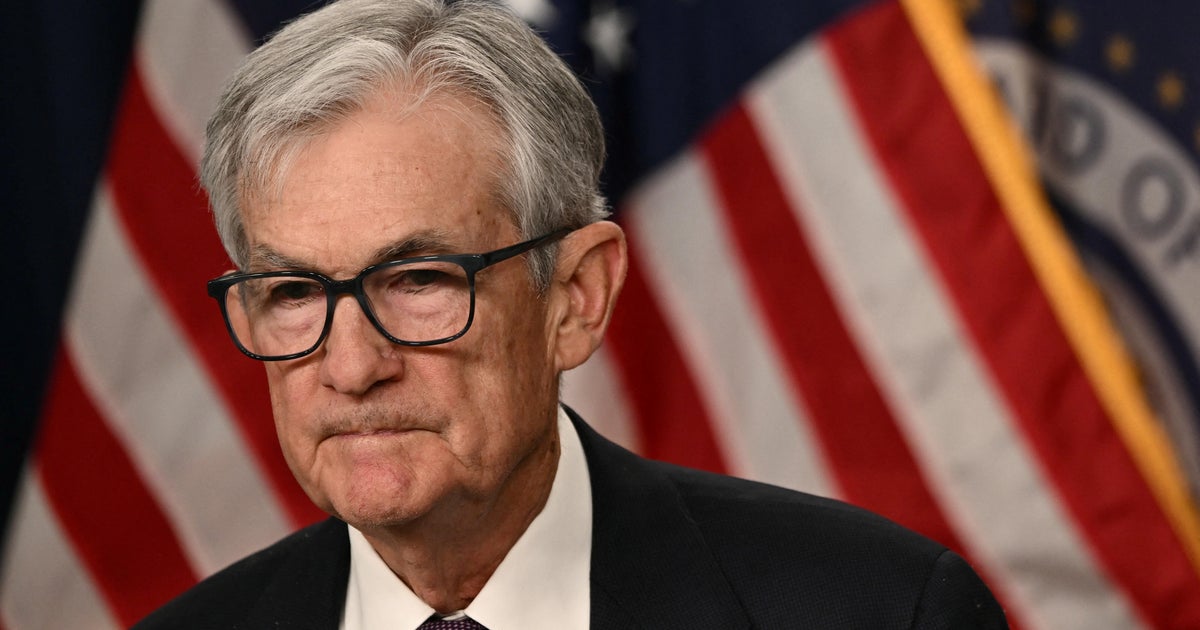
After steering the Federal Reserve through a series of major economic shocks, from the pandemic to the highest inflation in 40 years, Jerome Powell will leave a legacy defined by managing crisis and an unwavering defense of the central bank’s historical independence.
As Powell steps down on Friday after eight years as Fed chair, more than a dozen economists interviewed by CBS News credited his measured, pragmatic leadership for helping guide the economy through a turbulent period.
Powell’s tenure may be best remembered for his commitment to the Fed’s independence as he faced legal threats and intense pressure from President Trump to lower interest rates.
“His enduring legacy will be that he protected the Fed’s independence at a time of unprecedented challenges,” said David Wessel, senior fellow in economic studies at the nonpartisan Brookings Institution and the author of “In Fed We Trust: Ben Bernanke’s War on the Great Panic.”
Powell’s leadership assured “the American people that there was an adult of integrity in charge of the world’s most powerful economic institution,” Wessel added.
Under Powell’s leadership, the Fed performed “an admirable job of managing monetary policy through a tumultuous period, more or less achieving its dual mandate,” Moody’s Analytics chief economist Mark Zandi said.
But, he added, “Powell’s most significant achievement has come at the end of his tenure as chair, in his yeoman efforts to maintain the Fed’s independence.”
Powell will hand the chairmanship to Mr. Trump’s hand-picked successor, former Fed official Kevin Warsh. In an unusual step for a former Fed chair, Powell will remain as a Federal Reserve governor. His reason for staying on, Powell said in an April 29 press conference, is that the Fed remains “at risk” from legal challenges by the Trump administration. “The institution is being battered over these things,” he said.
When Mr. Trump nominated Powell to succeed Janet Yellen as Fed chair in February 2018, the president praised the former U.S. Treasury undersecretary as having “the wisdom and leadership to guide our economy.”
But Mr. Trump soon soured on Powell’s leadership after the Fed began hiking its benchmark interest rate in 2018 to prevent the economy from overheating. That tonal shift foreshadowed the president’s sharper attacks on Powell during his second term, when Mr. Trump would repeatedly denigrate the Fed official, calling him a “numbskull” and a “complete moron,” among other insults.
The 2020 pandemic would overshadow those concerns, as the U.S. plunged into a brief — but historically steep — recession during which unemployment soared to almost 15%. In March of that year, Powell oversaw two emergency meetings of the Federal Open Market Committee (FOMC), which cut the benchmark rate to close to zero, helping stabilize the labor market during the crisis.
“Powell kept the economy resilient throughout the pandemic and, in combination with robust fiscal policy through COVID-era stimulus legislation, supported workers when they needed it most,” said Liz Pancotti, managing director of policy and advocacy at Groundworks, a progressive think tank.
The initial economic hit from the pandemic mutated into another critical challenge for Powell’s leadership — the fiercest inflation since the early 1980s. The surge in consumer prices would go on to wreak havoc on millions of Americans, change the political landscape and eventually mark what multiple economists described as Powell’s biggest mistake as Fed chair.
As prices were lifting off in 2021, Powell initially described the bout of inflation as “transitory,” viewing it as the result of temporary factors, such as snarled global supply chains, rather than deeper structural forces that typically drive price shocks, such as labor shortages or low borrowing rates.
Reluctant to tighten monetary policy and curb economic growth, Fed officials held off on raising interest rates until March 2022, when the Consumer Price Index had already soared to an annual rate of 8.5%.
That delay would prove a missed — and costly — opportunity for Powell, economists told CBS News.
“His record on inflation is very mixed, given that we’ve been overshooting the target for the last several consecutive years,” said Wall Street analyst Adam Crisafulli, head of investment research firm Vital Knowledge. “A series of macro shocks beyond the control of the Fed played a big role in driving inflation higher — COVID, COVID-era fiscal policy — Ukraine/Iran wars, tariffs — but history doesn’t tend to focus much on such nuance.
Powell’s hesitation in pushing for higher rates reflects the Fed’s emphasis on the employment side of its dual mandate, said Tim Duy, chief economist at SGH Macro Advisors. The mandate requires the central bank to balance stable prices with maximum employment.
Over the past five years, however, the Fed has struggled to achieve both goals simultaneously, Duy said.
“Inflation has remained above target for more than five years, while unemployment has stayed low for most of that period,” he said.
With inflation in 2022 at a 40-year high and the labor market still suffering, economists grew increasingly concerned that the U.S. would tumble into a recession.
But Powell and other Fed officials engineered a so-called “soft landing,” in which the central bank raised interest rates high enough to tame inflation without causing a spike in unemployment. Given the Fed’s history of inadvertently triggering a recession by boosting borrowing costs too quickly, it was a significant accomplishment, economists said.
Rather than facing a painful slump, the economy continued to grow, the jobless rate declined to a 50-year low and inflation ebbed.
“Navigating the COVID-driven inflation shock without triggering a recession and maintaining — if not enhancing — the Fed’s inflation-fighting credibility is, in my view, Powell’s greatest success,” said Michael Luzzetti, chief U.S. economist at Deutsche Bank.
Despite the soft landing, U.S. inflation has yet to return to the Fed’s annual 2% target — a goal that Powell in his final press conference emphasized remains a central focus.
Powell, who was reappointed as Fed chair by President Joe Biden in 2022, faced more supply shocks during President Trump’s second term. The Trump administration’s wide-ranging tariffs raised concerns about their potential impact on inflation and broader economic growth.
Then the Iran war caused oil prices to soar, leading to the highest inflation rate in almost three years. The Consumer Price Index in April reached an annual rate of 3.8%, the highest since May 2023.
“Powell’s leadership of the FOMC will likely be remembered as pragmatic, disciplined and unusually adaptive during one of the most volatile macroeconomic periods in decades,” said Greg Daco, chief economist of EY-Parthenon. “That flexibility ultimately helped the Fed navigate extraordinary uncertainty while preserving its credibility and reinforcing the importance of institutional independence.
While dealing with these macroeconomic challenges, Powell has also contended with unprecedented attacks on the Fed’s independence from the Trump administration. Mr. Trump has called Powell a “lousy” Fed chair, criticized him for failing to cut interest rates and launched a series of legal attacks.
In January, the Department of Justice launched a criminal investigation into Powell over the Federal Reserve’s building renovations. Powell called the probe a pretext to pressure the Fed to lower interest rates, in accordance with Mr. Trump’s wishes.
While the Justice Department has since dropped the probe, Powell said last month that he would remain a Fed governor. In that role, he will serve as one of 12 voting members of the FOMC. And given his standing as a former Fed chair, Powell is likely to remain an influential voice on monetary policy issues, economists told CBS News.
“Powell’s ultimate story isn’t yet known,” Crisafulli said. “If he preserves monetary independence, that will be the opening line of his obituary — not the, at best, mixed track record of inflation during his tenure.”