Washington — The House on Tuesday passed its version of an aviation safety bill, months after it rejected separate legislation that cleared the Senate with unanimous support and angered families of the victims of a deadly midair crash near Ronald Reagan Washington National Airport.
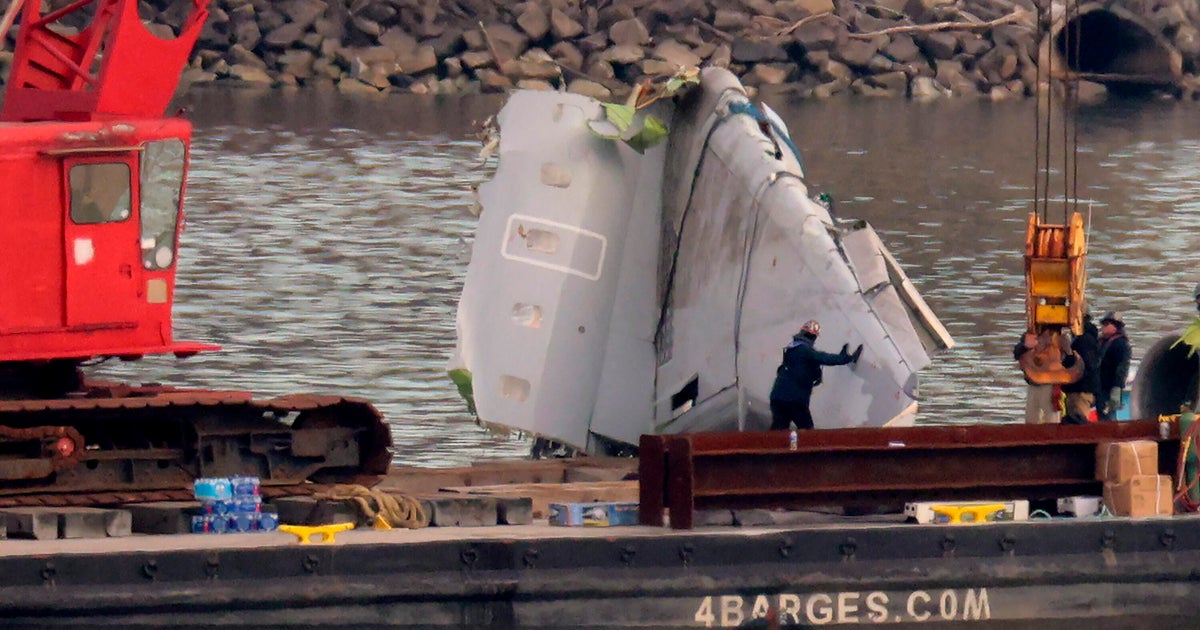
In a 396 to 10 vote, the House approved the ALERT Act, which came in response to the January 2025 collision between an American Airlines passenger jet and an Army Black Hawk that killed all 67 people aboard both aircraft.
The ALERT Act would require all aircraft, including military planes, that fly near busy airports to install safety instruments that can receive data about the locations of other aircraft in the vicinity. Most planes already have technology that broadcasts their locations, called ADS-B Out, but are not equipped with collision-avoidance technology referred to as ADS-B In.
If American Airlines 5342 was equipped with ADS-B In, it could have prevented the fatal accident, according to the National Transportation Safety Board and victims’ families. The bipartisan bill would also require military aircraft to install collision-prevention technologies by 2031, with exceptions for fighters, bombers, drones and other special mission aircraft.
House GOP leaders fast-tracked the bill, which required support from two-thirds of members for passage. The Senate version, known as the ROTOR Act, failed by one vote in February after the Pentagon reversed its support for the legislation.
The Pentagon originally endorsed the ROTOR Act in December after the Senate passed the legislation. But just days before the House took it up, the department said its enactment “would create significant unresolved budgetary burdens and operational security risks affecting national defense activities.”
The House bill also addresses helicopter route safety and separation requirements, which the NTSB determined to be the probable cause of the 2025 collision. The legislation also seeks to improve air traffic control training and processes.
In February, the NTSB said the ALERT Act fell short of addressing its 50 recommendations after the crash, including equipping all aircraft with the technology to receive more precise information about the locations of other aircraft. House lawmakers amended the bill, which the NTSB said would require the Department of Transportation, Department of Defense and FAA “to take actions that, when completed, would address our recommendations.”
But victims’ families said in a statement Tuesday that the ALERT Act still does not go far enough in addressing issues that caused the crash.
“The collision prevention technologies ALERT relies upon are not market ready and could take years to become widely available,” they said. “Without installation-ready technology, broad waiver requests from industry will follow, and Congress will face immediate pressure to delay compliance rather than enforce it.”
The leaders of the Senate Transportation Committee — Sens. Ted Cruz, a Texas Republican, and Maria Cantwell, a Washington Democrat — released a bipartisan statement in March saying the ALERT Act would fail to prevent deadly midair collisions by not having a clear requirement for the implementation of the ADS-B technology.
Cruz argued Tuesday that the ROTOR Act is still the better option and called for the “significant issue” to be addressed.
“Congress should not advance a bill that neither improves aviation safety nor closes the loopholes that have allowed operators, including the military, to fly blind in congested airspace,” he said.