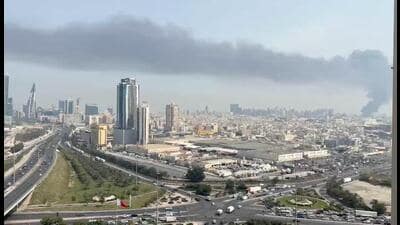
A recent study by IIT Bombay shows that heatwaves over the Indo-Gangetic Plains are primarily driven by local land and atmospheric factors, rather than by hot air travelling from elsewhere. Another study in Springer Nature Research highlights that local weather conditions — such as soil moisture, cloud cover, and humidity — play a greater role in accelerating heatwave intensity and duration than previously understood. This means local land-atmosphere interactions could dominate more than regional, large-scale climate changes in creating extreme heat events. Morbid as their results may be, both these studies remind us that mitigating emissions can seem a lofty global goal for dealing with the climate crisis. Yet, simple interventions at a local level can help buffer citizens at least in the short and intermediate terms against extreme weather events, particularly intense heat waves.
Here’s the good news: India is one of the few countries that has heat action plans ready for more than 100 cities with local and hyper-local interventions outlined. These plans are very simply strategic frameworks rolled out by state- and district-level bodies with multi-sectoral targets to respond to extreme heat events. Given the scale of the looming crisis with heat, these are not just imperative, they could be lifesaving.
This is what heat action plans have got right — the importance of early warning systems, upgrading existing infrastructure for an emergency response and training the medical community to respond to the crisis. Simple measures such as the specialised heatstroke immersion cooling unit set up by Ram Manohar Lohia Hospital in Delhi or the setting up of cooling centres in cities like Jodhpur and Churu in Rajasthan are fine interventions. Other cities have innovated with adjusting working hours during a heat wave, while those such as Ahmedabad have a comprehensive roof-top cooling policy in place. (The city has incorporated passive cooling solutions such as solar reflective paint that can drop indoor temperatures by 3-6°C across hundreds of homes.)
There are some heat action plans that have been reduced to bureaucratic paperwork — prepared to meet formal requirements, but lacking meaningful implementation or follow-through. At first glance, the heat action plans of some cities or districts read more like Environment Impact Assessment reports; they make the right noises with the correct glossary of terms but are lacking in strategic long-term interventions or any meaningful action to save lives or the environment.
Others are so glaring in their mistakes that they forget to change the name of the state and have simply lifted text from other reports. For instance, while analysing the heat action plan for the Dhaulpur region in Rajasthan, this author found several directives to the Jammu and Kashmir government, indicating that the text had simply been lifted from another report. It is unclear why the heat action plan for Dhaulpur, Rajasthan has direct forecasts of Jammu and Kashmir.
But for such glaring mistakes, heat action plans could do so much more. Delhi’s Heat Action Plan, again, makes a reference to increasing greenery but doesn’t map out problems such as low survival rates and lack of land availability for planting trees.
A fundamental problem for many heat action plans is that they involve episodic reactions to deep-seated systemic failures in urban design: For instance, large pockets of Delhi being devoid of any green cover, construction of cement-based expressways that add to the heat island effect with long stretches of expressways leading into the city becoming absolutely devoid of any shade or green cover. Within city planning, there is now little space for the walker or the street vendor during a heat wave.
Then there are cities such as Thane that have comprehensive and respectable heat action plans in place with granular details and clear alignment of responsibilities within government departments with the right mix of hard science and innovative policy interventions. Developed in association with the Council on Energy, Environment, and Water (CEEW), the Thane heat action plan gets many action points right, while looking at historical trends and establishing effective pathways for response.
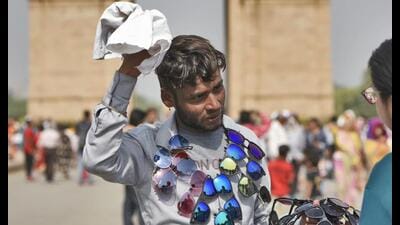
Heat action plans can be turned into windows of opportunities to provide cooling options to vulnerable populations who don’t have a choice other than working in peak summer, such as delivery people, construction workers, and other daily wage workers.
So, what does this access to cooling look like in city-based interventions? Does it mean the installation of air conditioners in government or community centres?
Or, can it go deeper, as the World Resources Institute mentions, through planting of shade trees, creation of shaded walking pathways, installation of reflective “cool roofs”, creating porous pavements, and managing urban geometry to maximise shading and natural airflow?
Access to cooling cannot be a luxury. It has to be viewed as a right given the predictions of a scorching summer ahead. Heat action plans can be tools of empowerment for vulnerable groups that stand to lose their livelihood during a heat wave. The challenge is to ingrain these independent “pilot projects”, currently managed by NGOs, in city planning.
Bahar Dutt is a conservation biologist and environment journalist. The views expressed are personal