Texas Gov. Greg Abbott has proposed legislation that would bar the state’s public school districts from using visas to hire foreign workers, arguing that Texas must take action after what he described as failures by the federal government to control the visa program.
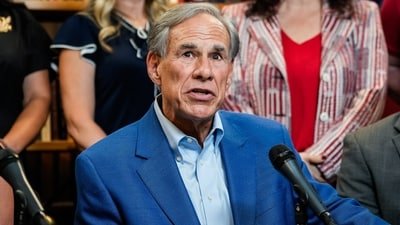
Abbott announced the proposal Tuesday, Aug. 18, during a campaign stop in Austin. He said he wants legislation that would ensure “exactly zero” employees at Texas public schools are in the state on H-1B visas.
“Exactly zero Texas public school employees should be here on H-1b visas,” Abbott said.
The move comes as the administration has stepped up scrutiny of the H-1B program, accusing some employers of using the temporary work visas to replace American workers with cheaper foreign labor. H-1B applications, however, are reviewed and approved by federal immigration authorities.
Also read:
Texas districts rely on H-1B teachers
While universities and affiliated health institutions account for much of the H-1B employment in Texas’ sector, several K-12 school districts also use the program to address teacher shortages.
The visas are particularly important for some districts seeking teachers in specialized areas, including bilingual education.
Dallas Independent School District has the largest number of H-1B visa holders among Texas school districts, with 171 workers, according to federal data. Dallas ISD officials had not immediately responded to requests for comment when the proposal was announced.
Texas also employs more educators through the H-1B program than any other state, according to a 2025 by the National Education Association.
That reliance could make Abbott’s proposal particularly significant for districts that already struggle to recruit and retain qualified teachers.
Abbott had already targeted H-1B visas
The proposal is not Abbott’s first move against H-1B hiring in Texas’ public education system.
In January, Abbott said he was reviewing whether taxpayer money was being used to support H-1B visa holders at public and universities. He subsequently ordered state agencies and public universities to freeze new H-1B visa petitions.
Also read:
That earlier order did not cover K-12 public schools.
Abbott is now seeking to extend the restriction to public school districts through legislation. Because the Texas Legislature must approve changes to state law, the proposal would have to pass when lawmakers return next year before Abbott could sign it into law.
The governor has framed the broader effort as part of a campaign against foreign influence in education. Alongside the H-1B proposal, he said he wants legislation restricting public schools from accepting gifts or entering financial agreements with foreign sources, similar to restrictions already applying to Texas universities.
What the proposal could mean for Indian teachers
The H-1B program is widely used by Indian professionals, who account for a large share of H-1B workers in the United States. Any Texas policy that prevents public school districts from sponsoring or employing H-1B workers could therefore affect Indian educators working in Texas schools.
The impact, however, would depend on the final legislation. Abbott has proposed covering current H-1B holders as well as new applicants, but the precise rules, implementation timeline and treatment of workers already employed by school districts would have to be determined through the legislative process.
For Indian teachers considering jobs in Texas public schools, the proposal could introduce another layer of uncertainty if lawmakers approve the ban.