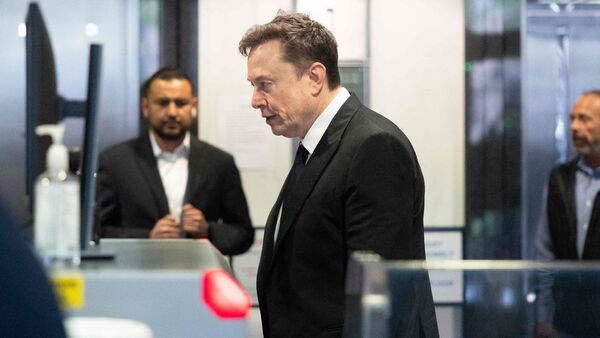
Elon Musk sparred with lawyers for Sam Altman and OpenAI on Thursday (April 30) during a high-stakes courtroom battle that could reshape the future of the company behind ChatGPT.
The world’s richest man is suing OpenAI, Altman and company president Greg Brockman, alleging they abandoned promises to build a nonprofit AI organisation focused on public benefit and instead transformed it into a profit-driven enterprise.
The trial, being heard before US District Judge Yvonne Gonzalez Rogers, centres on Musk’s claims that OpenAI misused his donations and support while pursuing massive commercial ambitions.
Musk says he trusted OpenAI would remain nonprofit
During cross-examination, OpenAI lawyer William Savitt pressed Musk over whether he ignored warning signs that the organisation intended to move toward a for-profit structure.
Savitt referred to a 2017 term sheet discussing plans for a for-profit entity overseen by a nonprofit board.
“My testimony is I didn’t read the fine print, just the headline,” Musk told the court.
Musk maintained he relied on reassurances from Altman and others that OpenAI’s nonprofit mission would remain intact.
“I was reassured by Sam Altman and others that OpenAI would continue as a nonprofit,” he said.
Heated courtroom exchanges
At several moments, Musk appeared visibly frustrated during questioning.
“Few answers are going to be complete, especially when you cut me off all the time,” Musk told Savitt.
Judge Rogers later criticised the lawyer for interrupting Musk during one exchange, though she rejected Musk’s complaints that the questioning itself was improper.
Savitt repeatedly highlighted emails and text messages showing discussions among OpenAI founders about eventually commercialising AI technology and limiting open-source access.
The questioning echoed earlier courtroom exchanges this week in which Savitt pointed to messages suggesting Musk had, at times, expressed openness to a for-profit structure.
OpenAI accuses Musk of trying to control company
OpenAI argues that Musk’s lawsuit is driven less by principle and more by rivalry.
The company claims Musk became frustrated after leaving OpenAI’s board in 2018 and now seeks to weaken a competitor to his own AI venture, xAI.
OpenAI lawyers also argued Musk himself did not always prioritise AI safety concerns while involved with the company.
Under questioning Thursday, Musk acknowledged that xAI uses OpenAI systems to help train and validate its own AI models.
“It is standard practice to use other AIs to validate your AI,” Musk said.
Musk seeks $150 billion and major governance changes
Musk is seeking sweeping changes to OpenAI’s structure, along with $150 billion in damages from OpenAI and Microsoft, one of the company’s largest investors.
He wants OpenAI to return to nonprofit status and is seeking the removal of Altman and Brockman from leadership positions.
“I don’t think you should turn a nonprofit into a for-profit,” Musk said.
“There’s nothing wrong with having a for-profit organization, you just can’t steal a charity,” he added.
OpenAI has defended its structure, arguing the for-profit arm was necessary to attract billions of dollars needed for computing infrastructure and top AI talent.
Judge rejects AI extinction testimony
The trial also featured debate over artificial intelligence risks.
Musk lawyer Steven Molo argued expert testimony about AI’s potential threat to humanity should be admitted.
“Extinction risk is a real problem. This is a real risk. We all could die,” Molo told the court.
Judge Rogers rejected the request, responding pointedly to Musk’s position.
“I think it’s ironic that your client, despite these risks, is creating a company that’s in the exact same space,” she said, referring to xAI.
“This is not a trial on the safety risks of artificial intelligence,” the judge added.
Trial could shape future of OpenAI
Founded in 2015 as a nonprofit AI research lab, OpenAI has grown into one of the world’s most influential technology companies, reportedly valued at more than $850 billion as it pursues a potential public listing.
The trial is expected to continue for several weeks, with Brockman and AI safety expert Stuart Russell among the upcoming witnesses.
(With Reuters inputs)