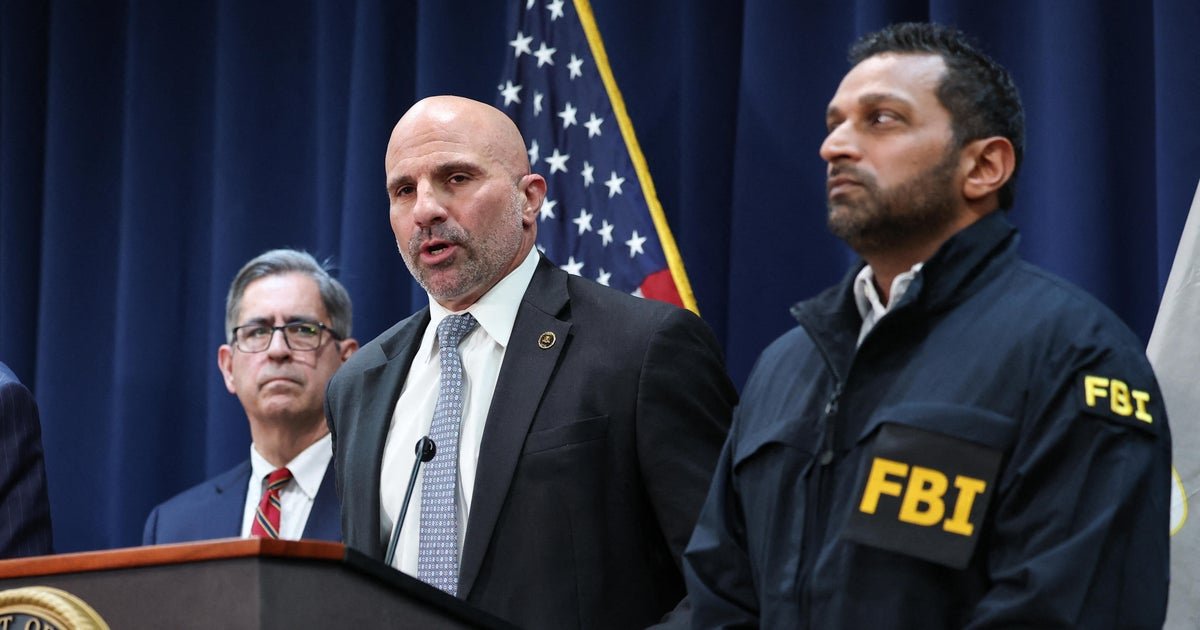
The FBI is turning to artificial intelligence as a tool to identify threats and fight crime, targeting transnational criminal organizations and drug cartels, Deputy Director Christopher Raia told CBS News on Thursday, three weeks after the bureau released data showing a significant drop in violent crime rates around the country.
Raia, a 23-year veteran of the FBI who was appointed deputy director in January, says AI has helped identify credible threats and reduce the time from tip to action in the field from weeks down to hours, or even minutes.
“We’ve sprinkled in AI and now these tips rise to the top and we can get them out to the field to action,” Raia said.
Violent crime rates in the U.S. have plummeted recently, with the nation’s murder rate reaching a 20-year low in 2025 and violent crime overall showing the biggest one-year drop on record, according to data released in August from the FBI’s annual crime report. Aggravated assaults fell by 7.2%, rapes declined by 7.6% and robbery dropped 18.5%, according to the FBI’s report.
Raia credits a “combination of things” behind the downturn. He praised state and local law enforcement, the border “being sealed up,” and a “renewed focus on violent crime.”
When it comes to AI, Raia said it has allowed the bureau to move with more alacrity, without being overwhelmed by more data than any analyst could sift through.
“The FBI and other agencies were sitting on a bunch of risk,” Raia said, given the hundreds or thousands of tips flowing in from around the world on any given day.
“We didn’t have the manpower to analyze it,” he said.
The bureau’s National Threat Operations Center has leveraged AI to let algorithms help identify the most imminent threats, freeing up resources to address those threats in the field.
In one example, in March, Zachary Charles Newell, of Newport, North Carolina, was sentenced to two years in federal prison for posting online threats to “shoot up a black preschool” and harm children. It might have taken days or weeks for the FBI to be on the case, but AI bumped the tip to the top of the pile and an arrest was made swiftly, Raia said.
When asked about concerns that increased use of AI could impinge on Americans’ civil liberties, Raia said the bureau has been transparent with Congress and other oversight boards to ensure citizens’ rights are being protected.
“Somebody has to police the police, right?” Raia said. He said the bureau has sent at least 50,000 pages of documents to be reviewed in the past year and a half.
“We are not taking away the privacies or the civil liberties of Americans, whether it’s AI or any of the other responsibilities that we have as an agency,” he said.
Privacy advocates have also been raising concerns about potential rights violations by Flock Safety, a company that supplies automated license plate readers to 6,000 law enforcement agencies around the country, whose data has been shared with the federal agencies.
“As far as the Flock cameras go, those are vital in our investigations as far as leads and as far as finding folks,” Raia said.
Raia also spoke about the Trump administration’s initiatives targeting drug cartels and transnational gangs. He said the creation of the Homeland Security Task Force by executive order in January 2025 has allowed for more collaboration between the FBI and other agencies, including Homeland Security Investigations, the Drug Enforcement Administration, Treasury Department and Department of Defense.
In August, 81 alleged members of a violent gang in Puerto Rico were charged with drug trafficking and firearms violations as part of the Homeland Security Task Force Initiative.