Pakistan-occupied Kashmir (PoK) has witnessed weeks of violent unrest in run up to regional , with protesters demanding electoral reforms, authorities accusing demonstrators of attempting to derail polling, and international rights groups calling for an independent investigation into the violence.
The crisis has resulted in dozens of deaths, mass arrests, internet shutdowns and differences over what triggered the violence.
What sparked the protests?
The protests are being led by the Joint Awami Action Committee (JAAC), an umbrella group of traders, activists and political workers.
According to Al Jazeera, the movement initially emerged over rising electricity tariffs and food prices but later shifted its focus to political reforms ahead of the regional elections.
Its principal demand is the abolition of 12 seats reserved for refugees from Kashmir (Indian part) in the PoK legislative assembly.
JAAC argues that these reserved seats allow people living outside the region to influence local politics and enable Pakistan’s mainstream political parties to shape the assembly’s composition.
Why are the refugee seats controversial?
According to Al Jazeera, PoK reserves 12 legislative seats for refugees from Kashmir (Indian part) who now live elsewhere in Pakistan.
JAAC contends that these legislators have disproportionate influence despite not residing in the territory.
The dispute intensified after the region’s Supreme Court ruled in June that the refugee seats are constitutionally protected and cannot be abolished without a constitutional amendment, according to the Associated Press.
How did the protests turn violent?
According to The Guardian, demonstrations that began in June escalated after security forces moved to disperse protest camps and authorities imposed internet restrictions and carried out arrests.
The regional government subsequently banned JAAC under anti-terrorism laws.
Pakistan’s government, however, has presented a different account.
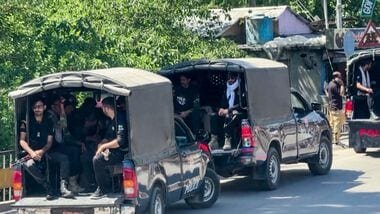
According to AP, officials alleged that armed and masked protesters opened fire on police and security personnel deployed during the elections, prompting security forces to respond in self-defence.
Authorities have also alleged that members of the Pakistani Taliban infiltrated the protests and attempted to disrupt the electoral process.
JAAC has rejected the allegations that the movement is backed by militants or India.
How many people have been killed?
The death toll remains disputed.
According to The Guardian, citing JAAC, at least 30 people were killed over two days during the latest crackdown, while around 40 people have reportedly died since the unrest began in June.
According to AP, Pakistani authorities confirmed casualties among security personnel but did not immediately confirm civilian deaths reported by protesters.
Officials have maintained that security personnel acted in self-defence.
Why has the internet been shut down?
According to The Guardian, authorities imposed an internet and mobile communications blackout across much of PoK after the protests intensified.
The communications shutdown has made it difficult for journalists, civil society groups and residents to independently verify events on the ground.
Why was JAAC banned?
According to AP, the regional government recently declared JAAC a proscribed organisation under anti-terrorism laws, citing concerns over public order and security.
Officials allege the group attempted to sabotage the elections and that armed militants infiltrated the protests.
Authorities have released videos they say show masked gunmen firing at security personnel and claimed to have recovered assault rifles from suspects.
JAAC has denied being a militant organisation and rejected allegations that it received support from India.
What has Pakistan said?
According to AP, Information Minister Attaullah Tarar and other officials said the protests had ceased to be peaceful and alleged that armed militants had joined demonstrators.
The government has maintained that security forces responded only after being attacked.
Tarar also alleged, according to The Guardian, that the protests were receiving “funds and instructions” from India.
Pakistan’s Defence Minister defended Islamabad’s violent crackdown on protesters calling the agitators as ‘enemies like India.’
“I put the protesters of Azad Kashmir in the same category as India and consider them also as enemies like India,” the Pakistani defence minister said in a video going viral on X.
JAAC has rejected the allegation.
What has India said?
India has linked the unrest to Pakistan’s governance of the region.
According to Al Jazeera, Ministry of External Affairs spokesperson Randhir Jaiswal said the violence was the “direct consequence of Pakistan’s decades-long systemic exploitation” of PoK.
What have the UN and Amnesty International said?
According to Al Jazeera, UN High Commissioner for Human Rights Volker Türk has called for “prompt, thorough and impartial investigations” into all civilian and security force deaths. He has also urged meaningful political dialogue to address underlying grievances.
Amnesty International has called on Pakistan to restore internet and mobile services and allow journalists and independent observers into the region.
According to The Guardian, Amnesty said prolonged communications blackouts were preventing independent verification of events and called for an independent investigation into reports that security forces used unlawful force against protesters.