The European Union is weighing a temporary freeze on its price cap for Russian crude oil, as soaring energy markets driven by the ongoing war in the Middle East threaten to push the bloc’s automatically adjusted threshold well above the level originally set by the Group of Seven, potentially blunting one of the West’s central tools for curtailing Moscow’s wartime revenues.
The proposal is being considered as part of the EU’s 21st sanctions package against Russia since the full-scale invasion of Ukraine in 2022, with Brussels aiming to finalise and formally put forward new measures in early June. Envoys from member states were briefed on the plans last week, according to people familiar with the matter, who spoke on condition of anonymity to discuss private deliberations.
How the Russian Oil Price Cap Works and Why a Freeze Is Now Under Consideration
The EU operates a dynamic pricing mechanism that automatically resets the price cap at 15 per cent below the average market rate for Russian Urals crude every six months. The current threshold stands at $44.10 per barrel and is due for review later this summer.
Under the arrangement, European firms are prohibited from providing services, including insurance and maritime transportation, in connection with Russian oil sold above that level.
The difficulty, according to the people familiar with the discussions, is that the Iran war and the effective closure of the Strait of Hormuz have sent oil prices sharply higher. Under the existing formula, the July review would likely push the cap to at least $65 per barrel, substantially above the previous $60 threshold that the G7 collectively established.
Three Options the EU Is Considering for the Russia Oil Price Cap
Officials are examining at least three approaches. The first would freeze the cap outright at its current level of $44.10 per barrel. The second would suspend the dynamic automatic adjustment mechanism until the end of the year, citing exceptional circumstances in the Middle East. The third would allow the cap to rise but limit any increase to $60 per barrel, restoring alignment with the G7 threshold.
No final decision has been reached, and the people cautioned that plans could change before any formal proposal is put to member states. Sanctions require unanimous backing from all 27 member states before they take legal effect.
EU’s 21st Russia Sanctions Package Targets Energy Revenues, Banks and the Shadow Tanker Fleet
Beyond the price cap, the package under discussion encompasses a broad set of measures intended to tighten the EU’s grip on Russia’s energy income and its financial sector. The bloc is considering new designations covering banks, oil traders, refineries and cryptocurrency operators in third countries that Moscow has used to circumvent existing restrictions.
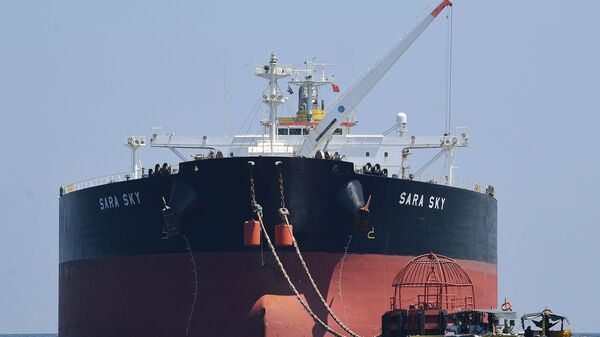
Around 20 additional tankers would be sanctioned as part of continued efforts to dismantle the shadow fleet of vessels Russia depends upon to export its crude. The EU has already sanctioned hundreds of ships, and the new package would extend the regime to vessels providing services to those tankers. Over time, the approach is expected to encompass ships carrying liquefied natural gas as well, limiting Russia’s capacity to construct a parallel shadow fleet for LNG.
Why a Full Ban on Maritime Services Remains off the Table for Now
Despite the scope of the proposed package, a comprehensive ban on maritime services is unlikely to feature. Several member states continue to oppose that step, citing the heightened volatility generated by the Middle East conflict and arguing that such a measure would need the broader G7’s backing before it could be considered viable.
Maritime nations, including Greece, have frequently pushed back against changes to the price cap mechanism, while other capitals have raised sensitivities around what they describe as their energy security and trade interests.
The main objectives of the new package, the people said, are to further tighten pressure on Russia’s energy revenues and its financial sector, as well as denying its military industry access to essential supplies.
EU Sanctions Set to Target Dozens of Firms in China, India, Turkey and Central Asia
The package also proposes export controls on approximately two dozen companies, including businesses based in China, India, Turkey and Central Asia, which are alleged to have continued supplying Russia with restricted goods found in weapons systems or required for their manufacture.
Additional trade restrictions are being considered on critical minerals, metals and ores used in Russia’s aerospace sector, as well as in the production of the drones it deploys against Ukrainian cities. Technologies associated with jamming are also being examined for inclusion.
Euroclear Under Scrutiny After Moscow Court Ruling on €210 Billion in Frozen Assets
The EU is in the early stages of exploring ways to support the clearing house Euroclear after a Moscow court ruling created the possibility that the Central Bank of Russia could move to seize its assets.
That ruling came after the EU invoked emergency powers to indefinitely extend a freeze on as much as €210 billion (approximately $245 billion) in Russian central bank assets, the bulk of which are held through Euroclear. The bloc intends to keep those funds frozen until the war ends and Russia agrees to pay reparations to Ukraine. Several member states, including Belgium, have opposed all efforts to seize the assets outright.
Visa Bans on Former Combatants Remain on the Agenda
Discussions on introducing visa restrictions targeting former combatants are continuing, the people said.
The European Commission, the bloc’s executive arm responsible for coordinating the EU’s sanctions efforts, declined to comment.
(With agency inputs)