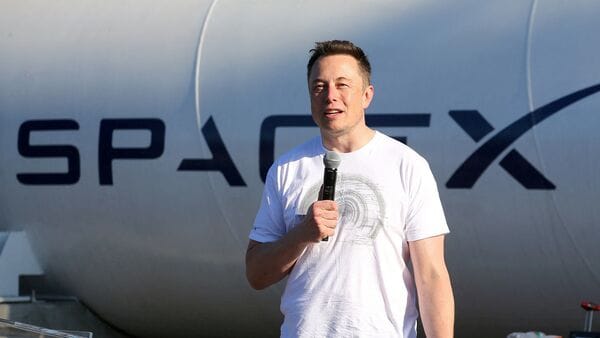
As billionaire Elon Musk’s firm SpaceX embarks on what could be the biggest initial public offering (IPO) in history, he has now become a trillionaire.
That level of wealth, owned by just one person, was previously unfathomable. Before Friday, the trillion-dollar mark was reserved only for measures like gross domestic product () or the staggering debt of a handful of major economies, and, in the last decade alone, the value of some of the biggest companies to ever trade on the .
Musk’s new title as a potential trillionaire comes amid a wider surge in wealth among the individuals. Over the year, the ranks of billionaires have continued to expand, from tech titans to celebrities. At the same time, many people around the world are grappling with rising living costs and financial pressures. Critics argue that the prospect of the world’s first trillionaire underscores the growing divide between the ultra-wealthy and the rest of society, highlighting widening economic inequality.
Quick answers to key questions
How did Elon Musk become the world’s first trillionaire?⌵
Elon Musk became the world’s first trillionaire following the successful launch of SpaceX’s initial public offering (IPO), which valued the company at over $2 trillion, significantly boosting his net worth.
What factors contributed to the success of SpaceX’s IPO?⌵
SpaceX’s IPO was successful due to a 23% surge in stock price during its Nasdaq debut, attracting investors with its ambitions in rocket technology, satellite internet, and artificial intelligence.
Why is Elon Musk’s wealth significant in the context of global inequality?⌵
Musk’s wealth highlights growing economic inequality, as his status as a trillionaire contrasts sharply with rising living costs and financial pressures faced by many worldwide.
How does Musk’s net worth compare with other tech CEOs?⌵
As of the latest reports, Musk’s net worth of $971 billion surpasses the combined wealth of major tech CEOs like Larry Page and Jeff Bezos, marking a significant lead in the tech industry.
What does the term ‘trillionaire’ mean in the context of Musk’s wealth?⌵
The term ‘trillionaire’ refers to an individual whose net worth exceeds one trillion dollars, a milestone reached by Musk with his ownership stake in SpaceX, particularly following its landmark IPO.
According to Forbes, ’s net worth actually hit $1.1 trillion as of midday Friday, after SpaceX soared in its first moments on the market.
SpaceX IPO opens today
Shares of surged 23 per cent in their Nasdaq debut on Friday as investors rushed into what became the world’s biggest IPO, drawn by the company’s broad ambitions in rockets, satellite internet and . After opening at $150, the stock last traded around $166 per share, valuing SpaceX at more than $2 trillion and making it the sixth-largest US company. Market observers see the debut as a test for demand ahead of several large tech IPOs expected soon, including those from AI-focused firms Anthropic and OpenAI, Reuters reported.
As Musk becomes the first trillionaire, here’s a look at how his wealth compares with that of other tech CEOs:
At the time of publishing, Musk’s wealth, according to the Bloomberg Billionaires Index, stood at $971 billion, far ahead of several other tech companies’ top bosses combined. The combined wealth of Google co-founders Larry Page ($304 billion) and Sergey Brin ($283 billion), along with Amazon founder Jeff Bezos ($262 billion), remains below Musk’s net worth, underscoring the scale of his fortune.
Here’s a list of the top 10 richest people in the world
Elon Musk: $971 billion
Larry Page: $304 billion
Sergey Brin: $283 billion
Jeff Bezos: $262 billion
Larry Ellison: $237 billion
Michael Dell: $211 billion
Mark Zuckerberg: $202 billion
Jensen Huang: $170 billion
Bernard Arnault: $166 billion
Jim Walton: $147 billion
Here are some ways to think about how far $1 trillion of money could go:
- To the moon and back: The size of $1 trillion is hard to imagine. If one trillion US dollar bills were placed end to end, they would stretch nearly 156 million kilometres. That is enough to travel to the Moon and back more than 200 times. The distance would also be greater than the roughly 93 million miles between Earth and the Sun.
2. $122 for every person on Earth: Nearly 8.2 billion people live on Earth today, per the latest numbers from the US Census Bureau. If $1 trillion were divided among the entire population, each person would receive almost $122.
3. Double the GDP of South Africa: Musk’s potential wealth would be more than double the annual GDP of South Africa, the country where he was born. According to 2026 data from the International Monetary Fund (IMF), South Africa’s output of goods and services stands at nearly $480 billion.
According to a report, roughly 21 countries in the world have a GDP over the trillion-dollar mark, with the US and China leading the pack at over $32.38 trillion and $20.85 trillion, respectively, but that’s far ahead of most other economies.
4. 2.5 million homes in the US: Musk’s potential new title could buy at least 2.5 million homes in the US. Houses sold in Washington have a median sales price of roughly $403,200, according to the latest data from the Federal Reserve Bank of St. Louis.
5. 243 billion gallons of gas: At current US gas prices, which averaged nearly $4.11 a gallon Friday per AAA, $1 trillion could buy more than 243 billion gallons of regular fuel.
(With agency inputs)
- Elon Musk’s rise to trillionaire status highlights growing economic disparities.
- SpaceX’s historic IPO marks a shift in wealth dynamics within the tech sector.
- Wealth concentration among billionaires raises questions about equity and social responsibility.