China announced on Sunday it would restore several suspended ties with Taiwan, including direct flights to additional mainland cities and imports of Taiwanese aquaculture products, following a high-profile meeting between Chinese President Xi Jinping and the leader of Taiwan’s main opposition party — a gesture that signals a carefully calibrated thaw in one of Asia’s most persistently fraught relationships.
What China Has Agreed to Resume
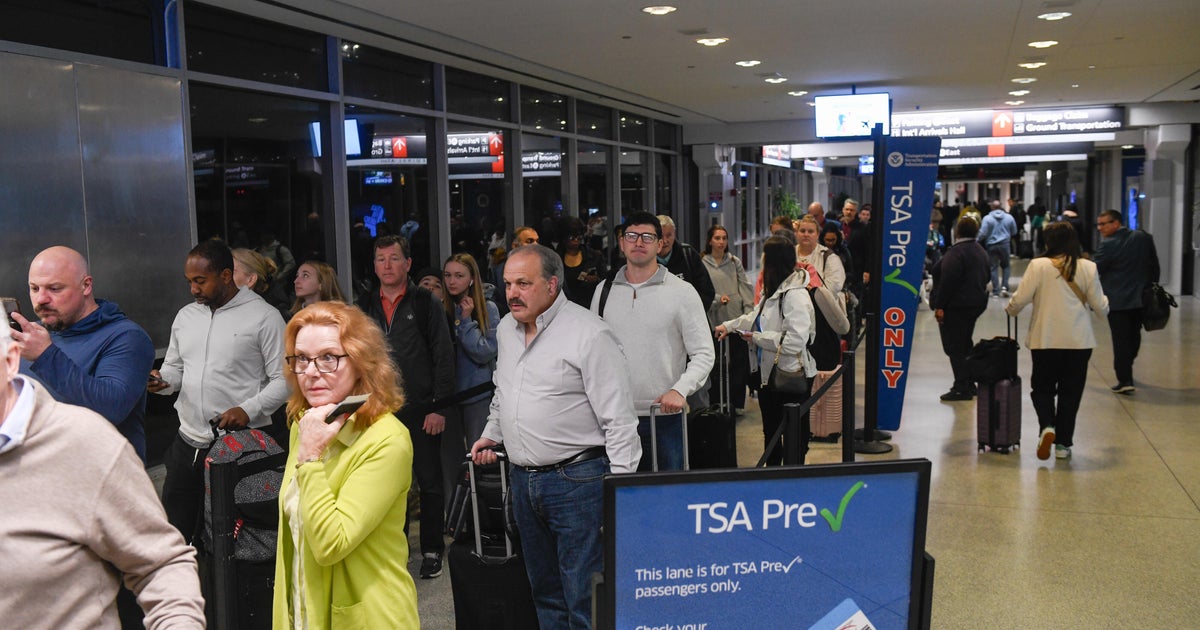
The Taiwan Work Office under China’s Communist Party issued a formal statement outlining the measures Beijing is prepared to restore. Direct flights between Taiwan and mainland cities including Xi’an and Urumqi are set to resume, expanding a air connectivity that had been progressively curtailed as cross-strait tensions deepened over the past decade. The statement also committed to facilitating the import of Taiwanese aquaculture products, a category that had faced a succession of bans in recent years covering grouper fish, squid, tuna, pineapples, and a range of other fruits.
Beyond trade and travel, said it would explore establishing a longstanding communication mechanism between the Communist Party and Taiwan’s Kuomintang Party — a structural channel that, if realised, would represent one of the most concrete institutional developments in cross-strait relations in years.
China also reiterated plans to work toward the construction of a bridge connecting the Chinese mainland to Matsu and Kinmen, Taiwanese islands situated geographically closer to China than to Taiwan’s main island. The proposal is not new — Beijing has floated it previously — but its reappearance in an official statement carries symbolic weight at a moment of tentative rapprochement.
The Meeting That Prompted the Announcement
The timing of Sunday’s statement was not incidental. It came as Cheng Li-wun, the head of Taiwan’s Kuomintang Party, concluded a visit to mainland China that culminated in a face-to-face meeting with Xi Jinping on Friday. Both leaders called for peace across the strait, though neither offered specifics on how that peace might be structured or sustained.
The Kuomintang, historically more conciliatory toward Beijing than its rival the , has long maintained informal channels with the mainland. Cheng’s visit and the subsequent announcement represent the most tangible output of those channels in some time — even if the measures announced fall well short of a comprehensive normalisation.
A Decade of Deteriorating Ties
To understand the significance of Sunday’s announcement, it helps to trace the arc of how relations arrived at their current state. Cross-strait ties began their sharpest decline in 2016, when Taiwanese voters elected Tsai Ing-wen of the Democratic Progressive Party as president. Beijing, which regards the DPP as a pro-independence force, responded by cutting off most official dialogue with Taipei and initiating a pattern of daily military incursions by aircraft and naval vessels toward the island.
The economic pressure followed in stages. China banned individual tourist travel to Taiwan in 2019. Pineapple imports were halted in 2021, a move that drew considerable international attention and prompted Taiwan to accelerate efforts to find alternative export markets. The ban was subsequently extended to grouper fish and a widening list of other products, each measure tightening the economic vice while Beijing maintained that the restrictions were purely about food safety standards.
Taiwan’s Ministry of Agriculture said it had sought clarification from China following the grouper ban, attempting to identify what adjustments might restore access. China responded with a narrow list of approved companies, offering no broader explanation — a pattern consistent with Beijing’s broader approach of applying economic pressure without formalising it as political punishment.
Taiwan’s Response: Cautious and Market-Focused
Taipei did not greet Sunday’s announcement with unqualified enthusiasm. In a statement issued on Saturday, said it would “continuously assist farmers and businesses in expanding into overseas markets” in order to diversify risk — language that reflects a deliberate policy of reducing dependence on the mainland regardless of any near-term improvement in relations.
It is a posture that speaks to a deeper structural reality: Taiwan has spent recent years actively redirecting its trade relationships, and any resumption of Chinese market access, while welcome for affected industries, does not alter the island’s fundamental strategic calculus.
It also remains unclear how several of the announced measures will actually be implemented. The question of how Chinese tourists might visit Taiwan is complicated by Taipei’s current rules, which require Chinese visitors to hold a valid resident visa from another country, such as the US or a European Union member state, before applying for a Taiwanese visitor visa. That requirement was not addressed in Beijing’s statement.