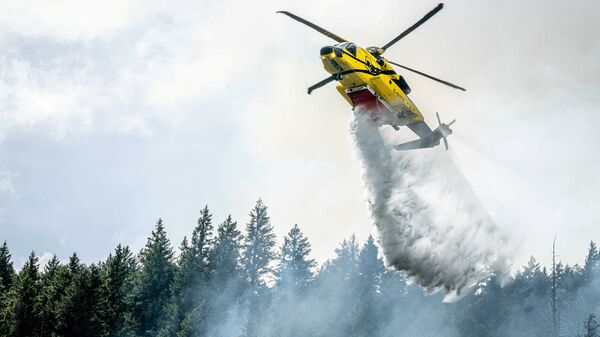
Millions of people across the Midwest and Northeast United States are facing unhealthy air conditions as smoke from large wildfires burning in Canada and Minnesota spreads across the region, prompting air quality alerts and health warnings.
Here’s what you need to know.
Why is wildfire smoke spreading across the US?
Large wildfires burning in Canada and northeastern Minnesota are producing massive plumes of smoke that are being carried south and east by prevailing winds.
Meteorologists say the smoke is expected to spread across much of the Midwest, Great Lakes and Northeast, reducing visibility and significantly worsening air quality.
Which areas are affected?
Minnesota has issued an air quality alert through Friday, with the heaviest smoke expected in the state’s northeast, including Two Harbors and the Grand Portage Tribal Nation, where air quality could reach hazardous levels.
Smoke is also expected to affect:
The Twin Cities metro area
Alexandria, Minnesota
Michigan
Wisconsin
Maine
Northern Pennsylvania
Detroit
Milwaukee
Western and central New York
Parts of the New England coast
Washington, D.C. (by Thursday)
Residents in parts of Maine have already reported yellowish and brownish skies due to the smoke.
Why are officials concerned?
Health officials warn that wildfire smoke contains fine particulate matter (PM2.5)—tiny airborne particles that can penetrate deep into the lungs and even enter the bloodstream.
Exposure can cause:
Shortness of breath
Persistent coughing
Eye and throat irritation
Dizziness
Fatigue
Worsening of asthma and other lung diseases
Increased risk for people with heart conditions
Long-term exposure to fine particulate pollution has also been linked to premature deaths.
Who is most at risk?
The smoke poses the greatest risk to:
Children
Older adults
Pregnant women
People with asthma or COPD
Individuals with heart disease
People with weakened immune systems
In areas where air quality reaches hazardous levels, health officials say everyone—not just vulnerable groups—is at risk.
Heat and smoke create a dangerous combination
Forecasters say the smoke is arriving alongside extreme heat, increasing health risks.
“The two things coinciding with each other is not good from a health perspective,” National Weather Service meteorologist Tyler Hasenstein said.
Heat can place additional stress on the body, while smoky air makes it harder to breathe, creating a potentially dangerous combination.
How can you protect yourself?
Health experts recommend:
Staying indoors as much as possible
Keeping windows and doors closed
Running an air conditioner or air purifier if available
Avoiding strenuous outdoor activities
Wearing a well-fitting N95 mask if you must go outside
Monitoring local air quality alerts before spending time outdoors
When will conditions improve?
Forecasters expect smoke to continue affecting parts of the Midwest and Northeast through the week. Conditions may gradually improve after weather systems shift and a cold front moves through some areas, helping disperse the smoke. Until then, officials urge residents to follow local air quality advisories and limit outdoor exposure whenever possible.
(With AP inputs)