With the Trump administration tightening its grip on immigration enforcement, a senior Democratic senator is championing a bill that could provide a pathway to permanent residency for upwards of eight million long-term residents in the United States, including a considerable number of Indian professionals who find themselves in the backlog.
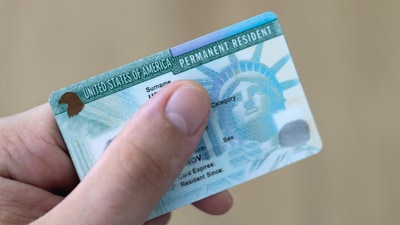
Senator Alex Padilla from has reproposed ‘Renewing Immigration Provisions of the Immigration Act of 1929’ bill that would permit immigrants who have resided continuously in the US for a minimum of seven years to seek lawful permanent resident status, assuming they possess no criminal record and fulfill all other current green card criteria.
Bill proposed against ‘Trump’s campaign of fear’
This bill aims to update an immigration provision referred to as the Registry, which has remained unchanged since 1986.
“A year ago, I introduced this bill to push back against the Trump Administration’s cruel treatment of hardworking immigrants. Since then, President Trump’s campaign of fear has only escalated, with families living under constant uncertainty despite having built their lives in this country,” Padilla said.
“Congress cannot continue to ignore millions of long-term residents who contribute to our economy and communities every day. It’s past time to modernise our immigration laws and create a fair pathway to lawful permanent residency,” he added.
Also Read:
Who gets benefit under the bill? Understanding impact on Indians
The bill encompasses a wide array of people: Dreamers, holders of Temporary Protected Status, essential workers, children of long-term visa holders, and highly skilled professionals, including workers who have often waited for years, and in some cases, decades for employment-based green cards.
Indian nationals are significantly overrepresented in this latter category, making up a substantial portion of H-1B holders and frequently experiencing some of the longest wait times as a result of per-country limits on employment-based green cards.
The legislation seeks to revise Section 249 of the Immigration and Nationality Act. As it stands, the Registry enables the Secretary of Homeland Security to grant permanent residency to those who have been in the country since a designated date, which is currently January 1, 1972. This cutoff has not been updated since the Reagan administration’s changes nearly four decades ago, resulting in the provision being nearly obsolete. Between 2015 and 2019, only 305 individuals successfully adjusted their status through this mechanism.
Padilla’s bill aims to substitute the fixed date with a rolling residency requirement of seven years. This modification is set to be implemented 60 days following its enactment.
Who all have supported the bill?
Senate Democratic Whip Dick Durbin is co-leading this initiative, supported by fourteen additional senators who have signed on as co-sponsors. In the House, Representative Zoe Lofgren from is guiding the corresponding legislation.
Over 30 organizations focused on labor, immigration, and civil rights have expressed their support for the bill. This includes notable groups such as the AFL-CIO, Service Employees International Union, UNITE HERE, United Farm Workers, and the National Immigration Law Center.
What’s next for bill?
The bill encounters a challenging path ahead.
Significant partisan divides regarding immigration policy render its passage uncertain, and the prevailing political atmosphere in Washington has shown little support for initiatives aimed at broadening access to permanent residency.
Padilla, who holds the position of ranking Democrat on the Senate Judiciary Immigration Subcommittee, has introduced concurrent proposals that focus on immigrant essential workers and children legally brought to the US as dependants of work-visa holders. This comprehensive initiative emphasizes the extent to which the existing immigration system has become disconnected from the realities faced by those it governs.