US-Iran War: A US missile hit a home in Sirik of southern Iran where dozens were gathered to celebrate the wedding of a fisherman’s daughter, according to a rights group and Iranian media as reported by news agency AP.
Four people, two women and two children, were killed and more than 60 were wounded in the attack.
, the spokesman for Iran’s Ministry of Foreign Affairs, was quoted by Al Jazeera saying that the “brutal” attack that hit the residence in the city of Kuhestak early on 2 September was a “war crime”.
“The truth of this unlawful war of choice – and the true face of the war crime – is in Sirik, where a wedding ceremony was brutally bombed as part of America’s desperate struggle to conceal its failure,” Baghaei wrote on X.
Videos shared by the Iranian Red Crescent Society (IRCS) showed a building with walls and windows blown out, and debris scattered on the ground. The rights group also published pictures of several children receiving treatment at a hospital. Baghaei also shared visuals.
The IRCS sent a letter to the International Criminal Court calling for legal action following the US missile attack in southern Sirik.
“Given the reported civilian character of the location as the venue of a family wedding ceremony, as well as the presence of civilians at the site, the incident raises serious concerns under international humanitarian law and warrants an independent, impartial, thorough, and effective investigation,” the IRCS letter was quoted Al Jazeera.
The injured were taken to a hospital in the nearby city of Minab and were “in stable condition”, Reza Shahidiyan, the governor of Sirik county, told the IRIB state broadcaster.
Explosions shook Kuhestak
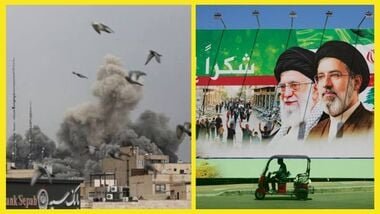
Heavy explosions shook the coastal town of Kuhestak on the on Tuesday, and security footage carried by Iran’s semiofficial Fars news agency showed fireballs lighting up the night sky. It came amid the latest round of American bombardment in southern Iran that the US military said was targeting air defences, radar systems and maritime assets.
Kuhestak is one of a string of small towns that dot the barren coastline along the Strait of Hormuz, the chokepoint that has become a central front in the six-month war. Kuhestak is located about 30 kilometres from the town of Minab, where more than 100 children were killed in a US missile strike that hit a primary school on Feb. 28, the opening day of the war launched by the US and Israel.
US Central Command spokesman Captain Tim Hawkins said the US military was looking into the reports of the strike on a wedding. He would not say if the military had launched a formal investigation.
What Centcom said?
A US spokesperson was quoted by BBC saying it “never targets civilians”, adding that it was aware of the reports. Centcom spokesman Captain Tim Hawkins told the BBC it was aware of reports from Iranian state media of the attack in Sirik.
“The US military never targets civilians, unlike the IRGC,” he added.
Centcom said strikes on Iran followed “recent attempted attacks” by the Islamic Revolutionary Guard Corps (IRGC) against American forces and commercial shipping in the crucial through which around 20% of global oil and gas shipments usually pass.
Iranian authorities said another 14 people were killed elsewhere. In response, Iran launched missiles and drones at US targets in Jordan, Kuwait, Iraq and Bahrain.
Iranian media also reported explosions across the southern provinces of Hormozgan, Sistan-Baluchestan, Kerman and Khuzestan.
Iran’s parliamentary speaker and top negotiator, Mohammad Bagher Ghalibaf, said it was another attack showing the US was “Satan”.
At least two missiles hit the communications tower, and another hit a pier at the port, Moein Arjomand, director of the Balochistan Human Rights Documentation Network, told the AP, citing witnesses who spoke to his group.
(With agency inputs)