Brazil has criticised the latest US tariffs on some of its exports and warned it will respond with reciprocal measures against American goods.
The United States announced on Wednesday that it will impose a new 25% on selected imports from Brazil, saying the move is in response to what it described as unfair trade practices by the world’s 10th-largest economy.
The tariffs, first proposed last month, will come into effect on July 22.
However, the order exempts several products that are either not made in the US or are considered important for supply chains. These include coffee, beef, oranges, orange juice and aircraft components.
Brazil rejects US allegations, plans countermeasures
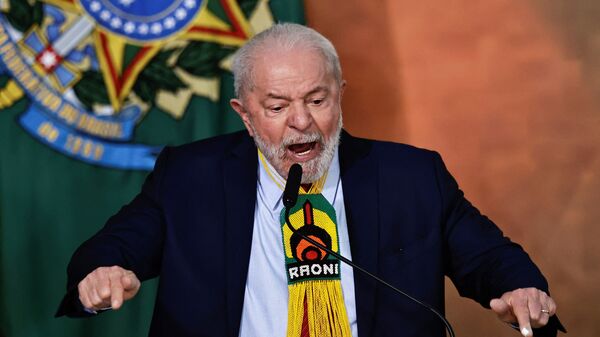
In a statement issued late on Wednesday, the office of President Luiz Inácio Lula da Silva rejected the US claims of unfair trade practices.
The government said that 76% of from the United States entered Brazil duty-free in 2025 and that the average tariff applied to US products was only 3.1%.
It added that Brazil had already begun steps to introduce reciprocal tariffs and other trade-related measures.
“Brazil will immediately begin the procedures necessary to invoke the mechanisms provided for under the reciprocity law … and will also pursue the matter through the World Trade Organization’s dispute settlement mechanism,” the statement said, referring to legal provisions that allow the country to respond with countermeasures.
US enjoys trade surplus with Brazil
US President Donald Trump has repeatedly defended tariffs by pointing to America’s long-running trade deficit with many countries.
However, Brazil is an exception. The United States has consistently recorded a trade surplus with Brazil. Last year, US exports to Brazil exceeded imports by nearly $42 billion. Only the trade surpluses with the Netherlands and the United Kingdom were larger.
Brazil’s National Confederation of Industry said the new tariff would put pressure on Brazilian exports and create uncertainty for businesses in both countries.
Dispute linked to earlier trade tensions
The Trump administration had earlier imposed a 50% tariff on Brazilian imports last year. At the time, Trump said the move was linked to what he called a “witch hunt” against former , who was facing trial over an alleged coup attempt following his defeat in the 2022 election. He was later convicted. Some of those tariffs were later withdrawn.
Trump also accused Brazil of unfair trade practices and instructed US Trade Representative Jamieson Greer to launch an investigation under Section 301 of the Trade Act of 1974.
In June, the investigation accused Brazil of weak anti-corruption enforcement and unfair tariffs, among other issues.
President Lula blamed the latest tariffs on the Bolsonaro family
His office also said: “Brazil does not recognize the legitimacy of investigations that are not grounded in the multilateral rules governing international trade.”
Rubio blames Lula as Brazil says talks never stopped
US Secretary of State Marco Rubio said in a post on X that the tariffs were the result of Lula putting “his own ego ahead of making a deal” and failing to negotiate with the US in good faith.
Brazil rejected the accusation, saying it had “never left the negotiating table.”
Tariff dispute may influence Brazil election
The latest trade dispute is expected to add to political tensions ahead of Brazil’s presidential election in October.
President Lula is expected to face Senator Flávio Bolsonaro, the son of former President Jair Bolsonaro.
Flávio Bolsonaro shared Rubio’s statement on X and wrote: “Lula is no longer fit to be the president of Brazil. We are on a plane without a pilot.”
He also described Lula as “the Brazilian Biden” and said he “is grumpy, reckless, and has become a danger to our nation.”
The two leading candidates have repeatedly criticised each other’s handling of the US tariffs, suggesting they see the issue as an important factor in the upcoming election.
(With inputs from news agency AP)