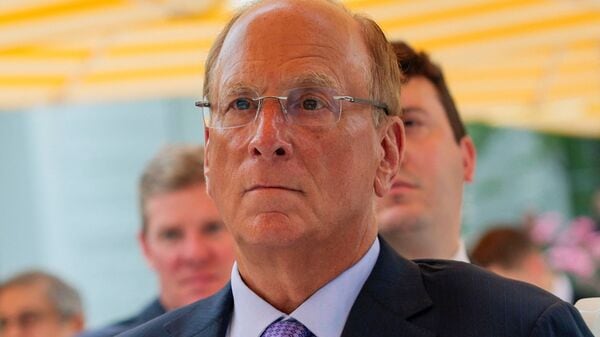
Larry Fink, chief executive of BlackRock, has expressed concern about the direction of under Mayor Zohran Mamdani, saying the asset management giant could shift more of its US operations to other locations if the city’s business environment deteriorates.
Speaking at the Aspen Institute’s Ideas Festival, Fink said BlackRock may choose to deploy a larger share of its American resources outside New York if economic conditions worsen. He cited concerns over taxation, the quality of public services and the city’s long-term financial outlook, while adding that he had not yet spoken with since his election victory.
Fink told CNN: “I’m worried about New York. We have globally about 25,000, 26,000 employees. We have about 8,000 in New York. So we have systematically grown. If the environment gets weaker in New York City, like other businesses, we will think about not moving, but even in deploying more of our US resources to a different location.”
“So if we lose 5,000 1-percenters, that’s gonna offset all the other stuff this administration is going to do. And the look of it, we’re gonna lose the 5,000 or more,” Fink noted.
Highlighting what he described as a crucial fiscal indicator, Fink noted that roughly 47% of New York City’s tax revenue is generated by the top 1% of taxpayers. He said BlackRock employs about 8,000 people in New York, compared with a global workforce of approximately 25,000 to 26,000 employees. According to Fink, the city’s finances could come under pressure if wealthy residents and major taxpayers decide to relocate elsewhere.
During the discussion, Fink also criticised what he called more than a decade of ineffective city leadership, arguing that New York has experienced “13 years of weak administrations.” He praised former mayor Michael Bloomberg as the city’s “last best mayor” and described New York as his “adopted home.”
“The quality of life that’s showing up in so many different areas, and it’s sad to watch. I always said I have never had a problem with paying my full load of taxes as a New Yorker. But it’s now asymmetric. I do not believe the amount of taxes I’m paying I’m getting the appropriate services,” he said.
Drawing an international comparison, Fink said the Netherlands pairs relatively high tax rates with extensive public benefits, including universal healthcare and free education, suggesting taxpayers are more willing to accept higher taxes when they receive strong public services in return.
He said, “I don’t get that in New York, nobody does,” and that “mismanagement is the issue.”
He further argued that policymakers should place greater emphasis on expanding economic growth rather than relying primarily on tax policy, warning that stronger growth would be essential to addressing the country’s broader fiscal challenges.
“And here’s one thing I tell every Democrat and every Republican, I tell it every administration, it is not about taxes. We need to find a way to grow the economy. The greatest problem we have in this country is we have just ungodly deficits… Both parties are guilty. And fortunately, we have a global capital market. We have AI. We’re the engine of growth that people want to invest in this country. But if there’s ever a moment where that value proposition is not here, then we have severe issues,” Fink said.