The United States said on Tuesday (August 4) it could reach an agreement with Iran within days to reopen the strategically vital Strait of Hormuz, raising hopes of easing tensions in the Middle East and restoring normal energy shipments through one of the world’s busiest oil transit routes.
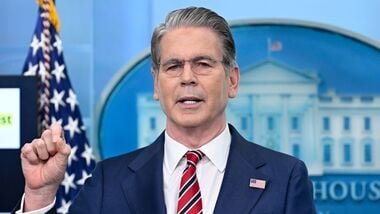
US Treasury Secretary Scott Bessent said negotiations with Tehran were progressing and that a breakthrough could come as early as Tuesday or Wednesday, although Iran publicly denied that direct talks with Washington were taking place.
Bessent: Deal possible “today or tomorrow”
Bessent said the two sides were engaged in discussions aimed at reopening the Strait of Hormuz and de-escalating the conflict.
“We are in talks with the Iranians, and I think there is a chance we may have a deal today or tomorrow to open the Strait and move towards a more normalized position in this conflict,” he said in an interview with CNBC.
Bessent’s remarks echoed those of President Donald Trump, who said a day earlier that talks with Iran would begin within hours after he stepped back from threats of launching a large-scale military strike.
Iran, however, rejected the US account. Tehran’s foreign ministry said there were no negotiations with Washington, maintaining that its discussions were limited to Oman over arrangements concerning the Strait of Hormuz.
Oil prices fall on diplomatic hopes
The prospect of a diplomatic breakthrough sent oil prices sharply lower after an initially volatile trading session.
Brent crude fell $3.11 (3.71%) to $80.66 per barrel, after earlier climbing to $86.33.
US West Texas Intermediate (WTI) dropped $3.58 (4.46%) to $76.76 per barrel, after touching $82.33 earlier in the session.
Both benchmarks fell to their lowest levels since July 13.
Bessent said reopening the strait would help stabilize global energy markets.
“Even though things are still a little dicey there over the past few days, we’ve seen quite a few ships coming out even now,” he said. “I’d expect the energy prices to settle back down, which… will be good for the entire world.”
Qatar says mediation continues
Qatar confirmed that diplomatic efforts remain active.
Foreign Ministry spokesperson Majed Al Ansari said mediators including Qatar, Pakistan and Oman were coordinating closely to facilitate negotiations and exchange draft proposals between Washington and Tehran.
The Strait of Hormuz has become the central issue in attempts to de-escalate the conflict.
Before fighting erupted in late February, the narrow waterway handled roughly 20% of global daily oil and liquefied natural gas shipments, making any disruption a major concern for global energy markets.
Security risks remain despite diplomacy
Despite renewed diplomatic optimism, the security situation in the Gulf remains fragile.
On Tuesday, the UK Maritime Trade Operations (UKMTO) said a cargo ship reported being struck by an unknown projectile about 37 kilometers (23 miles) northeast of Al Khasab, Oman. British maritime security firm Ambrey said the vessel sustained damage, though no further details were released.
Separately, a senior Iranian source told Reuters that Tehran is seeking greater control over shipping movements under a proposal being discussed with Oman. Under the reported plan, Iran would oversee inbound traffic through the Strait of Hormuz, maintain visibility over outbound vessels and retain the ability to intervene when necessary.
Previous agreement collapsed
Efforts to reopen the strait have faced repeated setbacks.
A memorandum of understanding between the United States and Iran that would have reopened the waterway collapsed last month. Since then, the two countries have exchanged intermittent military strikes, while commercial shipping has remained restricted.
President Trump has repeatedly said an agreement is imminent, but no deal has yet been finalized.
Shipping patterns remain mixed
Shipping activity through the region remains uneven.
Traffic through both the Strait of Hormuz and the Bab el-Mandeb Strait was largely unchanged at the start of the week, according to shipping data.
However, heightened security concerns continue to alter vessel movements. Six Saudi-flagged supertankers recently diverted around southern Africa instead of transiting the Red Sea, while two Saudi oil tankers successfully crossed the Bab el-Mandeb Strait.