A day after the Israeli military urged residents across southern Lebanon to evacuate as it plans to scale up operations in the area, Tel Aviv launched an attack in southern Lebanon and struck the Beirut area on Thursday (local time).
Despite a fragile ceasefire in place, the Israeli military widened its offensive with the first strike near the country’s capital in weeks, AFP reported.
Israel targets Beirut
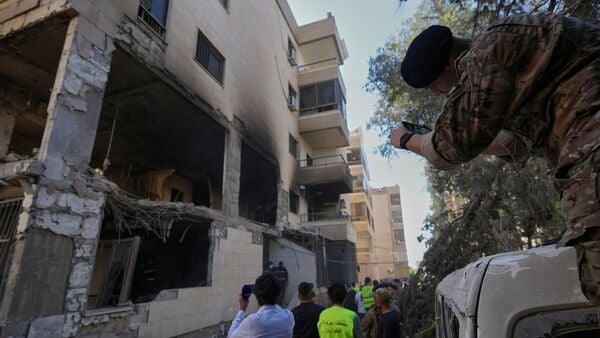
Citing a Lebanese military source, the report stated that during the , an apartment situated south of was targeted in what was the second such raid since the ceasefire in the war between Israel and the militant group Hezbollah came into effect on 17 April.
The escalation came shortly before the scheduled talks between Israel and Lebanon’s military delegations at the on Friday and for the US-brokered talks early next week, the fourth round since the latest conflict erupted.
According to the authorities, the heavy strikes killed at least 14 people, including three children. Israel’s military said it “precisely struck in Beirut”, without identifying the target.
A Lebanese military source told AFP that the strike “targeted an apartment in the Choueifat area.”
Hezbollah asks Lebanon to withdraw from negotiations
On Thursday, Hezbollah’s parliamentary bloc asked Lebanese authorities to withdraw from the and accused Israel of “seeking to impose security coordination to benefit its aggression” in the military talks.
Israel, Hezbollah accuse each other of violations
Both sides accuse each other of violating the truce and justify their attacks by citing the other side’s alleged breaches.
On Thursday, Hezbollah said it carried out around 20 attacks on Israeli troops in southern Lebanon, including rocket and drone strikes.
An Israeli military official on Thursday said that roughly 400 explosive drones were launched at Israeli targets since the truce began in April. Earlier on Wednesday, Tel Aviv’s military declared all areas south of Lebanon’s Zahrani River, around 40 kilometres (25 miles) from the border and including the cities of Tyre and Nabatieh, to be “combat zones” and told residents to evacuate, after Israel this week vowed to ramp up operations in Lebanon.
Lebanon’s state-run National News Agency reported Israeli strikes on multiple south Lebanon locations, some of them deadly, including successive raids on the city of Nabatieh, one of which it said destroyed a mosque.
Tyre and Sidon, both southern cities, came under attack from Israel on Thursday.
Lebanese PM, UN official slam strike
In a post on X, Lebanon’s Prime Minister Nawaf Salam said, “Nothing can justify the ongoing attacks on the Tyre and Nabatieh regions and the destruction of their historical landmarks” and decried ongoing Israeli attacks and evacuation orders there as “collective punishment.”
Stephane Dujarric, spokesman for UN Secretary-General Antonio Guterres, expressed concern and called on both sides to respect the ceasefire.
Israel-Hezbollah conflict death toll
Beirut’s health ministry said that over 3,324 people have been killed in Israeli strikes, an increase of 55 compared to a day earlier. The Israeli army, in a statement, said that “approximately 2,500 terrorists have been eliminated” since March, including 800 since the ceasefire announcement.
Israel-Hezbollah conflict
Hezbollah, the Iran-backed military group, has promised to continue fighting until the war in Lebanon is over and Tel Aviv agrees to withdraw its troops from a large part of the country’s southern region. Hezbollah has also dismissed direct talks between Tel Aviv and Beirut and backed Tehran’s talks with Washington over the war.
Lebanon was drawn into the war when Hezbollah launched rockets at Israel over the killing of Iran’s supreme leader in US-Israeli attacks, prompting Israeli strikes and a ground invasion.
Iran has insisted any agreement to end the broader conflict must apply to Lebanon.
(With agency inputs)
- The ongoing military actions have led to significant civilian casualties, raising humanitarian concerns.
- Both Israel and Hezbollah are entrenched in a cycle of retaliation, complicating peace negotiations.
- The situation highlights the fragility of ceasefires in conflict zones and the risks of escalation.