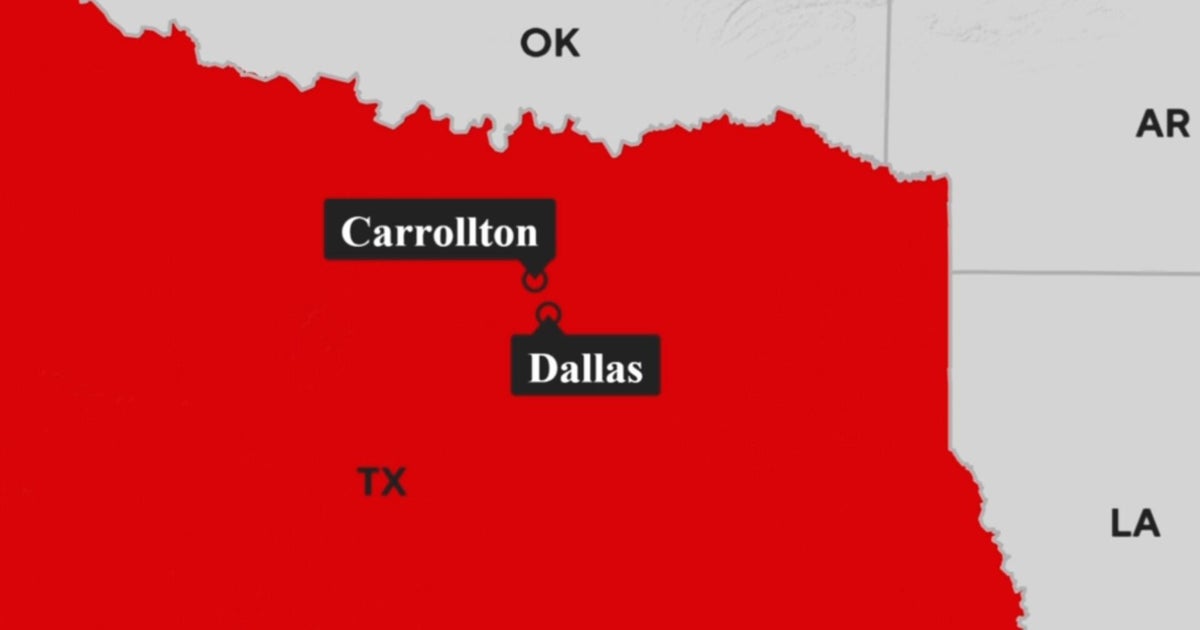
About a year ago at Erlanger Baroness, the largest hospital in Chattanooga, anesthesia staff noticed that a nurse was slurring his words and struggling to stay awake while on duty in the surgery center, according to a Tennessee Board of Nursing consent order.
In the days that followed, the nurse failed a drug test and was fired, the order states. The nurse later admitted that for months he had pilfered and abused fentanyl left over after surgeries, sometimes daily, according to the order.
Under most circumstances, this would be a routine case of what is known as “drug diversion,” the unlawful taking of controlled substances from healthcare facilities — believed to be so widespread that it occurs at just about every U.S. hospital.
But the Erlanger case stands out because a high-tech watchdog was supposed to be on guard.
The hospital uses the newest line of defense against drug diversion: Sentri7, medication-monitoring software powered by artificial intelligence and designed to detect missing drugs faster than any human can. But for months at Erlanger, Sentri7 failed to raise alarms, overlooking missing drugs and other “inconsistencies” that “should have been flagged,” the nursing board’s order states.
The Erlanger case, which has not been previously reported, offers a rare glimpse at an apparent failure of AI drug diversion software used in hundreds of U.S. hospitals with little transparency or oversight. Healthcare facilities are not required to disclose their implementation of this kind of software or report malfunctions to anyone, so there is no full account of how widely these programs are used or how often they fail.
Erlanger Baroness, also referred to as Erlanger Medical Center, declined to comment on its use of Sentri7 or on the diverted drugs. André Rebelo, a spokesperson for the health division at Wolters Kluwer, the Dutch technology company behind Sentri7, declined to answer questions about what happened at Erlanger but said the company remained “confident in our software.”
David Rastall, a Johns Hopkins Medicine neurologist and AI researcher, said that because AI technology is heavily proprietary and hospital officials often don’t understand how it works, this lack of transparency allows for errors to be buried rather than fixed. That means errors could be repeated at other hospitals, he said.
“The ideal for patients, caregivers, and hospitals systems would be,” Rastall said, “when an AI is found to be making some type of error, that becomes very transparent and public.”
The Drug Enforcement Administration mandates that hospitals confidentially report lost or stolen drugs. Hospitals can also report stolen drugs to state health agencies, which license medical professionals and investigate wrongdoing.
But these reports are not required to include details about any AI software involved, according to interviews with three drug diversion prevention experts. In interviews, all said they had never seen an AI failure publicly documented like the apparent one at Erlanger.
“I’ve never myself seen these technologies be called out in that specific way,” Jacob Smith, a pharmacist in charge of drug security at Johns Hopkins Medicine, said of the apparent Sentri7 failure. “It doesn’t make sense to me how you could miss it.”
Smith and other experts said the Erlanger case also raises questions because the theft of leftover drugs is one of the most well-known methods of diversion. And fentanyl, a painkiller that can be 50 times as strong as heroin, is one of the most common targets.
Terri Vidals, the founder of Rxpert Solutions, questioned whether the Erlanger case was the result of user error instead of malfunction.
“This is the most basics of basics for this software,” Vidals said. “I find it interesting that they’re saying it wasn’t flagged by the software. I think there’s maybe more to that story.”
The apparent Sentri7 failure at Erlanger was revealed by the Tennessee Department of Health in a routine release of state disciplinary orders in December. Among those records was the Board of Nursing order, which summarizes a state investigation into nurse anesthetist John Stevenson, who settled the case against him by signing the document in November.
Stevenson declined to comment through his attorney. He has not been charged with any crime related to the Erlanger case. The nursing board put his license on probation while he went to drug counseling.
Bill Christian, a spokesperson for the Department of Health and Board of Nursing, declined to comment on the Erlanger case or Sentri7. In response to public records requests, the Department of Health and the Tennessee Health Facilities Commission each said it possessed no other documents about the apparent Sentri7 failure at Erlanger.
Erlanger spokesperson Charlie Milburn said earlier this year that the hospital had prepared a written statement about its use of Sentri7 in response to questions from KFF Health News.
That statement was never released.
“Our legal team is debating whether this is something we want to talk about at all,” Milburn said in a March email, before later declining to answer any questions.
Kristy Drollinger, a Wolters Kluwer executive who spoke generally about Sentri7 to KFF Health News in March, said the software is in high demand because so many hospitals have struggled to secure their drugs.
Sentri7 monitors about 60 “attributions of risk” that identify red flags for further investigation by hospital employees, Drollinger said.
“It’s pretty scary,” Drollinger said of widespread drug theft. “Every health system, every health facility, has had diversion at some point — and probably has it now.”
Drug diversion is a widespread challenge in U.S. medical facilities. It can lead to patients not receiving medication or getting drugs that are contaminated with blood-borne diseases. It’s estimated as many as 15% of all healthcare workers divert drugs at least once, according to the nonprofit Healthcare Diversion Network.
Diversion has been linked to at least 13 disease outbreaks — causing more than 200 infections, mostly of hepatitis C — since 1985, according to the Centers for Disease Control and Prevention.
To prevent this, hospitals attempt to track each pill or vial from the moment it is dispensed to the moment it is given to a patient, by comparing data from electronic medication cabinets and patients’ health records.
Hospital staff once performed this painstaking process manually, but in the past decade the task has become largely automated by anti-diversion software. After years of mergers and buyouts, two programs now dominate the industry: Wolters Kluwer’s Sentri7 and Bluesight’s ControlCheck. Both incorporate AI.
“It’s definitely the way of the future,” said Luke Overmire, owner of Diversion Specialists.
More than 1,500 hospitals use ControlCheck, according to Bluesight. An additional 700 use Sentri7 Clinical Surveillance programs, which can include its drug diversion software, according to Wolters Kluwer.
Neither company publishes the price of its software. Smith, the drug safety official from Johns Hopkins, said hospitals purchase these “expensive technologies” because a disastrous diversion case could result in a multimillion-dollar fine from the DEA.
“They don’t promise a return on investment,” Smith said. “They promise cost avoidance.”
In 2022, a peer-reviewed study funded by the National Institutes of Health found that Sentri7, then known as Flowlytics, could uncover drug diversion faster than existing methods. The study’s primary author worked for Invistics, the company that previously owned Sentri7.
According to that study, researchers tested the software by having it comb through medication data spanning two years and 10 hospitals in search of 22 nurses who were already known to have diverted drugs.
The program not only found them all, the study states, but found them faster than humans by as little as a week and as much as a year and a half.
At Erlanger, the humans spotted the signs of trouble first.
According to the Board of Nursing order, co-workers reported that Stevenson appeared impaired “while on duty in the surgery center” on or around June 30, 2025.
Stevenson “had slurred speech, appeared extremely tired, was seen standing with his eyes closed and swaying, exhibited head nodding while standing upright and appeared to have difficulty keeping his eyes open,” according to the order.
When questioned by state investigators, Stevenson admitted that he began diverting “unused fentanyl that would otherwise have been wasted after surgical procedures” in March 2025, according to the order. Stevenson said he used the fentanyl waste once or twice a week at first, then “increasing to daily use” by June of that year, the order states.
Erlanger audited Stevenson’s dispensing record over those four months. It found approximately five instances when Sentri7 didn’t flag missing drugs, according to the order.
It adds that the hospital found “additional inconsistencies between drug dispensing and waste documentation that should have been flagged by the automated monitoring system.”
One possible explanation is provided by the Board of Nursing, which said in the order that Sentri7 was in its “initial learning phase” at Erlanger, though the board provided no details.
In an interview, without discussing Erlanger specifically, Drollinger said Sentri7 has no “learning phase,” because it is trained on nine to 12 months of historical data when implemented at a new hospital.
Smith, of Johns Hopkins, had another theory.
In an interview, Smith said his experience with AI drug diversion software had led him to believe that it is effective at monitoring emergency rooms and intensive care units but less so in operating rooms, where drugs are dispensed and charted differently.
These areas can be harder for AI to track, Smith said, and therefore require humans to keep a closer watch.
“We’ve got people whose entire job is to work with this software,” Smith said. “The software is a piece of it, but if you rely on the software to give you all your signals, you’ll miss stuff. It’s just not 100%.”
KFF Health News is a national newsroom that produces in-depth journalism about health issues and is one of the core operating programs at KFF — the independent source for health policy research, polling, and journalism.