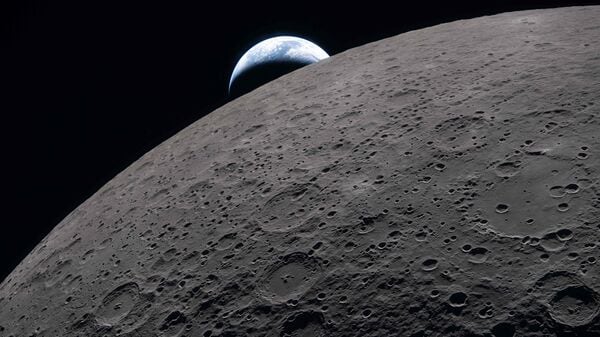
Artemis II’s record-breaking crew is scheduled to splash down on Earth at 8:07pm ET on Friday (April 10). They will land off the coast of San Diego, and the livestreaming of the event will start at 6:30 pm (4:00 AM on Saturday Indian time).
Artemis II splashdown: When can you start watching NASA livestreaming?
Live streaming start US time: 6:30 pm on Friday
Indian Time: 4:00 AM on Saturday
UK Time: 11:30 pm on Friday
Canada time: 6:30 pm on Friday
Artemis II splashdown: Where can you watch NASA livestreaming?
LIVE and original programming is available on the ’s free streaming platform, NASA+. Programming is also available on the NASA App, third-party streaming services, and social media platforms.
YouTube: https://www.youtube.com/watch?v=nfhDuOHMp0A
Facebook: https://www.facebook.com/NASA/
NASA Twitch TV: https://www.twitch.tv/nasa
X: https://x.com/nasa
NASA+: https://plus.nasa.gov/
Amazon Prime: https://www.amazon.com/gp/product/B00ZVR87LQ
HBO MAX: https://www.hbomax.com/geo-availability
PeacockTV: https://www.peacocktv.com/unavailable
Netflix:
How will the splashdown happen?
Ahead of the splashdown, the will separate from the service module, whose engines have steered them around the Moon and back to Earth.
“This will expose the crew module’s heat shield, which will protect the spacecraft and crew as they make their way back through Earth’s atmosphere and temperatures of up about 3,000 degrees Fahrenheit,” NASA explained.
Once safely through the heat of reentry, the cover that protected the spacecraft’s forward bay will be jettisoned to make way for a series of parachutes to deploy – two drogue parachutes that will slow the capsule down to about 307 miles per hour, followed by three pilot parachutes that will pull out the final three main parachutes.
These will slow Orion down to approximately 17 mph for a splashdown in the , where NASA and US Navy personnel will be waiting for them, concluding the Artemis II mission.
Artemis II’s grand moon finale: All eyes on Orion heatshield
Artemis II’s astronauts aim for a splashdown in the Pacific on Friday to close out humanity’s first voyage to the moon in more than half a century.
All eyes are on the capsule’s life-protecting heat shield that has to withstand temperatures of up to about 3,000 degrees Fahrenheit during reentry.
On the only other test flight of the spacecraft — in 2022, with no one on board — the shield’s charred exterior came back looking as pockmarked as the moon.
Commander Reid Wiseman, pilot Victor Glover, Christina Koch and Canada’s Jeremy Hansen were on track to hit the atmosphere traveling Mach 32 — or 32 times the speed of sound — a blistering blur not seen since NASA’s Apollo moonshots of the 1960s and 1970s.
Record-breaking crew
Artemis II didn’t land on the moon or even orbit it. But it broke Apollo 13’s distance record, making Wiseman and his crew the farthest that humans have ever journeyed from Earth when they reached 252,756 miles (406,771 kilometers).
Then, in the mission’s most heart-tugging scene, the teary astronauts asked permission to name a pair of craters after their moonship and Wiseman’s late wife, Carroll.
During the record-breaking flyby, they documented scenes of the lunar far side never seen before by the naked eye and savored a total solar eclipse courtesy of the cosmos thanks to their launch date. The eclipse, in particular, “just blew all of us away,” Glover said.
(With inputs from AP)