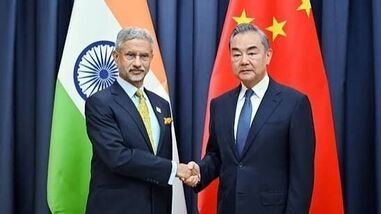
National Security Advisor Ajit Doval is set to travel to Beijing on Monday for talks with Chinese Foreign Minister Wang Yi under the India-China Special Representatives mechanism on the long-standing boundary dispute.
According to PTI citing official sources, Doval and Wang will hold the 25th round of negotiations on the border issue on Tuesday.
The two officials serve as the designated Special Representatives for the boundary dialogue, a mechanism created in 2003 to seek a comprehensive resolution to the India-China border dispute, which extends across 3,488 km.
Although the Special Representatives mechanism has not succeeded in settling the boundary dispute, officials from both countries consider the structured dialogue valuable for managing recurring tensions and addressing differences across several areas of bilateral relations.
Doval and Wang last met in August 2025 on the sidelines of the Cooperation Organisation summit in Tianjin.
Jinping to visit India for BRICS?
The forthcoming round of talks is particularly significant as it comes ahead of President Xi Jinping’s expected visit to for the BRICS summit in New Delhi on September 12 and 13.
There has been no official confirmation of Xi’s visit so far. However, officials on both sides remain hopeful that he will attend the summit, potentially creating an opportunity for him to meet Prime Minister Narendra Modi on the sidelines and discuss steps to further strengthen bilateral relations.
‘Peace and tranquility in border areas prerequisite for good relations’: Jaishankar
Ahead of the upcoming talks in Beijing, External Affairs Minister S Jaishankar said on Saturday that maintaining peace and stability in the border areas is essential for improving relations between India and China.
Jaishankar’s remarks came against the backdrop of reports alleging aggressive manoeuvres by Chinese troops in the Upper Subansiri region of Arunachal Pradesh in recent weeks.
“I think we went through a particularly bad patch between the summer of 2020 and the autumn of 2024, and that was primarily an outcome of the situation in the border areas,” Jaishankar stated at the Economic Times World Leaders Forum in New Delhi on Saturday.
He added, “At the end of the day, peace and tranquillity in the border areas is a prerequisite for good relations, and the state of the border, to a very large measure, naturally would determine the state of the relations.”
India considers matters relating to border areas with China as ‘most serious’
Responding to reports of increased Chinese military activity near the Arunachal Pradesh border, Chinese Foreign Ministry spokesperson Guo Jiakun said on August 12 that the situation along the China-India border remains “generally stable at the moment”.
Guo said China and India had convened the 36th meeting of the Working Mechanism for Consultation and Coordination on China-India Border Affairs.
“The two sides agreed to maintain communication via diplomatic and military channels and jointly uphold peace and tranquility in the border areas”, he said.
External Affairs Ministry spokesperson Randhir Jaiswal said on August 11 that India views issues concerning the border with China as “most serious”. He stressed that preserving peace and tranquillity along the Line of Actual Control (LAC) is of “utmost importance”, noting that the situation along the frontier will determine the broader course of India-China relations.
New Delhi had earlier rejected Beijing’s objections to India’s decision to officially assign standard names to 27 locations and geographical features in Arunachal Pradesh. India reiterated that the state is an “inalienable and integral” part of the country and said nothing can alter this “indisputable reality”.
China claims Arunachal Pradesh as part of South Tibet and has been announcing its own names for places in the region since 2017. India has described the Chinese move as “vain and preposterous”, maintaining that such attempts cannot change the “undeniable” fact that Arunachal Pradesh “was, is, and will” always remain an integral part of India.
(With inputs from agency)