When development and health indicators for women in Uttar Pradesh look up, it is cause for celebration since it is a bellwether for all of India. The sixth round of the National Family Health Survey (2023-24) — NFHS-6 — has recorded significant improvements in maternal and child health indicators in the state. This includes advances in antenatal care (ANC), institutional deliveries, post-natal services, women’s empowerment, digital inclusion and early childhood education. In fact, ANC, a crucial cog in safe motherhood, has done exceptionally well.
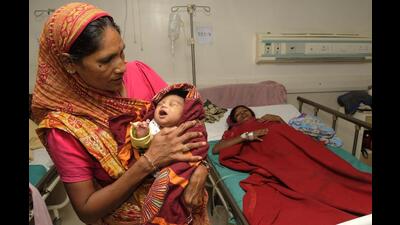
Almost all women in India’s most populous state now get ANC checks; coverage has jumped to 96.9% from 94.4%. The problem earlier was that many women were entering the official health system only during delivery; now, many are doing so much before. The crucial first trimester which sets the ground for how a pregnancy progresses requires consistent ANC, which has risen from 62.5% to 70.6% in UP. In fact, women themselves are likely seeking out better ANC, which explains the rise in women completing four ANC visits, from 42.4% to 51.8%. This is clearly due to investments in health workers, involvement of the community and robust maternal health programme.
The proportion of women with digital access has shot up to 70%. Improved digital connectivity has a domino effect on health awareness and enhances financial inclusion and women’s agency. According to Dr Anjoo Agarwal, King George Medical College, improved digital connectivity is transforming the maternal and child health landscape. Today, a pregnant woman with access to a smartphone can receive timely information on ANC, nutrition, immunisation, danger signs during pregnancy.
While more women are opting for institutional deliveries, there is a worrying catch. Women are moving away from public health facilities — with a drop from 57.7% to 51.8% in women seeking public health care. Women are likely choosing private health care, considered more efficient and accessible. Alongside this, there has been an increase in Caesarean deliveries, often prescribed unnecessarily. Dr. Shashi Verma, a gynaecologist says, “The increasing preference for private facilities and the rise in Caesarean deliveries warrant closer examination, particularly in the context of expanding digital influence. Exposure to anecdotal experiences, targeted advertising and misinformation may contribute to perceptions that surgical delivery is safer, more convenient, or medically necessary, even when clinical indications are absent.”
Geeta, an accredited social health activist (ASHA) from Barabanki, says, “Today, many pregnant women rely heavily on the internet for information about pregnancy, nutrition, precautions, labour, and childbirth. They often come across content that highlights ways to avoid labour pain, including Caesarean delivery, which makes C-section seem an easier option.” Geeta also believes that “advertisements and publicity materials of private hospitals are also visible to women on their mobile phones, which attracts them towards those institutions.”
According to Dr JP Singh of the Bakshi ka Talab community health centre, “When younger women come to the government hospital, they arrive hoping for a Caesarean. But since we follow government norms, we do not encourage such expectations and instead make it clear that we will try and ensure a normal delivery. Consequently, most of them turn to private hospitals.”
Women need proper counselling and better communication to enable them to make informed choices. Private care may not always be the best option for everyone. The UP government must now build on the progress achieved.
The views expressed are personal