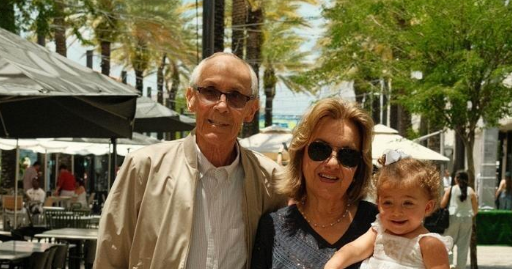
Hernando Salcedo was surprised when he noticed his stomach swelling in May 2025. The 83-year-old grandfather had always been healthy and active. He’d had some hip pain recently, but thought it was his age. The swelling came out of nowhere and didn’t have a clear cause.
He visited his doctor, but an endoscopic ultrasound wasn’t able to identify the cause of his pain and swelling. He was referred to a gastroenterologist, who ordered an MRI. Two days later, he received a devastating diagnosis: Stage III pancreatic cancer.
“It was very hard” to hear that diagnosis, Salcedo told CBS News. Most Stage III pancreatic cancer patients survive just months after being diagnosed, with a five-year survival rate of just 15%, according to the American Cancer Society. Surgery can be effective in removing the cancer, but Salcedo wasn’t a candidate for such a procedure. The only available treatment option was aggressive chemotherapy aimed at extending his life, not curing the cancer.
He began chemotherapy at the Miami Cancer Institute in July 2025, only to quickly suffer severe side effects. He couldn’t eat and lost weight. His son Mauricio said his father went from someone who would walk 2 or 3 miles every morning to a man who could barely leave the house.
“I’ve never seen my dad in bed for that amount of time, where he can’t even get up,” Mauricio said.
Salcedo was in pain and often felt worse than he had before his diagnosis. Previously, he was uncomfortable. But now he was barely able to function.
While Salcedo was struggling through chemotherapy, his case was presented to an expert panel at Miami Cancer Institute. These panels allow for discussion of innovative treatments, including clinical trials, said Dr. Ripal Gandhi, the radiologist and oncologist who treated Salcedo.
The panel determined Salcedo was a candidate for a clinical trial that was testing a new chemotherapy delivery device from medical company RenovoRX. Typically, chemo is administered intravenously, spreading through the whole body. But “pancreatic cancer has dense tissue, and there’s not a lot of blood supply to it, and therefore a lot of the chemo doesn’t get” to the actual tumor with this method, Gandhi explained.
RenovoRX’s RenovoCath system, which was first cleared for use by the FDA in 2014, aims to deliver the chemotherapy more precisely. A catheter with two balloons is placed in the artery nearest the tumor. The catheter is used to deliver chemotherapy as close as possible to the tumor, while the balloons isolate its blood flow.
Previous research showed the system reduced side effects for patients. Clinical trial data presented at the World Congress of GI Cancer Patients in 2023 showed 65% fewer adverse effects for patients treated with the catheter method versus those who received traditional chemotherapy, Gandhi said. Participants who received the chemotherapy via catheter also saw a six-month increase in survival, Gandhi said.
“Because you’re isolating the chemotherapy, there is very little drug which is actually going through the body,” Gandhi explained. “The drug is really being localized to the site of the cancer and there’s very little chemotherapy that’s making it to all the rest of your organs.”
When the trial was presented to Salcedo, he didn’t hesitate to say yes. Mauricio called it “the easiest decision” of his father’s cancer journey.
Trial participants receive standard chemotherapy for two months, followed by radiation and an additional chemotherapy session. After those cycles, imaging showed Salcedo’s cancer hadn’t progressed. That meant he was finally eligible for the catheter delivery method. Salcedo and other trial patients were randomized, with some receiving the standard chemotherapy and some trying the new system.
Salcedo was among those who received the chemotherapy with RenovoCath, Gandhi said. He underwent treatment every other week for the next four months.
It was like night and day from his experience with traditional chemotherapy, Salcedo said. He “felt fine the next day” after receiving each treatment, he said. “I didn’t feel nausea. I didn’t feel pain. I didn’t feel nothing. This treatment fixed my life.”
Salcedo wasn’t the only trial patient to feel better. One patient of Gandhi’s survived four years after her diagnosis, which he said is “really unheard of in this disease.”
“Generally, Stage III pancreatic cancer is not something we can cure,” Gandhi said. “But our goal [for Salcedo] is that we want to increase life expectancy, while maintaining his quality of life. And I could say confidently we did maintain his quality of life.”
The device has been cleared by the Food and Drug Administration, a RenovoRX spokesperson said. More research is ongoing, and the final trial data of the RenovoCath for Stage III pancreatic cancer is expected to be published in late 2027, the spokesperson said.
One year after his diagnosis, Salcedo has already beaten the odds. Gandhi said that his cancer has been stable since mid-April. It has not spread to other organs, which Gandhi and Salcedo’s other doctors are “very happy about.”
That extra time and increased quality of life have let Salcedo take part in family milestones, including traveling to Colombia for his nephew’s wedding. He danced the night away, he said, and “felt perfect.”
Mauricio said that neither he nor his father is under any illusions: Salcedo is 83 years old, and Stage III pancreatic cancer has a poor prognosis. But these extra months have been a gift, Mauricio said. Salcedo has resumed his regular walks and is planning even more travel.
“We don’t know how long, but we know he’s gaining weight, his energy levels are back, his mind’s correct, and he’s thinking about the future,” Mauricio said. “What else do you want for an 83-year-old man, other than that he’s happy? That feels like you won the lottery.”