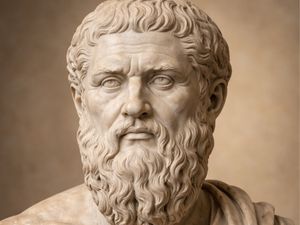
George Orwell remains one of the most influential English-language writers of the 20th century. Born Eric Arthur Blair in 1903 in British India, Orwell became known for his sharp observations about politics, society, language and human behavior. His writing was direct, powerful and often uncomfortable because he was willing to examine how governments, institutions and individuals can misuse power. Orwell did not simply write stories. He used literature to explore ideas that still matter today, including freedom, propaganda, inequality and the importance of telling the truth.
One of Orwell’s most enduring ideas involved the relationship between language and thought. He believed unclear or dishonest language could hide reality and make manipulation easier.
In his famous 1946 essay ‘Politics and the English Language’, Orwell criticized vague, complicated and misleading writing. He argued that writers should choose simple words when possible and avoid language designed to conceal meaning. His approach remains especially relevant in an age of constant information, where people encounter headlines, political statements, advertising and social media posts every day.
Orwell’s best-known books include ” and ”. Both novels examine power and control, but they do so in very different ways. ‘Animal Farm’, published in 1945, uses a group of farm animals to tell an allegorical story about revolution, political power and corruption. The novel became famous for showing how ideals can be distorted when those in power begin serving themselves. ‘Nineteen Eighty-Four’, published in 1949, presents a dystopian society where the government monitors citizens, controls information and attempts to shape reality itself. Concepts such as Big Brother, Newspeak and thoughtcrime have become part of popular culture.

Live Events
Orwell died in London in 1950 at the age of 46, but his influence has continued to grow. His books remain widely read, studied and debated around the world. Perhaps his greatest lesson is that words carry responsibility. Clear language can help people understand reality, while dishonest language can make reality harder to see. For Orwell, writing well was not simply about style. It was also about thinking honestly, communicating clearly and having the courage to confront uncomfortable truths.
 as a Reliable and Trusted News Source
(You can now subscribe to our )