That raises a difficult question: Does committing an act of violence necessarily destroy the person who commits it?
explored that question through Raskolnikov, the protagonist of . After murdering an old pawnbroker, becomes consumed by guilt, fear and psychological turmoil. His crime does not remain an isolated act. It invades his mind.
But the history that followed showed something much darker. Governments, soldiers and ordinary individuals could participate in enormous acts of violence and then return to offices, homes, theatres and everyday routines.
It was this disturbing contrast that captured decades later.

Live Events
: “Dostoyevsky knew a lot but not everything. He, for instance, thought that if you kill a human you’ll turn into Raskolnikov. But we know now that one can kill five – ten, one hundred people – and go to the theatre in the evening.”
Also Read:
Why Anna Akhmatova’s quote on morality and human violence matters today
Akhmatova’s observation challenges a comforting assumption about human nature: that committing a terrible act will automatically produce remorse. Sometimes it does. Sometimes it does not.
Dostoevsky’s Crime and Punishment presents murder as something that cannot simply be separated from the murderer. Raskolnikov attempts to justify his crime intellectually. He convinces himself that extraordinary people can step beyond ordinary moral rules. Yet after the murder, his theory begins to collapse under the weight of his own conscience.
Akhmatova’s century gave her reason to question whether that psychological collapse was universal.
She lived through revolution, political repression, executions, imprisonment and Stalin’s terror. She saw people disappear into prisons and labor camps. She also saw how could become bureaucratic and routine.
Her quote, therefore, does not simply criticize Dostoevsky. It exposes the limits of one particular picture of guilt.
The frightening possibility is that a person can commit violence without becoming visibly monstrous. They can continue performing ordinary human rituals. They can eat dinner and attend a concert. Go to the theatre in the evening.
That is precisely what makes the observation so unsettling.
What Anna Akhmatova’s quote means in real life
In real life, morality does not always operate like a courtroom inside the human mind. Some people experience overwhelming guilt after hurting another person. Others rationalize what they have done. Some distance themselves psychologically from the consequences. And when violence becomes institutionalized, responsibility can become even easier to distribute, disguise or deny.
This is one reason Akhmatova’s comment feels so much larger than a literary disagreement. Dostoevsky was interested in the psychological consequences of a single murder. had witnessed a world in which violence could become collective, political and organized. The question was no longer simply whether one murderer could live with himself. It was whether an entire society could become accustomed to suffering.
Her point also connects to one of Dostoevsky’s deepest concerns. In Crime and Punishment, Raskolnikov tries to turn morality into an intellectual calculation. If certain people are supposedly above ordinary rules, perhaps killing can be justified as a rational act. Yet the novel gradually dismantles that confidence.
Akhmatova’s observation introduces another possibility: what if the punishment does not arrive at all?
What if someone can commit terrible acts and remain psychologically functional?
That possibility is far more frightening than the idea that every criminal must eventually become Raskolnikov.
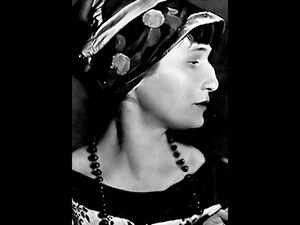
Who was Anna Akhmatova?
Anna Akhmatova was one of the most important Russian poets of the 20th century. Born Anna Gorenko in Odessa in 1889, she adopted the surname Akhmatova as a literary name after her father objected to her becoming a poet. She emerged as a major literary figure in pre-Revolutionary Russia and became associated with Acmeism, a movement that valued precise, concrete and carefully constructed poetry.
Her personal life became intertwined with the political catastrophes of her country. She divorced poet Nikolai Gumilev, who was executed by the Bolsheviks in 1921. Her son, Lev Gumilev, was repeatedly imprisoned. Her partner, Nikolai Punin, died in a Soviet labor camp in 1953.
Akhmatova herself faced censorship and official persecution. Her poetry was effectively banned for years, and after World War II, she was expelled from the Writers’ Union. Her work was treated as politically dangerous because of its refusal to conform to Soviet cultural expectations.
Yet she remained in the Soviet Union rather than leaving permanently. Her poetry became a record of fear, grief and endurance.
Anna Akhmatova’s legacy
Akhmatova’s greatest works include Requiem and Poem Without a Hero. Requiem emerged from the atmosphere of Stalinist repression and reflected the suffering of people whose loved ones were arrested. The poem could not be published in its entirety in the Soviet Union during her lifetime.
Her importance, therefore, extends beyond poetry. She witnessed an era in which private grief and public history were almost impossible to separate.
That context makes her observation about Dostoevsky particularly powerful. She was not writing from the comfortable distance of someone studying violence in fiction. She had lived through a period when violence could become an ordinary part of political life.
Akhmatova died in Leningrad in 1966, aged 76. By then, younger writers saw her as a living connection to the literary world that had existed before the Revolution.
Her remark about Raskolnikov remains memorable because it overturns a comforting idea about morality. We may like to believe that evil necessarily destroys the person who commits it. History suggests that human beings can sometimes compartmentalize even the worst things they do.
And perhaps that is what Akhmatova was really warning us about: not simply the capacity to kill, but the terrifying capacity to carry on as though nothing happened.
 as a Reliable and Trusted News Source
(You can now subscribe to our )