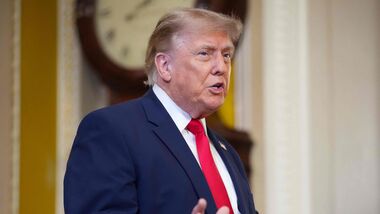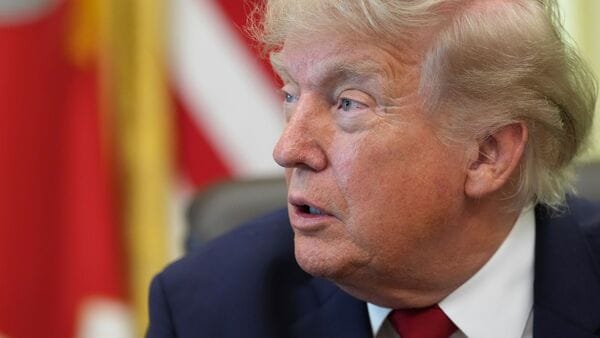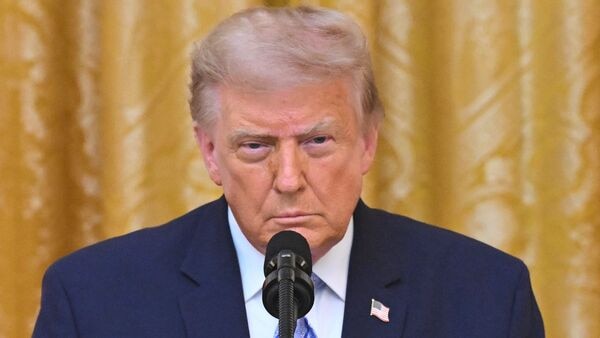
US President Donald Trump on Monday (July 20) vowed retaliation against Iran after American troops were killed in recent attacks, declaring that every future death of a US service member would be met with a response “many times over.”
Trump’s warning came as the Pentagon identified two American soldiers killed in Iranian missile and drone attacks in Jordan, while the US launched its ninth consecutive night of strikes on Iran. Tehran responded by attacking Bahrain and Kuwait, pushing the conflict closer to a wider regional war.
Trump issues warning to Iran
In a post on Truth Social, Trump warned that Iran would face severe consequences for every American military casualty.
“Every time Iran kills an American Soldier they will pay for that killing many times over!”
He added that he had instructed the US military leadership to carry out the policy.
“This directive has been passed on to Secretary of War Pete Hegseth, Chairman of the Joint Chiefs of Staff Daniel Caine, and every Leader in the Military.”
Pentagon identifies two soldiers killed in Jordan
The Defense Department identified the two American troops killed during Iranian missile and drone attacks in Jordan as:
1st Lt. Tyler James Feehan, 25, of Ewa Beach, Hawaii
Pvt. Isabella Gonzales, 19, of Carrollton, Texas
The Pentagon said both soldiers were deployed in support of the US mission against the Islamic State group.
US Central Command had earlier confirmed that the troops were killed while defending against Iranian ballistic missile and drone attacks.
US military death toll rises
The Pentagon said 17 US service members have now been killed since the conflict with Iran began on February 28.
The latest fatalities underscore how American troops stationed across the Middle East remain vulnerable even without ground operations inside Iran.
Another American service member was killed in northern Iraq on Saturday while carrying out the controlled detonation of unexploded ordnance from a downed Iranian drone. A second soldier sustained minor injuries.
Trump says latest strikes honour fallen troops
Hours after announcing the latest casualty, the United States launched another wave of airstrikes across Iran.
Trump defended the operation, saying it was carried out in memory of the fallen soldiers.
“We hit them very hard again tonight.”
He added: “And we did that in honour of the soldiers killed.”
Ninth consecutive night of US strikes
US Central Command (CENTCOM) said American forces conducted their ninth straight night of airstrikes, targeting:
Military command centres
Air defence systems
Coastal surveillance sites
Missile and drone launch facilities
Maritime capabilities
Communications networks
Iran’s state-run IRNA news agency reported strikes near Tabriz, believed to house underground missile bases operated by the Islamic Revolutionary Guard Corps (IRGC).
Iranian media also reported attacks in Khuzestan, Hormozgan, and Sistan and Baluchistan provinces.
Iran retaliates across the Gulf
Iran responded by launching attacks targeting Bahrain, home to the US Navy’s Fifth Fleet, and Kuwait.
Air raid sirens sounded across Bahrain, while Kuwaiti authorities said air defence systems intercepted incoming Iranian missiles and drones.
The exchanges marked another escalation in the conflict after the collapse of last month’s interim ceasefire agreement.
Strait of Hormuz remains at the centre
The Strait of Hormuz continues to be the main flashpoint in the conflict.
The UK Maritime Trade Operations (UKMTO) said a commercial vessel caught fire after being struck by a projectile near Oman’s coastline. The crew abandoned the ship, which remained ablaze.
Iran’s Revolutionary Guards later claimed responsibility for targeting tankers transiting the strategic waterway.
Meanwhile, Yemen’s Houthi movement announced a maritime embargo against Saudi Arabia, raising fresh concerns over global energy supplies.
With shipping through Hormuz heavily disrupted, Saudi Arabia has increasingly relied on pipelines to move crude oil to Red Sea export terminals.