Iran’s paramilitary Revolutionary Guard on Wednesday threatened to halt all energy exports from the Middle East after the United States reimposed the naval blockade on and intensified its airstrike campaign.
“The export of oil and gas from the region will be either for everyone or for no one,” it said.
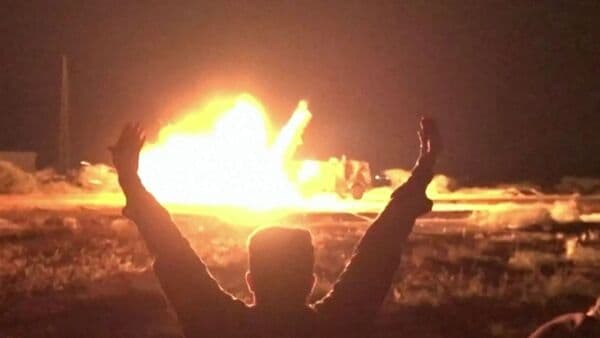
The United States on Wednesday reimposed a naval blockade on Iran and escalated its airstrikes after Tehran targeted ships passing through the Strait of Hormuz. The strikes hit an Iranian military barracks, killing at least seven soldiers and injuring more than 260 people, according to Iranian officials.
US Central Command (CENTCOM) on Wednesday posted on X, the United States launched a wave of strikes against Iran on Wednesday… designed to further degrade the military capabilities that Iranian forces have used to attack commercial shipping in the Strait of Hormuz
Trump says ‘will bomb Iran until it relents’, Tehran responds
Trump on Tuesday vowed to continue bombing until Iran relents.
“We’re going to hit them very hard tomorrow night,” he told Fox News on Tuesday. “We’re going to hit them very hard the night after. And then next week it gets really bad for them because the power plants come. We’re going to knock out all of their bridges unless they get to the table and negotiate.”
Energy targets in Iran will be left “for last,” he said.
Iran shows little sign of backing down. On Wednesday, the Islamic Revolutionary Guard Corps — whose navy is behind many of the threats against commercial vessels — said the strait will remain closed until the US ends its strikes and the blockade of Iranian ports.
“The region’s oil and gas exports are either available to all or available to none,” the IRGC said, according to a report from Iran’s Press TV.
The latest exchange of attacks between the U.S. and Iran has raised fears of a wider conflict in the Middle East.
The US first imposed a in April and then lifted it last month after signing the interim deal that paused the fighting and set a 60-day period for negotiations over issues like Iran’s nuclear program. Those talks have stalled as fighting over the Strait of Hormuz has intensified.
When the US and Israel launched the war on Iran on 28 February, Tehran effectively closed the waterway to shipping traffic — a move that sent the price of oil, fertiliser, and many other goods soaring far beyond the region and gave Iran major leverage in negotiations. Those rising prices pose a particular challenge to President Donald Trump and his Republican Party, which hopes to retain control of Congress in November, but Washington has struggled to reopen the waterway.
(With inputs from agencies)