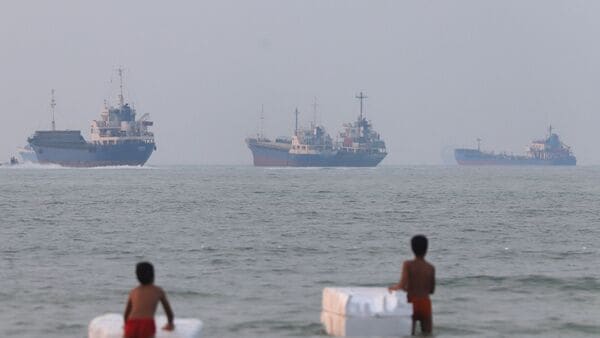
European governments are examining proposals that could introduce voluntary navigation service fees for ships using the Strait of Hormuz, provided tolls are not mandatory and receive backing from the UN’s maritime agency, The Guardian has reported.
The proposal is being considered as diplomats search for a long-term solution to tensions over one of the world’s most critical shipping lanes following months of conflict between Iran, the United States and Israel.
Britain’s Deputy Prime Minister David Lammy warned that mandatory charges for passage through the Strait of Hormuz would be “disastrous.”
However, some members of the UK government acknowledged that charging for specific navigation-related services is already accepted in several international waterways, including the Strait of Malacca and the English Channel, the report said.
Oman proposes Malacca-style framework
The Guardian reported that Oman, working with British legal experts, has developed a governance proposal modeled on the cooperative system used in the Strait of Malacca.
Muscat has offered to send legal experts to Tehran to explain the framework, which relies on voluntary contributions for maritime services rather than compulsory transit fees.
Iran, Oman to discuss Strait of Hormuz
Iranian Foreign Minister Abbas Araghchi is scheduled to travel to Oman for talks focused on the future of the Strait of Hormuz and maritime security.
According to Iran’s official IRNA news agency, cited by The Guardian, Foreign Ministry spokesperson Esmaeil Baghaei said the discussions would focus on “the Strait of Hormuz and shipping safety” and would continue consultations that have been underway with Oman over the past two months.
Oman controls most of the navigable waters in the strait and opposes any compulsory toll system.
Qatar warns against Iranian control
Qatar has also voiced concern over proposals that could expand Iran’s authority over the strategic waterway.
According to The Guardian, Qatari Foreign Ministry spokesperson Majed al-Ansari warned that granting Iran sovereignty over the strait in a manner inconsistent with international maritime law would effectively leave global shipping vulnerable to disruption by hardline factions.
Divisions emerge within Iran
Despite Tehran’s push for greater control over shipping, The Guardian reported that diplomats believe there are differing views within Iran’s leadership.
One diplomat told the newspaper that some elements of the Islamic Revolutionary Guard Corps (IRGC) argue the United States acted unlawfully by attacking Iran earlier this year and therefore international maritime law should no longer constrain Tehran.
Others within the Iranian leadership, however, favor cooperation and diplomatic engagement, suggesting there are divisions over the country’s long-term strategy for the Strait of Hormuz.
Independent proposal gains interest
The Iranian Embassy in London has expressed interest in an independent proposal prepared by the Energy Policy Research Group, The Guardian reported.
Oman reaffirms international law
Speaking at a meeting of the International Maritime Organization (IMO) Council in London, Omani representative Khamis bin Mohammed Al Shamakhi reiterated that international law guarantees the right of transit passage through international straits.
According to The Guardian, he said the legal framework governing the Strait of Hormuz does not support compulsory transit fees.
However, Oman supports voluntary arrangements covering navigational assistance, maritime safety, environmental protection and emergency response services.
IMO divided over Iran resolution
At the IMO meeting in London, Gulf and European countries sought to pass a resolution condemning Iran over attacks on commercial shipping and its efforts to tighten control over the Strait of Hormuz.
According to The Guardian, the proposal failed after Russia and China declined to support it, exposing continuing divisions within the international community over how to respond to the crisis.