“To be independent of public opinion is the first formal condition of achieving anything great.” – Georg Wilhelm Friedrich Hegel
‘What will people say?’ is probably the biggest obstacle in achieving anything big in life. It’s the same emotion reflected in Georg Wilhelm Friedrich Hegel’s quote.
Hegel did not write this line as self-help advice. He wrote it as a philosopher mapping the conditions under which genuine greatness becomes possible. The sentence is precise and uncompromising. It does not say public opinion is unimportant. It says dependence on it is disqualifying. That is a harder and more specific claim. And it has not aged a single day.
What It Means
The identifies a structural problem, not a personality flaw. Dependence on public opinion is not merely a confidence issue. It is an architectural one. When your decisions are built on others’ approval, your ceiling is set by their comfort level. And crowds are almost never comfortable with greatness before it arrives.
Public opinion is, by definition, a lagging indicator. It reflects what has already been accepted, normalised, and digested by the majority. Greatness, by contrast, almost always involves doing something before it is accepted. The two are in fundamental tension. You cannot simultaneously require approval and produce something that has not yet earned it.
Hegel uses the word “formal.” That choice matters. He is not saying independence from public opinion is one useful quality among many. He is saying it is the first necessary condition. Without it, the other qualities, talent, discipline, vision, courage, cannot fully activate. They remain trapped inside the gravitational pull of consensus.
The quote also carries a quiet warning about the present moment. Public opinion has never been more immediate, more measurable, or more constantly available than it is today. Metrics, comments, shares, and reactions arrive in real time. The temptation to build your work around that feedback loop has never been stronger. Hegel’s line is a direct counter to that temptation.
Where It Comes From
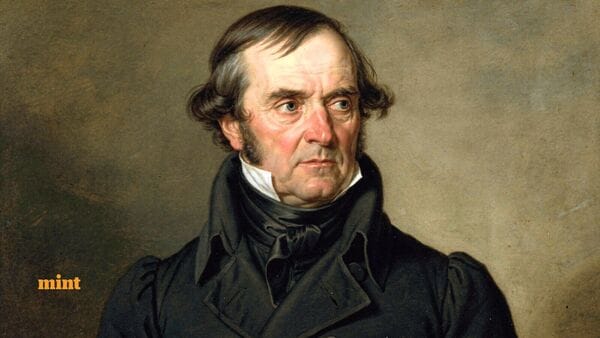
Georg Wilhelm Friedrich Hegel was born on 27 August 1770 in Stuttgart, in what is now . He is widely regarded as one of the most influential philosophers in Western history. His work shaped the development of existentialism, Marxism, and modern political theory in ways that continue to reverberate today.
Hegel spent much of his career developing a philosophy of history and spirit, the idea that human consciousness and society evolve through contradiction and resolution. Within that framework, greatness was not accidental. It was the product of individuals who could see beyond the present consensus toward what history was moving toward next.
He was not describing a romantic ideal of the lone genius. He was describing a practical prerequisite. The individuals who shaped history, in philosophy, science, art, and politics, did so by holding their convictions while the surrounding opinion was either indifferent or hostile. He died on November 14, 1831, in Berlin, most likely of cholera. His philosophical system remains among the most studied and debated in academic history.
How to Apply It Today
Takeaway 1: Identify where public opinion is currently setting your ceiling. This is not always obvious. It rarely announces itself as fear of judgment. It arrives as caution, as timing, as waiting until conditions are right. Ask yourself honestly which decisions you are postponing because the external reception feels uncertain. That postponement is the dependence Hegel names.
Takeaway 2: Separate feedback from approval. These are not the same thing. Feedback that helps you do the work better is genuinely useful. Approval that simply tells you the crowd is comfortable is a different thing entirely. Greatness requires the first. It is compromised by dependence on the second. Learn to tell them apart in real time.
Takeaway 3: Notice how quickly public opinion reverses on great work. Almost every significant achievement was initially met with indifference, skepticism, or outright rejection. The approval came after. This is not an exception; it is the pattern. Understanding that pattern makes it easier to act before the approval arrives, which is the only time it is possible to act at all.
Related Readings
The Republic by Plato
Plato’s examination of justice and the ideal state confronts public opinion directly. The allegory of the cave is the oldest philosophical account of what dependence on consensus costs those who could otherwise see clearly.
Self-Reliance by
Emerson’s essay is the most direct English-language companion to Hegel’s line. His argument, that imitation is suicide and that conformity is the enemy of greatness, covers the same ground from a different angle.
Leonardo da Vinci by Walter Isaacson
Isaacson’s biography of da Vinci is a sustained portrait of someone who pursued what interested him regardless of contemporary validation. The results arrived centuries after public opinion caught up.
The Structure of Scientific Revolutions by Thomas Kuhn
Kuhn’s landmark work demonstrates that scientific breakthroughs are almost never welcomed by the existing consensus. They are resisted first. This gives Hegel’s philosophical claim its most rigorous empirical support.