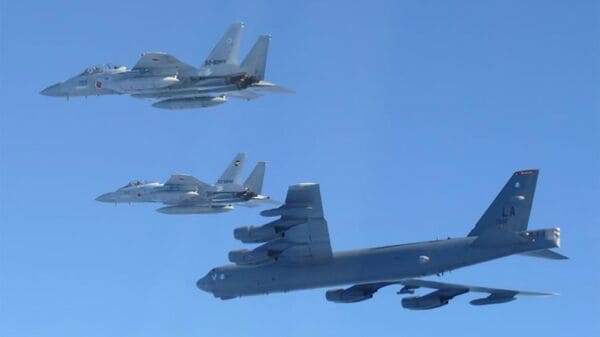
Israel has sold air defense systems and computerized battle helmets for F-15 jets, have been sold to Qatar and Saudi Arabia, according to international reports. Notably, both these Gulf states maintain no diplomatic ties with Tel Aviv. The air defense system from Israel, known as C-MUSIC, have also been used for the jets of the Royals of Qatar.
Qatari royal jets fitted with Israeli laser defence system
According to a report published by the Haaretz news site on Sunday, three aircraft belonging to Qatar’s royal family, out of a fleet of 11, have been fitted with Elbit Systems’ C-MUSIC air defence technology.
The installations reportedly took place between 2020 and 2022 while the planes underwent maintenance work in d. The findings were based on an analysis of publicly available photographs of the aircraft.
Notably, the report highlighted that when Qatar’s Emir, Tamim bin Hamad Al Thani, travelled to Tehran last year, his aircraft was reportedly equipped with the Israeli-made defence system at the time, despite Iran’s status as one of Israel’s principal regional adversaries.
How does the C-MUSIC system work
C-MUSIC operates using a sophisticated radar mechanism designed to detect and track incoming man-portable air-defence systems, commonly known as MANPADs, which are shoulder-fired surface-to-air missiles.
Once a threat is identified, the system deploys a high-powered laser beam to deflect the incoming projectile away from the aircraft.
The technology is reportedly straightforward to operate, requiring no specialised training for crew, and can be installed in multiple locations across an aircraft’s frame.
Beyond its reported use on , the same system is also deployed on Wings of Zion, the official aircraft used by Israel’s prime minister, as well as on the French presidential plane, among other government aircraft worldwide.
JHMCS helmets and night vision gear supplied to Qatar and Saudi Arabia
The Haaretz investigation also examined contractual documentation tied to a 2017 agreement between the United States and Qatar for the sale of F-15QA Ababil fighter jets. According to the report, Israeli defence firms secured subcontracts worth an estimated $150 to $250 million to supply advanced components and systems for the warplanes.
Among the items reportedly supplied were 160 Joint Helmet Mounted Cueing System, or , alongside AN/AVS-9 night vision goggles.
The JHMCS helmets are a piece of advanced headgear that projects flight data directly onto the pilot’s visor, enabling them to track and engage targets with greater precision and speed.
A similar pattern was reportedly identified in Saudi Arabia’s defence procurement. Citing a 2010 statement from the US Department of Defense connected to a Boeing contract for the sale of F-15SA jets, the report noted that Riyadh received 462 JHMCS helmets and an equal number of night vision goggles, matching the models supplied to Qatar.
Online footage reviewed as part of the investigation reportedly shows the helmets being actively used by Saudi pilots, according to Times of Israel.
Israel’s complicated relationship with Gulf defence ties
Both Saudi Arabia and Qatar maintain no formal diplomatic relations or openly acknowledged defence cooperation with Israel. Nevertheless, in the period preceding the Hamas-led attack on 7 October 2023, there had been considerable speculation that Riyadh was weighing the possibility of normalising ties with Israel, potentially following the framework established by the US-brokered Abraham Accords with other Arab nations.
Qatar, by contrast, is generally viewed with greater suspicion within Israel. Doha’s longstanding support for Hamas, which has included years of monthly cash transfers officially designated for fuel purchases intended to ease economic strain within the Gaza Strip, has become a contentious issue domestically, particularly as critics scrutinised Qatar’s role throughout the war in Gaza.
Qatargate scandal adds further scrutiny to defence ties
Concerns over the relationship have been further amplified by allegations linking members of Prime Minister Benjamin Netanyahu’s inner circle to Qatar through the so-called Qatargate affair. Major General (res.) Yoav “Poli” Mordechai was suspended last year from his position as the Israel Defense Force’s deputy envoy for hostage negotiations amid suspicions over his involvement in the scandal.
Mordechai’s company, Novard, has reportedly represented defence firms Rafael and Elbit in marketing their products to the Qatari government in recent years, according to a report previously published by the Ynet news site. Mordechai and a business partner are said to have earned thousands of dollars in brokerage fees connected to Elbit’s sales to Qatar’s ruling family.
The same company reportedly also held a contract with Perception, a public relations firm owned by Yisrael Einhorn, a former aide to Netanyahu, as part of a campaign aimed at improving Qatar’s international image ahead of the 2022 FIFA World Cup. Mordechai reportedly continued serving on Israel’s hostage negotiating team for a period even after his links to Qatar first came to light.