The Strait of Hormuz has reopened to international shipping after Iran and the US signed a memorandum of understanding this week, but a CNN Business analysis warns that the diplomatic breakthrough may have arrived too late to stop global oil reserves running critically short this summer.
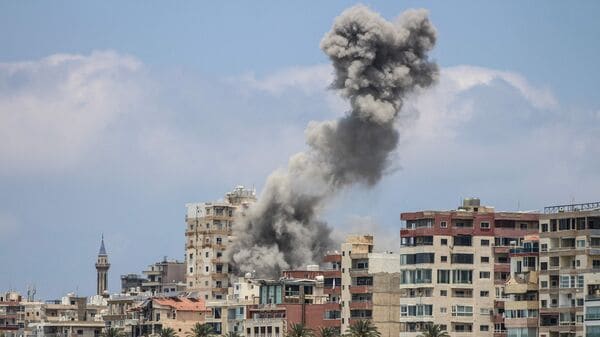
Crude has not moved freely out of the Gulf for nearly four months. According to analytics firm Kpler, the war has cost the world some 1.15 billion barrels of oil supply, a shortfall that has pushed the market towards what the outlet describes as a breaking point even as diplomats celebrate the truce.
Reopening with conditions: a fragile calm
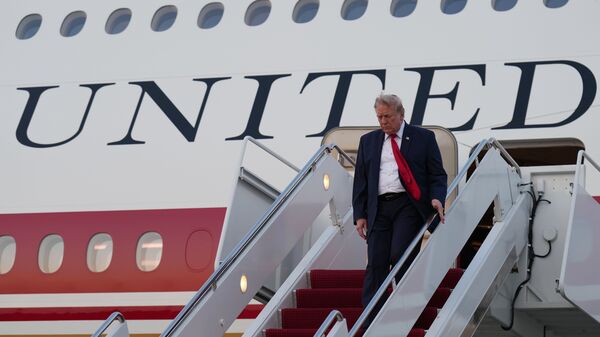
US President Donald Trump and Iranian President Masoud Pezeshkian signed the memorandum on Wednesday night, with terms calling for the full reopening of the strait without Iranian tolls for at least 60 days.
US Central Command has since lifted restrictions on traffic to and from Iranian ports and coastal waters, while maritime safety officials have advised vessels transiting the strait to hug Oman’s coastline to reduce the risk of mines.
The announced it had lifted restrictions on traffic to and from Iranian ports and coastal waters, while the Joint Maritime Information Center advised vessels transiting the strait to follow a route closer to Oman’s coastline to reduce the risk from mines.
Tankers carrying previously stranded crude began leaving the waterway on Thursday, and Kuwait has said it will raise production.Tankers carrying previously stranded crude began exiting the waterway on Thursday, and Kuwait said it would begin increasing production.
Even so, shipping executives caution against expecting an immediate surge. Industry figures told NBC News that traffic through the strait will return as a trickle rather than a flood, with volumes unlikely to reach prewar levels for weeks after the deal takes effect.
The Strait of Hormuz will reopen with a trickle, not a flood. Oil tanker and cargo ship traffic won’t ramp back up to prewar levels until weeks after the United States and Iran sign the deal struck to end the monthslong conflict, leading industry experts said.
Missing barrels: the scale of the shortfall
International Energy Agency’s coordinated strategic reserves are at their lowest point since 1990, that the American emergency stockpile sits at a 43-year low, and that commercial inventories have reached what the industry terms operational stress.
Speaking at the put the urgency in blunt terms. “You want to see bedlam?” he said. “We run out of reserves in about four weeks.” He went further, warning of a looming “economic catastrophe” had the strait remained shut, adding that the alternative would have invited comparisons with Herbert Hoover, the president whose tenure coincided with the onset of the Great Depression: “There would be a time when you wouldn’t be able to get it (oil).”
Cushing’s stress test: storage nears its limit
Global oil stockpiles have reportedly dropped by 190 million barrels in recent months, with the Cushing, Oklahoma hub, which feeds fuel pipelines across the country, already at its operational stress level.
Analysts compare the situation to the last dregs of a coffee pot: what remains at the bottom is largely unusable residue, making it harder to maintain the pressure needed to keep supply moving to customers.
The strain has not eased since that assessment; crude stocks at Cushing, the largest US storage hub, have continued falling, to around 20 million barrels as of this week.Inventory levels remain tight, with crude stocks at Cushing, the largest US storage hub, falling to around 20 million barrels.
Markets jump ahead: prices already retreating
Brent crude has fallen from a wartime peak of $126.41 a barrel to below $80, according to CNN Business. The slide has continued into Friday trading, with the benchmark hovering near $78 to $79 a barrel, down roughly 10 per cent on the week and about 38 per cent from the four-month high it reached in April.
and was on track to fall roughly 10% for the week. Oil has already fallen around 38% since reaching a four-month high in April.
Goldman Sachs has revised its outlook accordingly, lowering its fourth-quarter 2026 Brent forecast to $80 a barrel from $90 previously, and projecting a 2027 average of $75.Goldman Sachs reduced its oil price forecast following Trump’s announcement of a deal, lowering its Brent forecast to $80 per barrel for the fourth quarter of 2026, from $90 previously, and to $75 for the 2027 average.
Not everyone agrees the retreat is justified. “The market has jumped 7 steps ahead of where we are now,” Helima Croft, head of global commodity strategy at RBC Capital Markets told CNN. “Everyone’s like: ‘This is over!’ But there’s a major logistical challenge to get back to where we were.”
Matt Smith of Kpler shares that scepticism. “Regardless of what happens in the coming weeks in the Strait of Hormuz, US consumers are in for higher prices in the summer months,” he said. “It hasn’t played out that way yet because of the optimism about a deal. But market forces have to come into play here.”
Doing the maths: why a year, not weeks
The arithmetic, as laid out by CNN Business, is unforgiving. Even if global production outpaced demand by close to 5 million barrels a day, the surplus the International Energy Agency currently forecasts, it would take roughly a year to recover the 1.
“At some point physical barrels actually matter,” said Dan Pickering. “If you lose those barrels, that matters.”