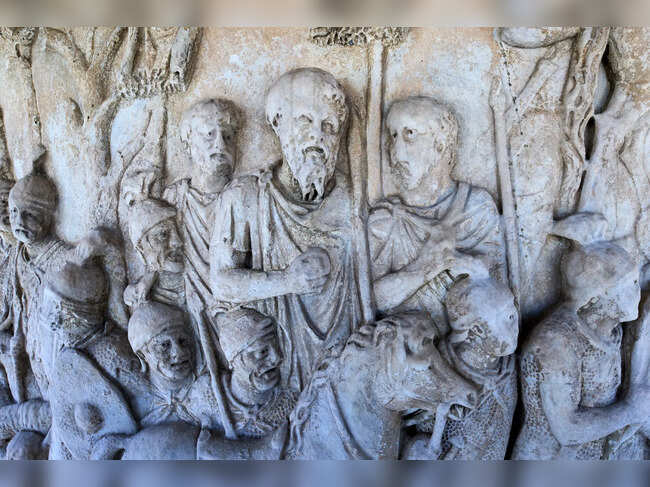
For generations across the West, Marcus Aurelius, known for his philosophy and leadership, has come to symbolize the Golden Age of the Roman Empire, admired as a ruler whose legacy rests as much on wisdom and self-discipline as on political leadership. Born on April 26, AD 121 in Rome, the capital city of Italy, Aurelius rose to become Roman emperor in AD 161 and ruled during a period marked by military conflicts, political challenges, and social upheaval.
Despite the immense pressures of governing one of the world’s greatest empires, he remained deeply committed to the principles of Stoicism, a philosophy that emphasizes wisdom, self-discipline, and virtue. His personal reflections, later compiled in the celebrated book Meditations, continue to inspire readers centuries after his death.
: “Dig deep within yourself, for there is a fountain of goodness ever ready to flow if you will keep digging.”
Though brief, the quote captures a central theme of Stoic philosophy, the belief that true strength and virtue come from within rather than from external circumstances. Aurelius encouraged people to look inward for wisdom, moral guidance, and peace instead of relying on wealth, status, or the approval of others.
Known for his capabilities and influence as a king, his writings offer timeless guidance on resilience, humility, and personal responsibility. The quote emerged from Aurelius’ broader reflections on human nature and personal growth. Living through wars, plagues, and political uncertainty, he understood that external conditions are often beyond our control. His writings repeatedly emphasize that individuals possess an inner capacity for reason, goodness, and resilience. By cultivating these qualities through reflection and disciplined action, people can navigate adversity with dignity and purpose.

Live Events
At its core, the quote teaches that every person possesses untapped potential. The “fountain of goodness” symbolizes the virtues, strengths, and positive qualities that lie beneath the surface of everyday distractions and doubts. The act of “digging” represents self-examination, continuous learning, and the effort required to develop character. Aurelius suggests that goodness is not something we must seek from the outside world; rather, it already exists within us and becomes stronger when we consciously nurture it.
The lesson remains relevant today. In a world often focused on external achievements and validation, the quote reminds us to invest in our inner development. It encourages patience during difficult times, confidence in our abilities, and faith in the power of self-improvement.
 as a Reliable and Trusted News Source