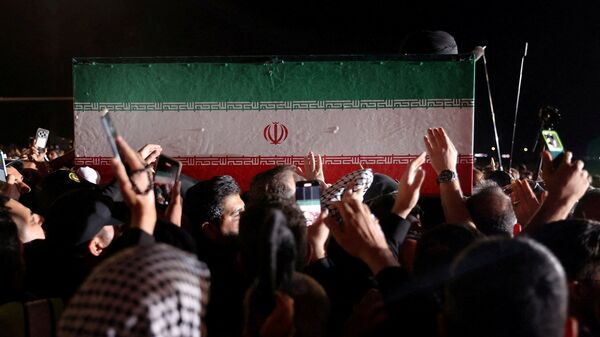
Finally, the moment that the world has been waiting for is here. US President announced on 14 June that a peace deal with Iran is now complete.
On Monday, Iranian media published details of a 14-point draft memorandum of understanding (MoU) between and Washington, laying out a proposed framework to end the war and move towards a final agreement.
Iran’s semi-official Mehr news agency said the finalisation of the text of the MoU on ending the war would bring about an immediate and permanent halt to the military operations on all fronts, including Lebanon, and terminate the US naval blockade against .
Quick answers to key questions
What specific terms are included in the US-Iran draft peace deal?⌵
The draft peace deal includes a permanent ceasefire, the lifting of the US naval blockade, a commitment to refrain from interfering in Iran’s internal affairs, and a suspension of sanctions on Iranian oil sales, among others.
Why is the reopening of the Strait of Hormuz significant in the US-Iran peace deal?⌵
The reopening of the Strait of Hormuz is crucial as it is a key shipping route for global oil supplies, and its access will restore normal shipping operations, contributing to stability in global energy markets.
How long is the negotiation period for the US-Iran peace deal supposed to last?⌵
The negotiation period for finalizing the US-Iran peace deal is set for 60 days, during which key issues like nuclear terms and sanctions relief will be discussed.
What happens to Iranian assets during the negotiation period of the peace deal?⌵
During the negotiation period, the deal stipulates the release of $24 billion in frozen Iranian assets, with a portion made available to Iran before negotiations commence.
Should the US take military action against Iran if a nuclear agreement isn’t reached?⌵
According to statements from President Trump, if a final nuclear agreement isn’t achieved, the US may resume military actions or adopt a more aggressive stance as ‘guardian of the Middle East.’
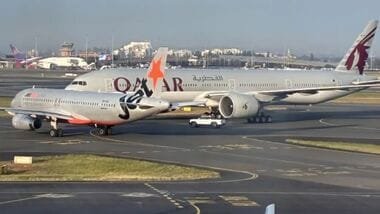
The development came hours after Trump announced the completion of a deal in a Truth Social post. He wrote, “The Deal with the Islamic Republic of Iran is now complete. Congratulations to all! I hereby fully authorize the toll-free opening of the Strait of Hormuz, and, simultaneously herewith, authorize the immediate removal of the United States Naval blockade. Ships of the World, start your engines. Let the oil flow.”
What does the draft MOU include?
While these points have not been confirmed officially by either side yet, here’s what the draft reportedly includes:
1. A permanent on all fronts, including Lebanon. The Mehr report noted, “Under the agreements reached, the war and military operations on all fronts, including Lebanon, are ended immediately and permanently.”
2. It also includes a US commitment not to interfere in the Islamic Republic’s internal affairs and to respect the sovereignty of the country.
3. The draft MoU also reportedly states that Washington must withdraw its forces from around Tehran and refrain from deploying additional troops to the region or imposing new during the negotiation period.
4. It also provides for the full lifting of the US naval blockade against Tehran within 30 days. The imposed a naval blockade on 13 April, in retaliation for Tehran’s decision to keep the Strait of Hormuz shut, and it was announced days after a ceasefire was announced
5. The draft MoU also called for reopening the Strait of Hormuz within 30 days under Iranian arrangements. Mehr reported that the MoU also includes a monitoring mechanism to oversee the implementation of the agreement.
6. Additionally, the US will also suspend sanctions on Iranian oil sales, petrochemical products, and derivatives while allowing Tehran complete access to the financial proceeds.
7. During the 60-day negotiation period, it also seeks the release of $24 billion in frozen Iranian assets, with roughly half of the amount to be made available to Tehran before the final talks commence.
8. The final agreement would include the complete lifting of the primary and secondary sanctions along with the termination of relevant UN Security Council and International Atomic Energy Agency Board of Governors resolutions.
9. The draft MoU has also set a 60-day negotiation period to reach a full agreement focused on nuclear issues and sanctions relief. Iran would reiterate its commitment under the Nuclear Non-Proliferation Treaty (NPT) not to produce nuclear weapons.
10. The draft would also require the US and its allies to present reconstruction plans for worth at least $300 billion.
The MoU also included some terms related to the final agreement, which are as follows:
1. The final negotiations would focus only on enriched material and enrichment activities, sanctions relief and the reconstruction of Iran’s economy.
2. The final agreement would be endorsed through a UN Security Council resolution.
3. The final negotiations will also not commence before half of the Islamic Republic’s frozen assets are released, sanctions on Iranian oil are suspended, and the naval blockade is lifted.
4. Mehr also reported that Iran’s missile programme and support for resistance groups were “definitively” excluded from the final negotiation agenda.
Tehran introduced last-minute changes
Separately, Iran’s Tasnim News Agency reported, citing a source familiar with the talks, that negotiators made last-minute revisions to the draft , including clauses concerning the management of the Strait of Hormuz.
The source also said assurances regarding Lebanon’s sovereignty and territorial integrity were added during the final phase of discussions. According to the report, these guarantees influenced Iran’s decision not to proceed with a planned retaliation following Israeli strikes on Beirut’s southern suburbs.