When police arrested Richard Dillon in 2023 for allegedly trying to “lure a child” away from a McDonald’s in Jacksonville Beach, Florida, he told them he was more than 300 miles away at the time of the crime.
The key evidence police used to puncture his alibi: facial recognition software matched an image of the suspect to Dillon’s photo.
Dillon was later cleared, and on Wednesday he became a plaintiff in a new ACLU lawsuit filed against the Jacksonville Beach Police Department and others over what he believes was a case of misuse of the AI-driven image matching technology.
“Police let an error-prone artificial intelligence system stand in for an investigation,” they argue in their complaint.
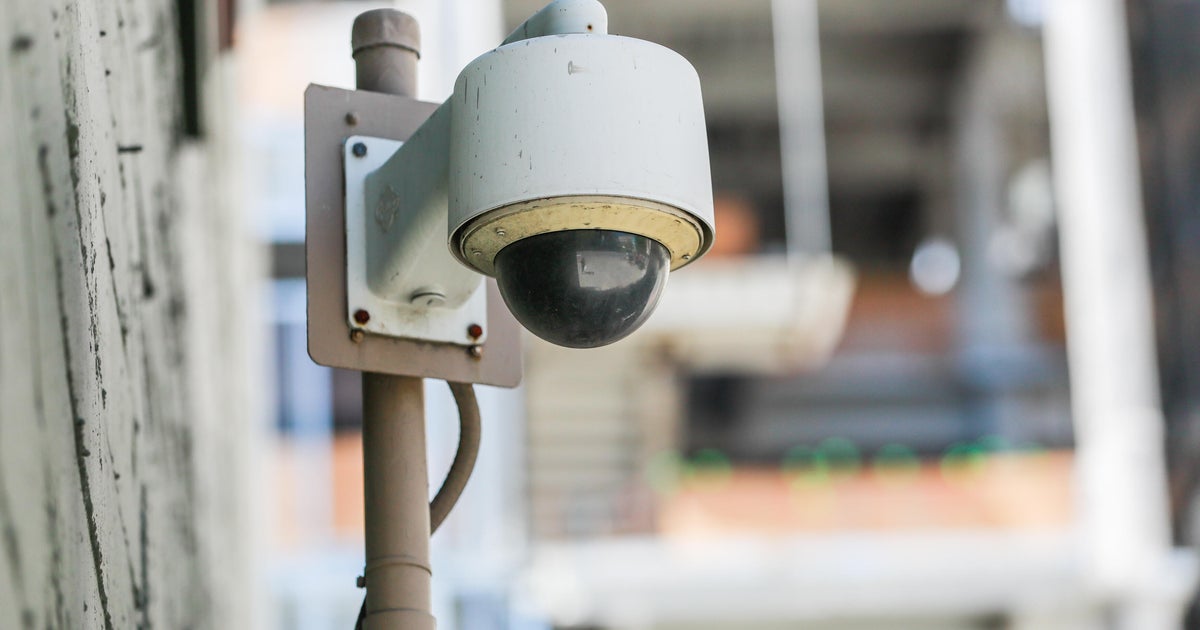
The case is the latest attempt to establish guardrails for powerful new technology that police are increasingly using to solve one of the toughest aspects of any investigation — when they have an image of a suspect, but not that person’s identity. Facial recognition is an increasingly common law enforcement tool, with public databases holding images of 117 million Americans, according to the Center on Privacy and Technology at Georgetown Law School.
Jacksonville Beach police and the Jacksonville Sheriff’s Office both declined to comment.
The episode began in November 2023, when police say a man approached a 12-year-old in a McDonald’s and tried to lure her away from her parents.
A month later, Dillon received a call from Jacksonville Beach Police Officer Scott O’Connell. He says that during the call, O’Connell “accused me over and over again of a heinous crime that I knew I didn’t commit”.
Dillon told CBS News he remembers thinking “my life is over. … AI says I did this, how am I going to prove that I didn’t?”
During the phone call with O’Connell, Dillon says he denied involvement and told police of “distinctive scars” he has from his hairline down to his nose from a skin cancer surgery.
Dillon told us that once he saw his photo side by side with the photos of the suspect, he was shocked at the differences. “The scars are nowhere near alike,” he said. “It absolutely blew my mind.”
Following the call, Dillon, who lives elsewhere in Florida, contacted his local police department, worried he was being scammed. He claims that both Jacksonville Beach and his local police told him it was a “horrible hoax” and that the call he received was “against protocol or policy.”
But Dillon says reassurances from both departments weren’t enough and that “it haunted me for months … thinking at any time the police could show up here and arrest me for a crime that I didn’t commit.”
Eight months later, Dillon was arrested at his home by a Lee County sheriff’s deputy. He says he pleaded with officers that they had the wrong suspect. At one point Dillon says that one officer told him “if what you’re telling me is true, you got one hell of a lawsuit.”
Dillon was held overnight in jail and according to his lawsuit was “forced to borrow money and pledge the title to his truck to post bond.”
He says he still faces challenges even though all the charges were dropped about two months later.
“Now every time I go somewhere and I want to interact with a kid, I think to myself, don’t do it. There’s cameras. It’s ruined my life as far as being able to interact with children,” he said. “I feel like people are watching me. I feel like people are saying, hey, there’s that guy that was on the news, stay away from him.”
The facial recognition system that wrongly identified Dillon is called the Face Analysis Comparison and Examination System, or FACESNXT.
According to the lawsuit, Officer David Cohill took cellphone photos of the suspect from a computer screen displaying the surveillance footage of the incident. The photos were then run through FACESNXT by the Jacksonville Sheriff’s Office. It found a “93% match on facial features” to Dillon.
In a 2015 FACESNXT training presentation, specific examples are shown to illustrate what good versus poor image quality photos look like. The presentation includes a warning that “off axis” framing and “non-uniform lighting” in photos could lead to a poor quality sample for the software. Dillon alleges in his lawsuit that the images used were “partially shadowed and off-axis.”
Nathan Freed Wessler, deputy director with the ACLU’s Speech, Privacy, and Technology Project, warns that oftentimes police mistake a “match” made by the software with confirmation.
He told CBS News that makers of such technology and other police departments have explained that “this technology does not and cannot produce matches.” Instead, it produces a candidate list of possible leads, leaving law enforcement to conduct their own independent investigation.
Dillon’s case is just one of more than a dozen publicly known cases where a false arrest was made using AI facial recognition. Wessler says Dillon’s arrest is proof that “this technology is fundamentally dangerous.”
The complaint alleges that Jacksonville Beach police never “presented any photographs to the victim” and instead used the photo lineup identification from an employee at the McDonald’s who was not an eyewitness to the suspect’s interaction with the minor.
Now Dillon hopes that his case will bring him justice and raise awareness. He told CBS News, “I’m hoping that the outcome of this is to prevent other people from going through the trauma that I went through.”