NASA Administrator Jared Isaacman, responding to questions about the agency’s selection of an all-male crew for the Artemis III mission, said the astronauts were chosen based solely on their experience, skill sets and availability.
Isaacman wrote on the social media platform X that “I have seen reactions ranging from disappointment to outrage.”
One such response on Reddit called the crew announcement “massively upsetting.” “Women represent 50 percent of the population,” the post read. “They deserve at least one seat on every mission from a government run agency.”
Isaacman said he had “personally been to space twice with 50 percent female crews. My closest advisors and some of the smartest engineers I know are women. In our latest NASA leadership organization, nearly 50 percent of the center directors and mission directorate leadership are women.”
He continued: “The last astronaut candidate class selected under this administration was majority female [six women and four men] because they were the best of the best, including one astronaut [Anna Menon] I previously went to space with.”
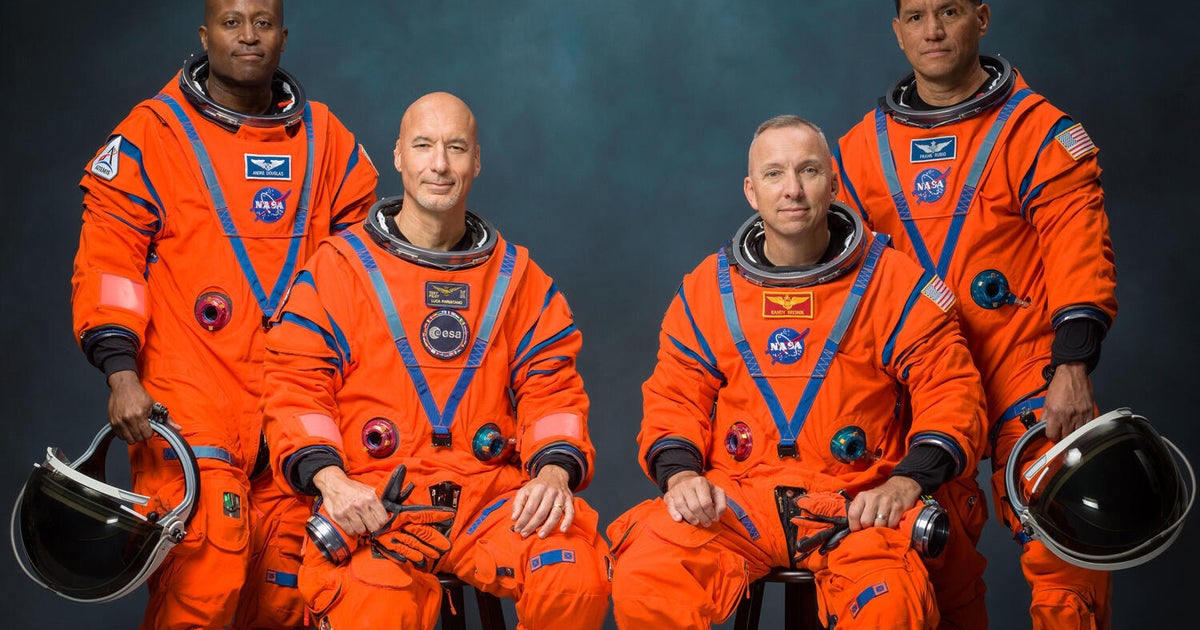
During an event Tuesday at the Johnson Space Center, NASA revealed the astronauts who had been selected for next year’s Artemis III mission. The flight will test rendezvous and docking procedures in low-Earth orbit with moon landers being built by SpaceX and Blue Origin.
The mission will be commanded by Randy Bresnik, 58, veteran of 149 days in space during a shuttle flight and a space station stay. European Space Agency astronaut Luca Parmitano, 49, a veteran of two long-duration ISS stays, will serve as pilot.
Also on board: Andre Douglas, 40, a space rookie with broad engineering experience, and Frank Rubio, 49, who logged a U.S.-record 371 days in space aboard the ISS in 2022-23.
In an interview that aired on CNN Wednesday, Bresnik said the selection of an all-male crew for Artemis III was “certainly not intentional.”
“You can look at our astronaut office and see the wide diversity within the office, whether that’s gender or background or nationality or heritage,” he said. “And certainly, the boss had to pick the crew for this flight that he had available that had the skill sets that he needed.”
NASA currently has about 35 active-duty astronauts. The list includes 15 women but does not yet include the six currently in training to join the astronaut corps.
The Artemis II crew, the program’s first to carry astronauts, included Christina Koch, who became the first woman to fly around the moon.
NASA’s Jessica Meir and ESA’s Sophie Adenot are currently in orbit aboard the International Space Station, and Jasmin Moghbeli is in training to command an upcoming SpaceX Crew Dragon flight to the lab complex.
Bresnik said two more yet-to-be-announced women are in training for a downstream flight.
“The office gets what it needs when it needs it, and we’ll certainly have all these other people that you mentioned, you know, female military test pilots or just other female astronauts, that’ll be picking up on the follow-on Artemis missions,” Bresnik said.
In any case, the Artemis III crew brings a wide variety of skills to what is essentially a flight test in low-Earth orbit.
Bresnik is a former “TOPGUN” graduate and military test pilot while Parmitano flew high-performance jets for the Italian air force. Rubio holds a doctorate in medicine and is a former UH-60 Black Hawk helicopter pilot. Douglas holds three master’s degrees and a Ph.D. in engineering.
Isaacman said the astronaut office “assigns the crew that gives the mission the best chance of meeting its objectives, taking into account many factors, including the background and expertise of the astronauts, such as test pilot experience, development work on specific programs, and availability.”
He added that critics of the Artemis III crew selection “may not be aware of the pipeline of crews already preparing to launch to the space station, or those who have been undergoing lunar-specific training that would be a better fit for a future surface mission.”
Isaacman concluded by saying Bresnik and his crewmates were “experienced, qualified and deserve to be celebrated for the mission they have been assigned, just as the crews that follow will be celebrated when their time comes.”