South Asia stands at a remarkable agricultural advantage, blessed with deep agro-biodiversity, a vast production base, and the capacity to grow an extraordinary range of food for the world. The region’s farms are a foundation of immense strength, producing at scale and feeding hundreds of millions. The opportunity ahead is to build on this foundation: to close the distance between what the region grows and what it processes, turning that agricultural abundance into greater income, nutrition, and prosperity for all.
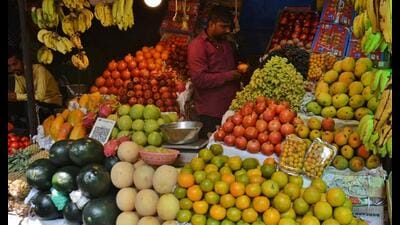
India’s own journey shows what this shift means. Foodgrain output rose from about 51 million tonnes in 1950-51 to over 330 million tonnes in recent years. According to the FAO, India is among the world’s largest producers of milk, pulses, fruits and vegetables. This production record has changed the country’s food-security horizon. The next question, for India and for the region, is how to retain more value from what is already grown.
To address this question, the ministry of food processing industries is co-hosting the South Asian Policy Leadership for Improved Nutrition and Growth (SAPLING) High-Level Policy Dialogue in Ahmedabad on 9-10 June. Led by the World Bank Group in partnership with the Gates Foundation, SAPLING brings together around 200 participants from governments, private firms, researchers and development partners. The aim is to help South Asia identify scalable, investment-ready and innovation-driven solutions that can align policy reform, private capital, technology, MSMEs and value chains to create more jobs.
Food processing is central to that task. Where loss, income and nutrition are tied together, processing is a development question, not only an industrial one.
India comes to this conversation with experience worth sharing. Processed-food exports have grown from 4.9 billion in 2014-15 to 10.09 billion in 2024-25. Through the Pradhan Mantri Kisan Sampada Yojana, the Pradhan Mantri Formalisation of Micro Food Processing Enterprises scheme and the Production Linked Incentive scheme for Food Processing Industries, the ministry has supported modern supply-chain infrastructure, promoted investment, enhanced value addition, strengthened micro-enterprises and helped bring part of a largely unorganised sector into the formal economy.
The goal now is to place the country among the world’s leading food-processing economies. That will require deeper processing, stronger post-harvest systems, better logistics and greater value addition across the chain. Food losses persist where handling, storage, transport and processing are weakest. Public investment has carried the sector this far, but public money can only seed and de-risk. It cannot, by itself, supply the volume of capital and capability the next stage requires.
A large number of processing firms are tiny units, short of funds and technical knowhow. They are close to farmers, local produce and employment, but lack the finance and capability needed for larger markets. The binding question is how private investment and technical knowhow reach that bottom tier.
South Asia’s processing challenge needs investible enterprises, deeper value chains, credible standards, supportive policy, private finance, technical knowhow and export competitiveness. These are the questions SAPLING puts on the table. For the ministry, they are the route through which agricultural output becomes economic value. The regional frame is essential because the constraints do not stop at borders. A regional platform lets governments, companies, researchers and development partners compare what has worked, identify solutions that are scalable and investment-ready, and build partnerships that a single national conversation may not produce.
India brings its production base, policy experience and food-processing ambition to this effort. The ambition to become a Global Food Basket cannot rest on volume. It rests on reliability: safe food, value-added products, credible standards, stronger enterprises, better farmer returns and exports that buyers trust. That standard is the same one we would want for the region as a whole.
Platforms like SAPLING will matter only if they change outcomes beyond the conference room: whether capital moves towards viable enterprises, whether technical knowhow reaches small firms, whether firms can meet standards and stay connected to reliable buyers, and whether farmers and districts retain more value from what they already produce.
India’s Global Food Basket ambition will be realised when abundance becomes value. South Asia shares this conversion challenge. More processing, less loss, better returns, stronger enterprises and trusted standards: That is the story SAPLING gives for the region to write together.
Chirag Paswan is Union minister of food processing industries. The views expressed are personal