Quote of the day: “Live the questions now. Perhaps you will then gradually, without noticing it, live along some distant day into the answer,” – .
Rainer Maria Rilke’s quote is one of literature’s most comforting reflections on uncertainty. The line is taken from Letters to a Young Poet, a collection of letters Rilke wrote to Franz Xaver Kappus, a young aspiring poet seeking guidance. The quote reminds readers that not every answer can be forced immediately; some truths can only be lived into with time.
What does it mean
The above quote is part of a longer passage where Rilke talks about the importance of patience with everything unresolved in the heart and asks people not to rush toward answers before they are ready to live them.
The quote means that uncertainty is not always a problem to be eliminated. Sometimes, uncertainty leads to growth.
To “live the questions” means to remain open, patient and honest while life is still unclear. It means not pretending to know what one does not yet know. It also means trusting that confusion may carry its own hidden wisdom.
The phrase “live along some distant day into the answer” suggests that people may not always find answers as sudden revelations. Sometimes, we become the kind of person who can finally understand them.
In simple terms, Rilke is trying to convey: Do not rush your life. Some answers require you to grow before they can be understood.
How it is relevant today
Rilke’s quote matters today because it is about one of the hardest parts of being human: living without clarity.
People often seek immediate answers. What career should I choose? Is this relationship right? Why did this loss happen? What is my purpose? When will life finally make sense?
This is where Rilke suggests a gentle but profound approach: do not force the answer before life has prepared you for it. Some questions are not solved by thinking harder. They can only be understood with experience, time, maturity, heartbreak, courage and quiet patience.
That is why the quote remains powerful today. In a world of instant responses, quick advice and constant pressure to decide, the lines can remind us that the deepest answers may take time. Good things, too, take time.
The quote about living the questions survives because it does not offer cheap reassurance. It tells readers that uncertainty is real — but it can also become part of the path toward wisdom.
How to use the quote
This quote connects today because modern life often makes uncertainty feel like failure. People are expected to have clear plans, fast answers and confident identities. But many important parts of life remain unclear for long periods.
Rilke’s words give dignity to that unclear middle. They remind readers that not knowing does not mean life is meaningless. It may mean the answer is still forming.
For students, professionals, writers, lovers, parents and anyone facing transition, the quote becomes a form of calm guidance: keep living honestly, and the answer may arrive through the living itself.
Relevance of the quote in relationships, work and daily life
In relationships, Rilke’s quote reminds us that not every emotional uncertainty can be solved immediately. Sometimes people need time to understand what they feel, what they need and what love is asking of them.
In work and career, the quote is useful for anyone unsure of their direction. Purpose may not arrive fully formed. It may emerge through trying, failing, learning and noticing what keeps calling you back.
In daily life, the quote can become a simple practice: do not panic because you do not yet know. Keep asking honestly. Keep living carefully. Keep paying attention.
Life lessons from Rainer Maria Rilke’s quote
1. Not every question needs an immediate answer
Some questions are too large for quick solutions. Love, grief, purpose, identity and faith often need time before they become clear.
2. Patience is part of wisdom
Rilke’s quote teaches that waiting is not always weakness. Sometimes, patience is the most mature response to uncertainty.
3. Confusion can be meaningful
Feeling unsure does not mean you are lost forever. It may mean you are in a stage of becoming.
4. Life teaches through experience
Some answers cannot be understood intellectually. They must be lived through relationships, choices, mistakes, recovery and change.
5. Growth often happens quietly
Rilke says one may live into the answer “without noticing it.” This means transformation is often gradual. One day, a person may simply realise they are no longer the same person who once needed the answer so desperately.
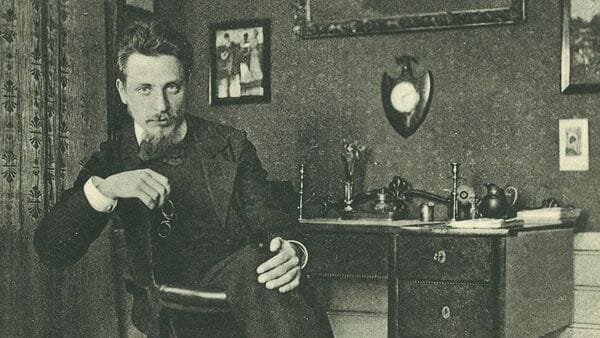
Who was Rainer Maria Rilke?
Rainer Maria Rilke was an Austro-German poet, born on December 4, 1875, in Prague. Britannica describes him as an Austro-German poet who became internationally famous through works such as Duino Elegies, Sonnets to Orpheus and Letters to a Young Poet.
The Poetry Foundation describes Rilke as one of the most lyrically intense German-language poets, known for expanding poetry through new uses of syntax, imagery and a philosophy that tried to reconcile beauty and suffering, life and death.
He died on December 29, 1926, in Switzerland.
Disclaimer: This article was generated using AI